Alternaria has infected the pods of many hailed crops. (See photos below.) Keep watching these crops. When infected areas make up 50% or more of the crop, swathing early may be the best way to salvage the yield in those infected plants if a large proportion of pod surfaces are covered with the black spots. Otherwise diseased plants will shell out if left standing while you wait for healthy plants to be ready. If healthy plants are showing some color change or if the seeds are at least firm, they should mature in the swath.
Click here for an older article with more harvest management tips for diseases and damaged crop.
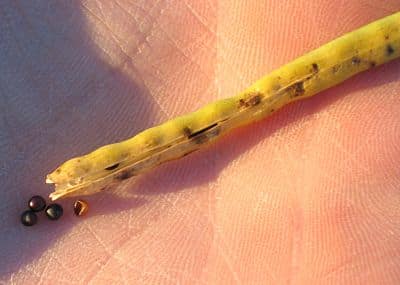
Alternaria disease can cause pods to dry prematurely.
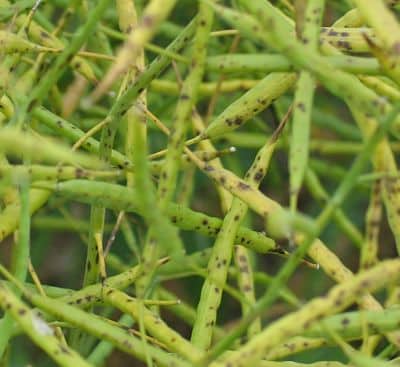
Alternaria infection
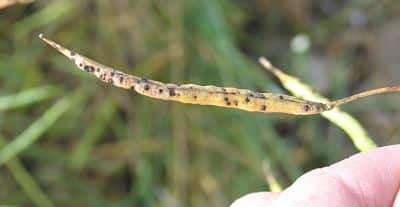
More advanced alternaria infection
E-newsletter sign up +
Key Topics

Agronomy Fundamentals
Explore articles on the best management practices for yield, profitability and sustainability:
Related Articles

August 30, 2023
Questions of the Week
Canola 4R Advantage | Disease scouting | What is turning canola grey/black? | Kochia | Assessing maturity in uneven fields
January 14, 2021
Sign up your land for pest surveys
Insect and disease surveys across the Prairies have moved to a permission-based system to access fields for monitoring. Canola Watch uses this information to
January 13, 2021
Rotations and risk management
Scientific research in Western Canada shows lower yields for canola in short rotations. Blackleg (shown above), clubroot and many other factors can cause this