Canola growers and agronomists can use these steps to improve canola yield (as much as possible) in dry, drought-like growing conditions.
8 best practices to maximize canola seed survival
Follow these tips to improve emergence percentage so more canola seeds contribute to yield and profitability.
9 agronomy tips to help increase canola profit
These agronomy practices can help farmers and agronomists improve canola profit at little to no added cost.
Agronomy priorities: More canola, more profits, lower emissions
Work through the checklist of key best practices for each priority to identify which ones are applied on farm and which ones warrant consideration.
Broadcast seeding canola: Tips
Broadcast seeding can work in a pinch when the calendar ticks toward June and fields are still too moist for a farm’s regular seeding tool.
Calculate a yield target based on profit
The most profitable canola yield target will vary by field and by year. Crop plans, input decisions and profit outlooks benefit from an appropriate yield target for each field each year.
Can we heat-proof canola?
Highs of 27°C and above can disrupt pollination and seed production in flowering canola. No protective practices have a proven track record.
Choose the right cultivar for each field
Cultivar decisions based on the opportunities and challenges in each particular field can improve productivity and profitability of canola.
Hail – From emergence to harvest
This article describes the potential yield impact from hail on canola at four growth stages – seedlings, four- to six-leaf, flowering and podding. Hail early in the season tends to have a much lower yield impact than hail late in the season.
How to count canola plants and explain low numbers
Canola plant counts at around the two-leaf stage will demonstrate the success (or not) of the seeding operation.
How to get acres counted as 4R
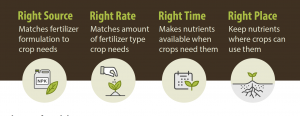
With acres counted under 4R Nutrient Stewardship, canola growers can demonstrate their commitment to improved nutrient use. Part one of the article shows how to get acres counted. Part two describes basic-level 4R practices for nitrogen and phosphorus in Western Canada.
Manage gophers in early spring
The best time to manage Richardson’s ground squirrels, AKA gophers, is late winter and early spring as they emerge from their burrows.
Many reasons for missing pods
Disruptions and malfunctions in bud formation and pollination can result in blanks on canola stems where pods should be. Here are the common causes.
Quick tips for on-farm trials
Farms can run research trials to test how a particular practice or product performs in the local environment. Here are the steps…
Rotation for risk management
Breaks of at least two years between canola crops will reduce risk from clubroot and blackleg diseases, reduce selection for weed resistance, and increase crop yields.
Seeding canola in dry conditions
When seeding into dry soil conditions from March until mid-May, the recommendation to seed canola no deeper than 1” still applies. Here’s why…
Shopping for an agronomist
A farm decides it could benefit from outside advice on crop rotation and fertilizer rates, or on scouting and pest management. Here are some questions to ask a prospective agronomist.
Spring frost: Did the crop survive?
After a frost, it can take a few days to accurately determine how many plants survived. Be patient.
Target 5 to 8 plants per square foot
The canola plant population target of five to eight plants per square foot is a safe target to balance yield potential and economics.