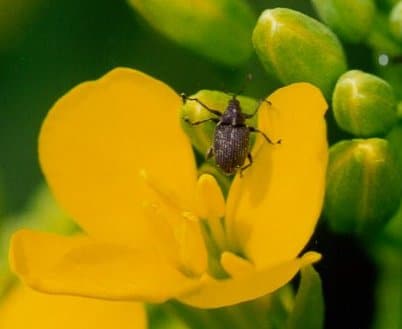
Cabbage seedpod weevil
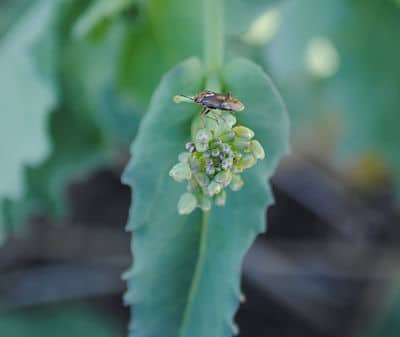
Some canola fields have lygus bugs, cabbage seedpod weevils, and diamondback moths. Economic spray thresholds are calculated based on individual species. We don’t have scientific evidence to combine thresholds, but where an “additive” effect of multiple species can make sense is when more than one species are feeding on key yield-producing areas — flowers, buds and pods — at the same time.
For example, if you have lygus bug and cabbage seedpod weevil in the same field and if they are both at 50% or more of their economic spray thresholds, spraying may provide an economic benefit.
E-newsletter sign up +
Key Topics

Agronomy Fundamentals
Explore articles on the best management practices for yield, profitability and sustainability:
Related Articles

June 28, 2023
Questions of the Week
Sclerotinia fungicide in a variable crop | Insecticide ROI | Abnormal flowering | Canola 4R Advantage funding
June 21, 2023
Questions of the Week
Cabbage seedpod weevil | How to get the most from a patchy / variable field | Sclerotinia spray decision | Timing a variably staged
June 29, 2022
Topics for the Week
Cabbage seedpod weevil | Prioritize predicting sclerotinia | Still planning an in-season herbicide? | How is that crop looking?