Canola needs a little bit of boron, and most Canadian Prairie soils have enough to meet this demand. Boron deficiency, if it occurs, is more likely in sandy soils with low organic matter or in high pH soils. Soil pH above 8 will reduce boron solubility. The Canola Encyclopedia chapter on micronutrients includes more detail on boron.
Boron deficiencies look like:
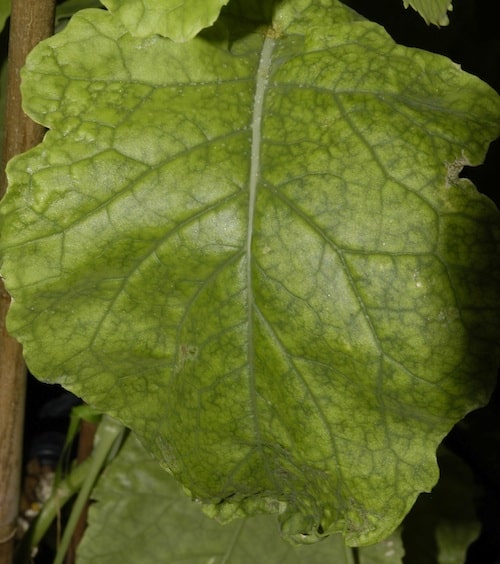
- Interveinal chlorosis. Veins are green but the rest of the leaf is light green. (See the photo above.)
- New leaves are stunted and may roll up along the length of the leaves around the mid vein.—Short, stunted root hairs and poor rooting.
- Long and unproductive flowering period. Boron is involved in pollen tube fertilization, and with boron deficiency, pods may not form. The plant keeps flowering and flowering producing new bud clusters from leaf axils, trying to get fertilization and pod set to occur.
E-newsletter sign up +
Key Topics

Agronomy Fundamentals
Explore articles on the best management practices for yield, profitability and sustainability:
Related Articles

December 16, 2020
How much fertilizer does canola need?
Canola generally needs nitrogen, phosphorus and sulphur fertilizer each year. A small percentage of fields will also benefit from a potassium application. The following
September 27, 2017
Boron and other micronutrients
When well-designed research studies are done for micronutrients in canola, results show little if any economic benefit.
February 3, 2016
Boron — Understanding the soil test
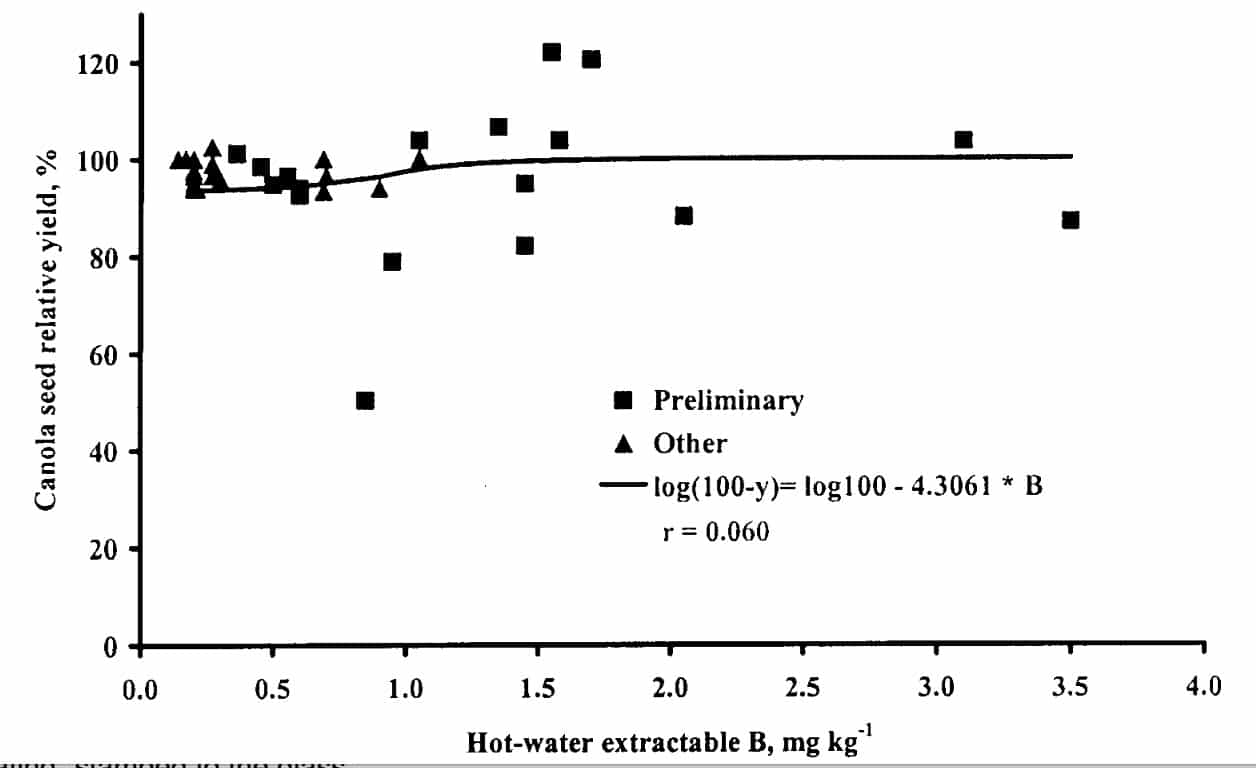
One challenge with boron is the hot water extraction (HW) soil test commonly used to test boron levels does not seem to be a