Risk factors:
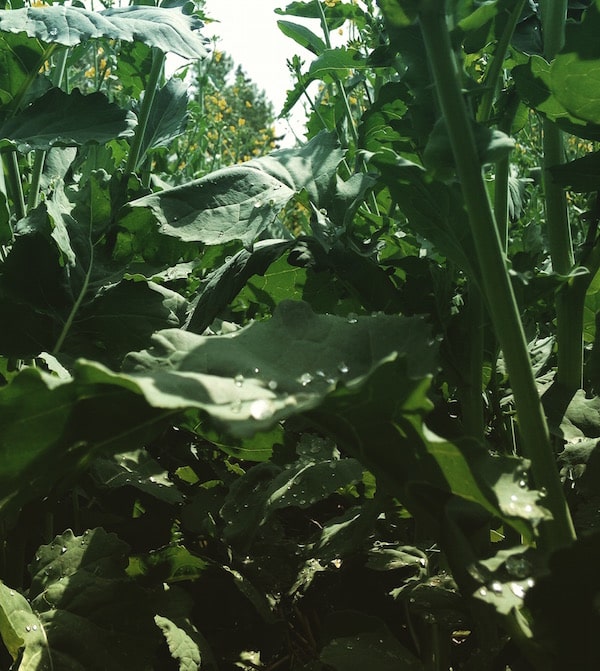
—Prevalence of sclerotinia stem rot has a direct correlation to above-average moisture. If a field has regular rains or high humidity or both from two weeks before flowering and through flowering, then infection will likely occur. If these conditions continue after flower, severity of the disease will be high and yield loss will be significant.
—If these conditions are present and canola has yield potential of 30 bu./ac. or greater, then a fungicide application at 20-30% flower is warranted. Fungicide may also pay for yield potential below that level.
—All areas of the Prairies are at risk. Geography does not provide immunity to this disease.
At risk: A moist canopy and good yield potential.
Sclerotia depots and qPCR petal tests are newer methods that can be used to help assess sclerotinia stem rot risk. These tools may improve the accuracy of sclerotinia fungicide decisions and will improve with further validation. For now they should be used in addition to the additional risk assessment tools.
Spray timing:
If growers decide to spray, the window is 20-30% flower for some products and 20-50% flower for others. Earlier is usually better as early infection on the main stem tends to cause the most yield loss. But if conditions are borderline early in the window and it starts to rain, a late application can be the better option.
Further reading:
5 key questions about sclerotinia spraying
SaskCanola’s sclerotinia risk calculator
10%, 20% and 50% flower
Sclerotinia stem rot management: DETAILED
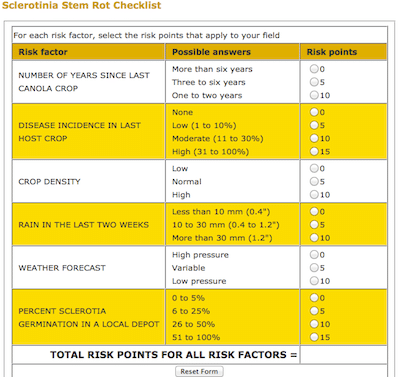
The new sclerotinia stem rot risk assessment checklist from http://www.saskcanola.com/research/riskcalculator.php