Swath timing should always be based on the stage of plants that will contribute the most to yield. Plants senescing early due to disease will not likely produce many viable seeds, so a decision to swath early because of these dying plants can actually make the situation worse. It cuts yield potential for healthy plants.
Don’t let your eyes focus on only the prematurely maturing or dying patches.
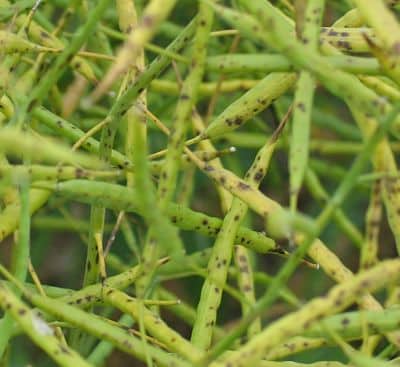
Alternaria infection
One exception where early swathing could provide an economic benefit is the case of severe alternaria black spot — where pods are at high risk of infection and early shattering. In general, infected pods will shatter more easily with this disease, so plants moving in the wind may be more susceptible to shattering losses. Also, as the swathed crop dies down, spread of alternaria will slow down — hopefully stopping this disease from infecting pods.
Other diseases rarely warrant early swathing. In the case of blackleg, sclerotinia stem rot and clubroot, base the swath timing decision on healthy plants that will contribute to yield.
Further reading:
Swath timing: Plant population and seed colour change
Cut later for higher yields (incl data)
E-newsletter sign up +
Key Topics

Agronomy Fundamentals
Explore articles on the best management practices for yield, profitability and sustainability:
Related Articles

August 30, 2023
Questions of the Week
Canola 4R Advantage | Disease scouting | What is turning canola grey/black? | Kochia | Assessing maturity in uneven fields
January 14, 2021
Sign up your land for pest surveys
Insect and disease surveys across the Prairies have moved to a permission-based system to access fields for monitoring. Canola Watch uses this information to
January 13, 2021
Rotations and risk management
Scientific research in Western Canada shows lower yields for canola in short rotations. Blackleg (shown above), clubroot and many other factors can cause this