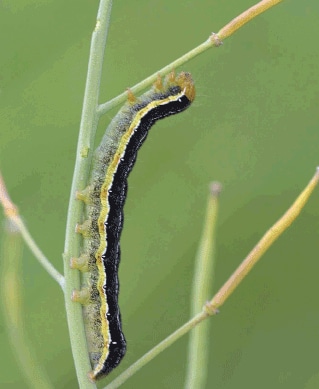
July 30, 2014 Bertha armyworm thresholdsBertha armyworm is one pest that can do a lot of damage in a short time. They’re large and eat a lot. Even within
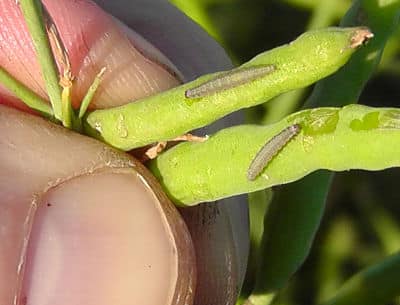
July 30, 2014 Diamondback moth larvae — ThresholdsThresholds are 100-150 larvae per square metre in immature to flowering plants and 200-300 larvae per square metre (20-30 per square foot) in plants
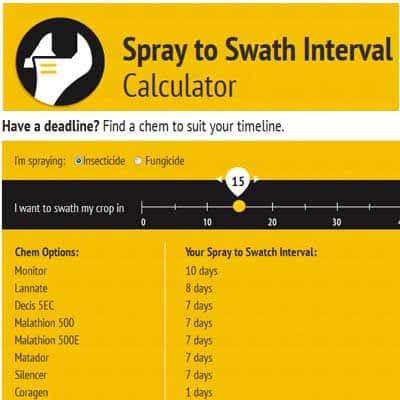
July 30, 2014 Leave required time between spraying and cuttingPre-harvest interval (PHI) refers to the amount of time that must lapse (in days) after a pesticide application before the crop is cut. Cutting
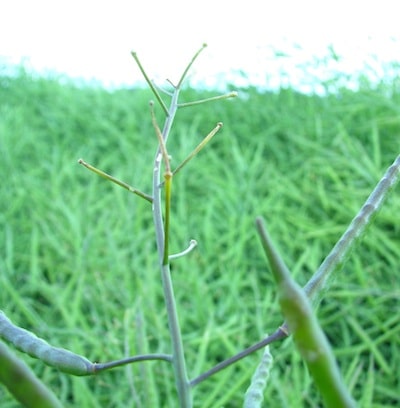
July 30, 2014 6 causes for missing podsSeeing stems with lots of blanks where pods should be is often cause for alarm. There are many possible factors. Here are the top
July 30, 2014 Disease diagnosticsSeeing signs of canola disease but you don’t know what it is? Read this article: Disease to look for while harvest scouting. Watch this
July 23, 2014 Four the weekDistinguished pests. CCC agronomists launch a new video (embedded above) this week with tips and helpful images for your pre-harvest disease scouting routine. Who
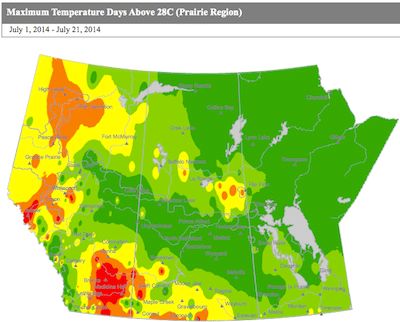
July 23, 2014 Map of the weekThe areas in orange and red have had the most days with maximum temperatures of 28°C or above in July. These hot days can
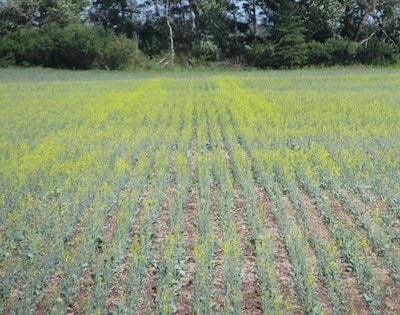
July 23, 2014 July 23 QuizWe have three questions on insects plus a mystery question (shown in the photo above). We don’t know what this is, and we’re hoping
July 23, 2014 Video: Begin your pre-harvest disease watchYield-robbing levels of disease will be easy to spot in canola fields now and through to harvest. This is a great time to start
July 23, 2014 Tank hang ups and spraying mishapsWhen strange patterns of damage in canola fields line up perfectly with the sprayer boom width or follow typical drift patterns, phone calls and
July 23, 2014 Rescue treatment for heat, hailed cropHeat at flowering and hail at late flowering and podding can be highly damaging to yield. Lost pods are yield that cannot be recovered,
July 23, 2014 Fungicide for late and long-flowering cropsThe risk of sclerotinia stem rot infection is still present on later crops that have not reached full flower, especially given the rain and