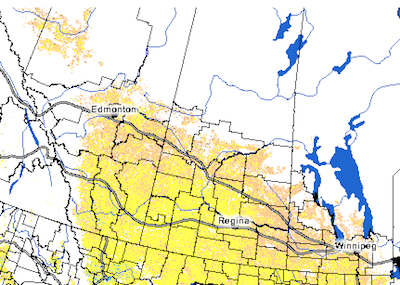
May 27, 2014 Map of the weekThis map shows the difference in Normalized Difference Vegetation Index (NDVI) at 1-kilometer resolution as of May 19 to 25, 2014 compared to the
May 27, 2014 May 28 QuizThe questions for this week: 1. Flea beetles have been feeding on these cotyledons. What percentage of these leaves are considered defoliated? 2. Cutworm
May 27, 2014 Top dress timingTop dressing fertilizer usually occurs after emergence, often as a response to increased yield potential or as a remedy for noticeable deficiency symptoms. However,
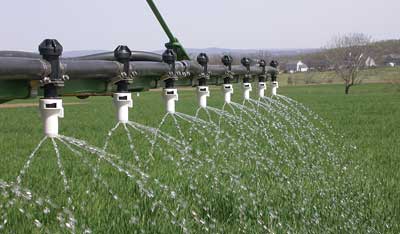
May 27, 2014 Top-dress lessons from fertigation studiesIn an Alberta study, fertigation was put on at three different stages — 5-leaf, bolting, and flowering — and then compared to plots where
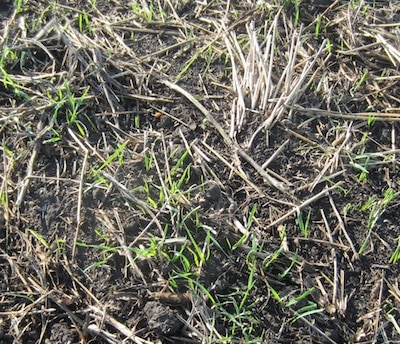
May 27, 2014 Biggest loss from weeds emerging before canolaIf a burnoff didn’t get done or missed key yield robbing early season weeds such as quackgrass and dandelion, then control has to be
May 27, 2014 Crop insurance deadlines for canolaManitoba and eastern Saskatchewan, in general, have a lower percentage of canola seeded than other parts of the prairie. Canola seeded June 5 or
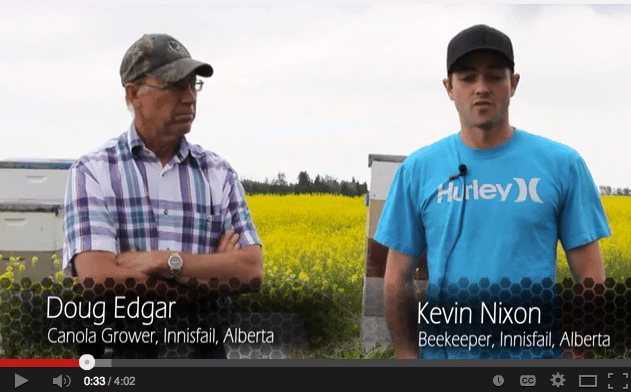
May 27, 2014 Bees and canola: A sweet relationshipThe Canola Council of Canada has produced four videos showing how beekeepers and canola growers can work together. Click the image above to see
May 22, 2014 Four the weekCarpet of weeds. It seems like they’re all emerging at once, as shown in this photo from Anastasia Kubinec with MAFRD. Early control significantly
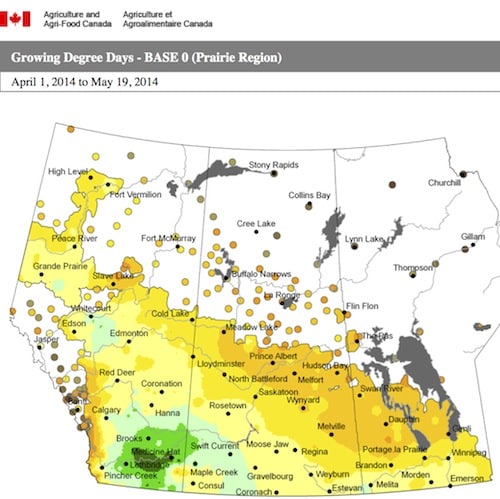
May 22, 2014 Map of the weekThe AAFC map above shows accumulated growing degree days (GDDs) as of May 19. Click here to create your own AAFC weather maps.
May 22, 2014 May 22 QuizThree questions: 1. Neil Harker, research scientist with AAFC in Lacombe, Alberta, says to provide “high yield protection” weed control should ideally occur before
May 22, 2014 Missed pre-seed? In-crop must be earlyMore growers may have skipped the pre-seed burnoff this year — given that weed emergence was delayed with the cool start to spring and
May 22, 2014 TSW just one factor in plant populationWith an average seeding rate of 5 lb./ac., an average thousand seed weight (TSW) of 5 grams, and 50% seed survival rate, the result