August 17, 2011 Effect of cooler temperatures on canolaCooler overnight temperatures (in the neighborhood) of 1 to 2 C occurred overnight Monday into Tuesday in parts of Alberta. These cooler temperatures will
August 17, 2011 How long from 30 to 50% seed colour changeSeed colour change is an indication of moisture dry down. The following is an estimate of canola seed dry down rates during ripening based
August 17, 2011 What if frost does happen?As crops near maturity, the risk of frost is watched closely especially this year with late crops and late stages within fields. If a
August 17, 2011 Disease UpdateRelatively low levels of sclerotinia infection can be found in most areas except in heavy and late maturing crops in northwest Saskatchewan where disease
August 17, 2011 Keep malathion out of canola binsMalathion CANNOT be used to treat bins where canola will be stored or to treat canola as it goes in to storage. These applications
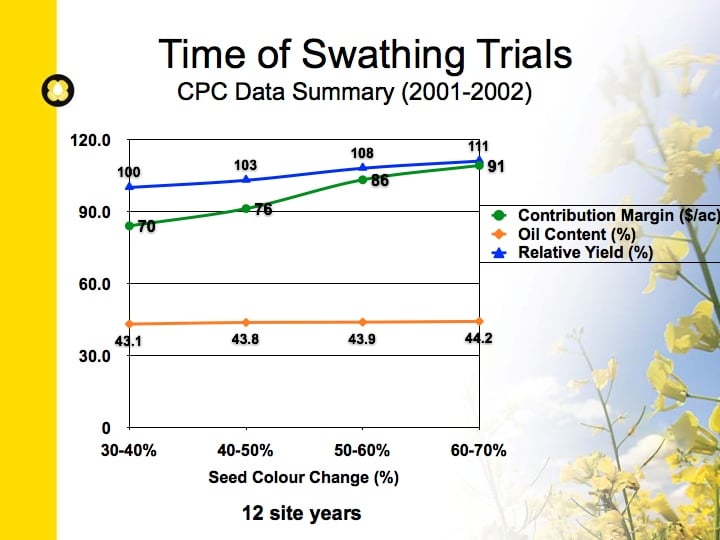
August 17, 2011 Tips to time swathingSwathing is about to become general in Manitoba and proper timing is tricky in parts of Saskatchewan and Alberta because of variable staging. The
August 10, 2011 Issues of the weekInsects are the hottest topic this week, with managing uneven maturity at swathing and harvest a close second. Before spraying those insects, make sure
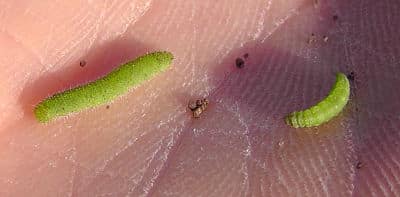
August 10, 2011 Which worm is it: bertha, diamondback or cabbage?Before spraying, make sure the worms feeding on your canola are actually the species you think they are. Bertha armyworm, diamondback moth larvae and
August 10, 2011 Tips to control multiple insect species at onceEconomic spray thresholds are calculated based on individual species. We don’t have scientific evidence to combine thresholds, but where an “additive” effect of multiple
August 10, 2011 How to sweep net properlyThresholds for lygus bugs and cabbage seedpod weevil, for example, are based on a specific sweep net technique. If you’re not doing a complete
August 10, 2011 When to swath multi-branched canolaThe ideal time to swath for yield and quality is when 50-60% of seeds on the main stem are turning color. At this stage,
August 10, 2011 Apply pre-harvest glyphosate only after seed moisture drops below 30%Growers considering a pre-harvest glyphosate cannot apply it to canola (RR or non-RR) until seed moisture drops to 30% or lower. This roughly coincides