February 7, 2013 Blackleg management: FarmTech messageKeys to blackleg management: 1. Assess your risk and avoid planting into a high risk situation. 2. Add diversity to your operation by rotating
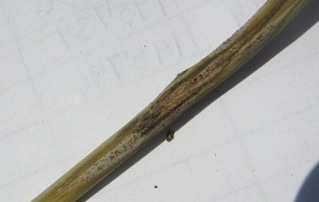
September 6, 2012 How to ID blacklegHigh levels of blackleg have been found in some canola fields this year. Quite likely blackleg was present the last time canola was grown
August 29, 2012 Diseases to look for while harvest scoutingPre-harvest is a good time to scout for disease severity. The photo above shows severe sclerotinia infection. This article includes sclerotinia and various other
August 22, 2012 Pre-harvest scouting for diseasePre-harvest is a good time to scout for disease severity. Fields with lots of diseased plants may also be poorer candidates for straight cutting
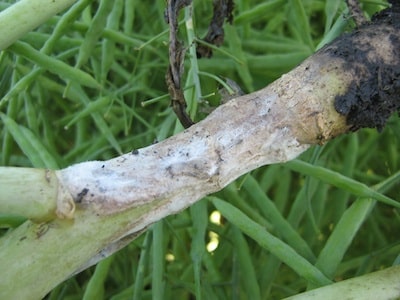
August 1, 2012 How to tell blackleg from sclerotinia stem rotSome regions are reporting higher rates of blackleg (shown above) and most regions are seeing sclerotinia stem rot damage. Fungicide is not effective at
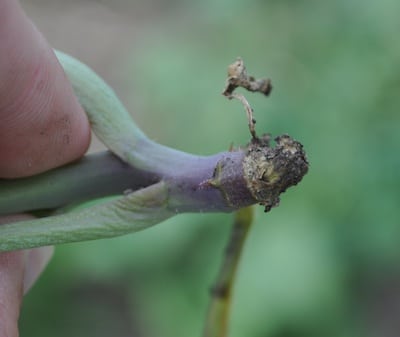
July 25, 2012 Disease update: Blackleg, sclerotinia, foot rot, clubrootSclerotinia could be bad this year but the window to apply fungicide has closed for most crops. Rhizoctonia foot rot, shown above, may explain
July 11, 2012 Blackleg heavy in parts of ManitobaGrowers are encouraged to check maturing crop for blackleg infection. It’s too late for fungicide to provide any benefit, but checking now can help
June 13, 2012 Disease watch: Blackleg and wirestemEarly blackleg infection — from the cotyledon to 3-4 leaf stages — leads to the greatest yield loss. If growers see blackleg lesions on
August 10, 2011 Is that sclerotinia or blackleg?Growers seeing stem lesions or pre-mature ripening should take a closer to identify the cause. There is a good chance it’s sclerotinia. But it