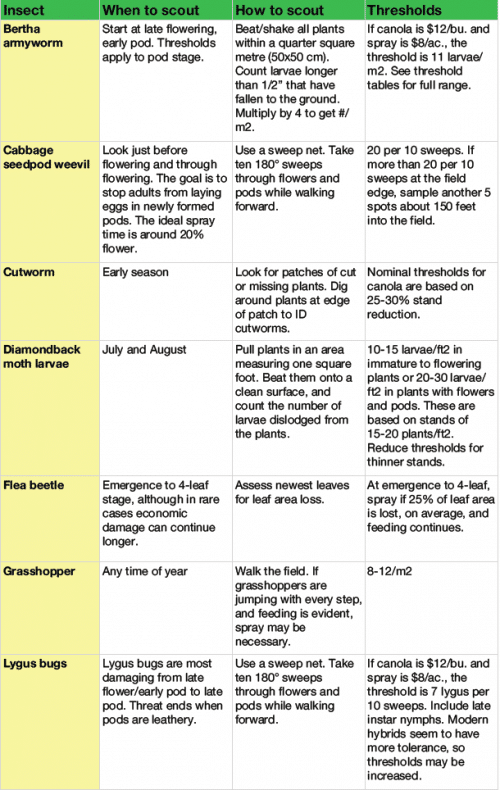
July 24, 2013 Top 10 things to consider when scouting for insects3. Record what you find. With detailed records, including insects found in each field, insect numbers, what they’re feeding on, time of day, temperature
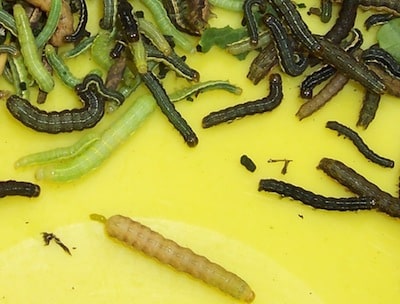
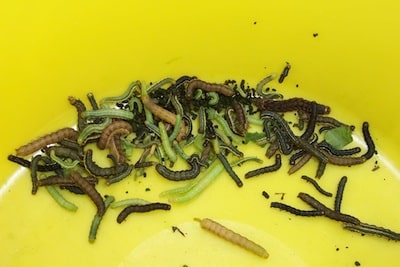
July 24, 2013 Insect update — Bertha armyworm, thripsThrips damage shows up in some fields. Bertha armyworms are the bigger issue, with adult counts continuing to build and many areas now at
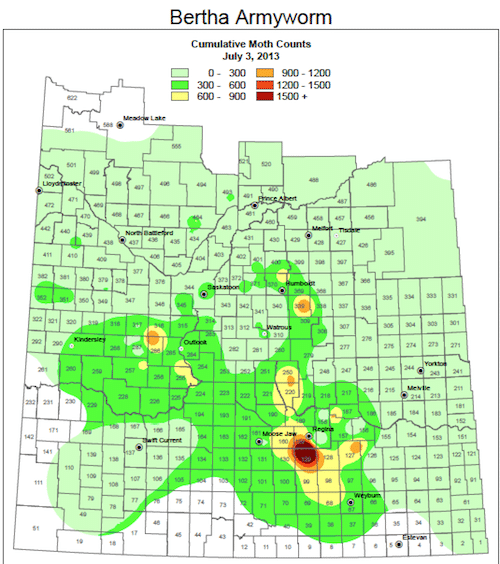
July 17, 2013 Insect update: bertha counts videoBertha armyworm moth counts continue to accumulate across the Prairies. Many areas are now at moderate to high risk, and adult numbers will continue
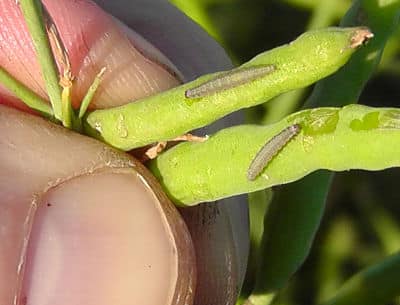
July 17, 2013 Bertha armyworm scouting tips—Go out in early morning or late evening when larvae are mostly active. —Mark out an area a quarter-metre square (50 cm by 50
July 10, 2013 Insect updateBertha armyworm adult trap counts suggest low to medium risk in most areas this year, with a couple higher risk hot spots in Saskatchewan
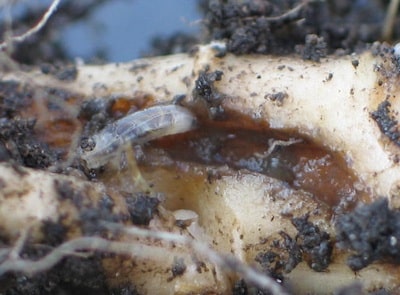
July 10, 2013 Root maggots and diseaseRoot maggots and root disease often show up together in the same field. Root maggots are white and up to 10 mm (half an
July 4, 2013 Diamondback moth scouting tipsThe most accurate method to estimate diamondback moth population density in canola is to count larvae in several locations throughout the field, and determine
July 4, 2013 Heat blast and 6 other causes for missing podsAs canola starts to move from flowering and into pod formation, growers will often notice blanks up the raceme where pods did not form.
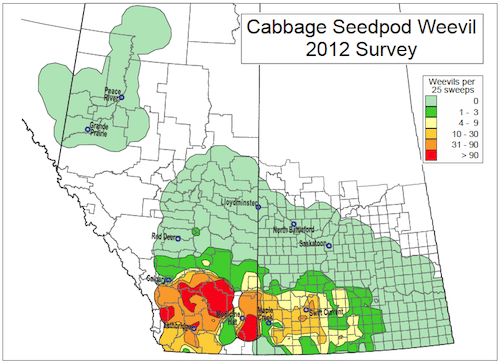
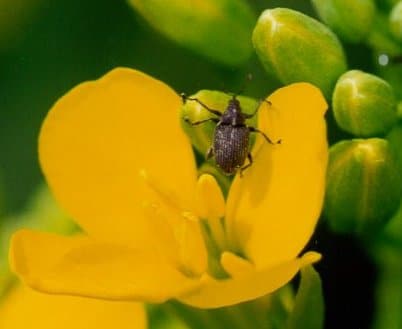
July 4, 2013 Cabbage seedpod weevil: Spray decision tipsCabbage seedpod weevil numbers are high in some regions of southern Alberta and southwestern Saskatchewan. The map shows CSPW reach for 2012. Growers and
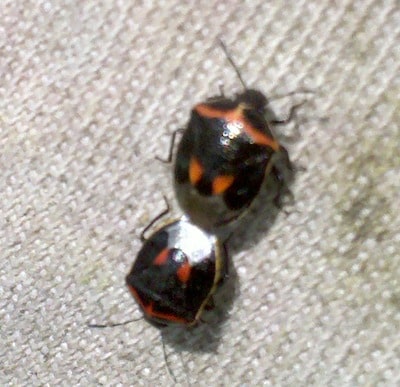
July 4, 2013 Weevils and lygus feeding together. Threshold?Many canola fields have a combination of insects feeding on the crop. An “additive” effect is possible when more than one species are feeding
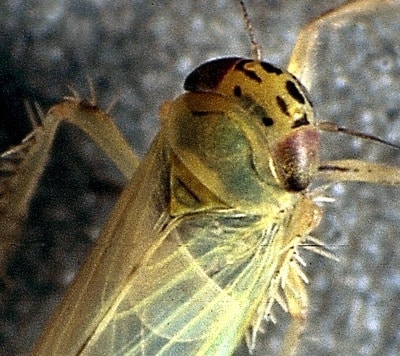
July 4, 2013 Leafhoppers buildingLeafhopper populations are building, which could increase the risk for aster yellows. Even so, there is not really a good case for spraying for
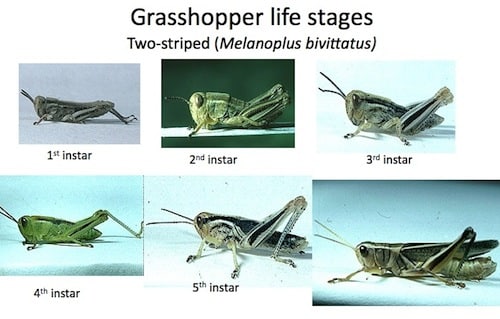
June 19, 2013 Insect update: Cutworms, flea beetles, CSPW, grasshoppersCutworms are spotty but keep scouting. Flea beetles may need to be controlled past the 4-leaf stage in some extreme cases this year. Cabbage