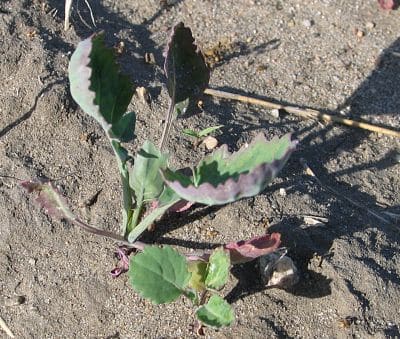
July 23, 2014 How late can you top dress?Sulphur and nitrogen deficiencies are showing up in some canola crops. The crop may not have received enough fertilizer to begin with, especially if
July 3, 2014 Top dress — yes or no?Two potential top dress situations are showing up in canola fields across the Prairies this week: 1. Excess moisture and poor nutrient availability. 2.
May 27, 2014 Top dress timingTop dressing fertilizer usually occurs after emergence, often as a response to increased yield potential or as a remedy for noticeable deficiency symptoms. However,
May 14, 2014 More moisture, more nutrient, more yieldGood soil moisture may encourage some growers to increase planned nutrient rates to capture an increase in yield potential. However, before increasing fertilizer rates,
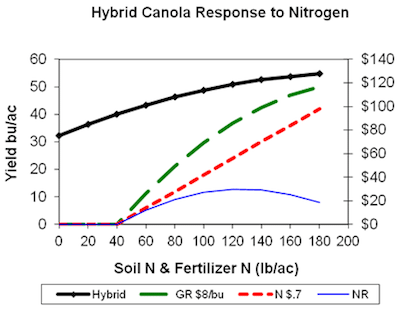
April 3, 2014 Nitrogen economics: Offside at the blue lineThis figure show the yield response of hybrid canola to applied and soil nitrogen. The blue line is what matters when assessing the return
March 5, 2014 Make the most of your fertilizer investmentThe 4 Rs, as described by the Canadian Fertilizer Institute and other crop nutrition organizations, are the right fertilizer source at the right rate,
July 4, 2013 Top-dressing at early flowerThe ideal time for a sulphur top up is any time before flowering, but a top up at early flowering may pay off if
June 19, 2013 Top dress: Identify N and S deficiencyGrowers who used elemental sulphur as their only sulphur source may see deficiencies in this year’s crop. Elemental sulphur will not be available when
June 12, 2013 When does top-dress fertilizer make sense?Click here for more information on products, rates and timing for best results from a fertilizer top-dress. This article has just been updated. If
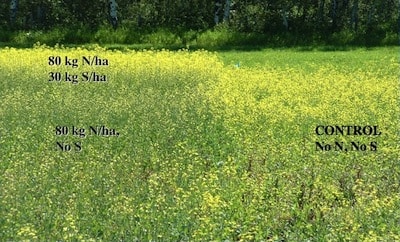
April 4, 2013 N does bad things when S is missingWhen fields are sulphur deficient, canola that receives only nitrogen fertilizer (front left in photo) can yield less than canola that receives no fertilizer
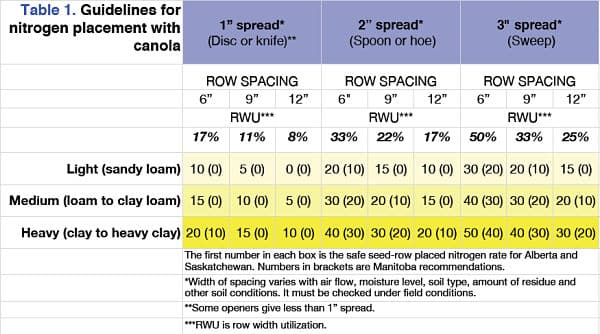
May 18, 2011 Safe rates of seed-placed nitrogenSafe rates of seed placed fertilizer depend on seedbed moisture conditions, soil type, row-width utilization, and nitrogen source. For example, the safe rate of