It may be tempting to try other products, but these products are not registered. The whole point of controlling volunteer canola and early weeds is to give the canola crop a head start. But if unregistered herbicides are setting back the canola crop and thinning the stand, the whole purpose of a pre-seed burnoff is compromised.
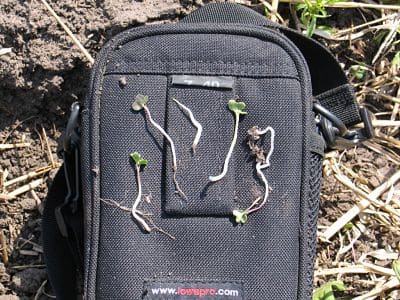
Thin stands often better than reseeding
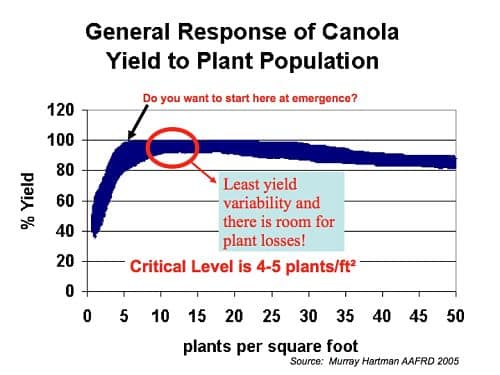
A thin stand at the end of May has better yield and quality potential than the alternative, which is reseeding. The key is to protect those few plants. Thresholds for everything are lower with a thin stand.
Safe rates of seed-placed nitrogen
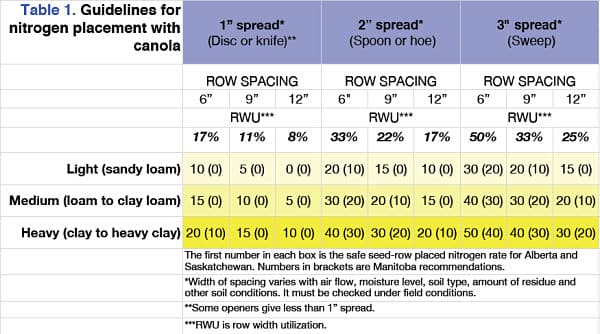
Safe rates of seed placed fertilizer depend on seedbed moisture conditions, soil type, row-width utilization, and nitrogen source. For example, the safe rate of seed-placed nitrogen is only 10 pounds of actual nitrogen per acre when using a 1” knife on 9” spacing and seeding into moist, medium soils.
Try the drill before broadcast seeding
Given the importance of a good seed bed for canola, it may be worth waiting an extra day or two for fields to dry out some more instead of rushing to seed canola into or onto mud. Try the drill first to assess the seed placement situation before choosing the broadcast option — which can be especially risky on no-till fields with high residue.
Consider split fertilizer when soggy seeding
Growers seeding into less than ideal conditions or using less than ideal seeding equipment — broadcast, for example — may want to lower their fertilizer rates at seeding then top up if a good stand emerges and if growing conditions improve.
Spray weeds now, even if seeding is delayed
Early weed control is best. Even if growers don’t expect to seed for 10 days or more, they may want to consider a pre-seed burnoff now (as long as fields can support a sprayer) to get weeds at smaller stages.
Consider herbicide residue before switching canola fields
Growers switching crop plans this spring should consider their herbicide use last year, especially last fall, before seeding canola on any fields not originally planned for canola. Canola is sensitive to many residual herbicides, and herbicide carryover can be higher than expected when fields are saturated.
Tips to help canola mature faster
Before growers take steps to encourage earlier maturity (some of which may hamper yield potential), they should first calculate whether these measures are necessary. Canola seeded any time in May has a good chance of reaching maturity. If growers decide that measures to hasten maturity are warranted, here are steps to consider:
Start insect scouting right after seeding
Once crops are seeded, check fields on a twice weekly basis for flea beetles and cutworms. Canola in the western Prairie will emerge quickly, and highs for the region are in the high teens for the coming week. This will promote more insect activity.
Estimating flea beetle damage in canola
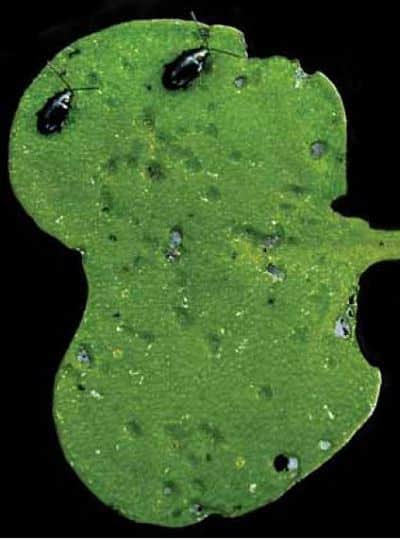
Flea beetles are the most chronically damaging insect pest of canola in western Canada. Direct losses to oilseed production average 8-10% of the annual crop yield, and in outbreak years flea beetles can cause hundred of millions of dollars damage.The nominal economic threshold for flea beetles in canola crops in Canada is an average defoliation level of 25% or more of the seedling leaf area. Images and descriptions in the following article will help growers determine if a foliar insecticide is necessary to protect their canola from flea beetles.