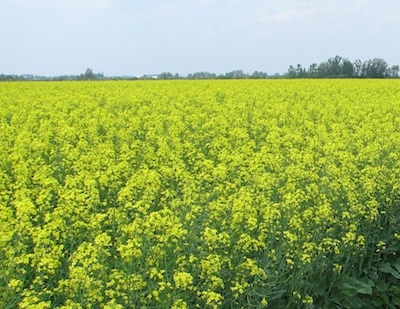
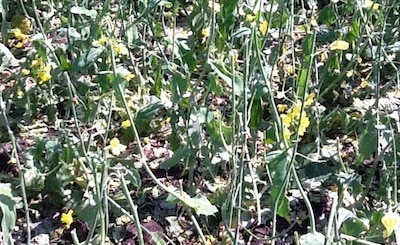
July 18, 2012 When would late applications work for sclerotinia?Fungicide labels allow for spray up to 50% flower (some are up to 30%). Spraying this late may work well if the crop seems
July 18, 2012 Pre-harvest interval close for some productsKeep in mind pre-harvest intervals for fungicides and insecticides now that many early seeded crops are less than a month from swathing. Pre-harvest intervals
July 18, 2012 Discolored petalsCanola petals can turn orange in response to stress, usually heat stress. There is nothing that can be done about heat damage. White or
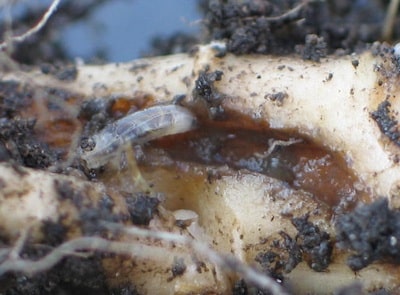
July 18, 2012 Root maggot, root disease in back to back canolaAn AAFC study has shown very clearly that with continuous canola, there is a statistically significant increase in crop damage by root maggots. No
July 18, 2012 Sulphur deficiencies after extended rainsFields that have received lots of rain may be showing sulphur deficiency. Rain leaches sulphur lower in the soil profile. Plants can usually access
July 18, 2012 Swathing begins for earliest canolaIt’s mid July, and some very early canola is already being swathed in parts of Manitoba. Waiting until 60% seed colour change on the
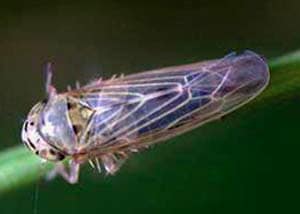
July 11, 2012 Issues of the weekMore aster leafhoppers are carrying phytoplasm this year, so that could mean a jump in aster yellows. Sclerotinia stem rot risk may still be
July 11, 2012 Heat alone will not eliminate sclerotinia stem rot riskWhen it comes to the sclerotinia stem rot risk, moisture has a much larger influence than temperatures. Infection can be high in hot weather
July 11, 2012 Rescue treatments for heat, hailHeat — Foliar boron applied at flowering has been tested on canola in Ontario to as a way to prevent blossom blast during summer
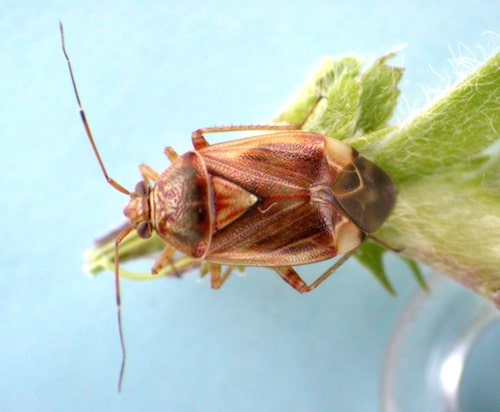
July 11, 2012 Insects: Canola can handle some lygus feedingOur current economic threshold tables for lygus in canola may be too low when applied to current canola production systems across the Prairies. If
July 11, 2012 Insects: Leafhoppers, berthas, blister beetles, cutwormsLeafhoppers are more plentiful and carrying more aster yellows phytoplasm this year, but spraying is rarely effective. Bertha counts are starting to spike in
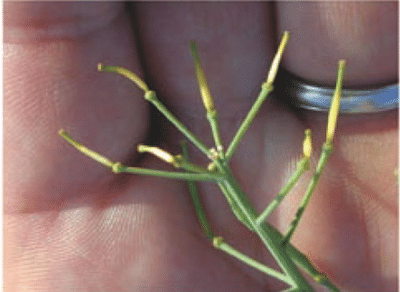
July 11, 2012 Missing pods can have many causesAny stress can inhibit proper fertilization of the flowers. Common stresses included heat, drought, excess moisture, insects, herbicide damage, and nutrient deficiency. In many