It is not surprising that sclerotinia stem rot disease levels differ from field to field even if fields are in close proximity. Sclerotinia disease level is very dependent on the microclimate within the field. Moist growing conditions (ie. frequent rainfall or high humidity or heavy dews) promote disease development but factors that result in moisture-laden canopies can
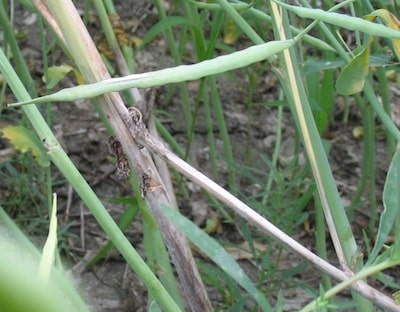
Why more sclerotinia stem rot this year?
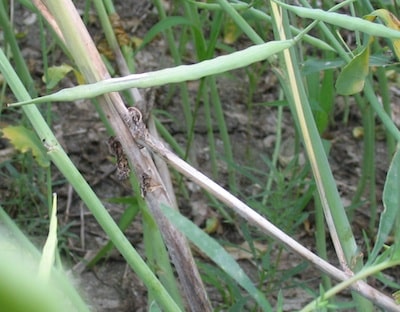
Moisture before and during and following flowering was the biggest factor driving up sclerotinia stem rot infection this year. Moisture as rain or high humidity or dew through the period from two weeks before flowering through early podding has increased the sclerotinia risk considerably, no matter the rotation history of the field. Most regions had these conditions this year. Fungicide use will reduce but not completely eliminate the disease when pressure is high. Rotation has limited benefit for sclerotinia stem rot management.
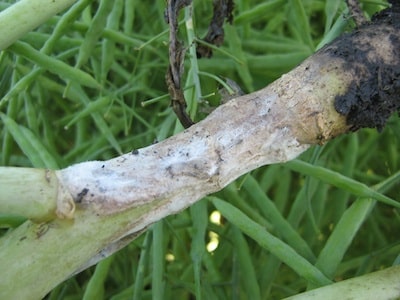
How to tell blackleg from sclerotinia stem rot
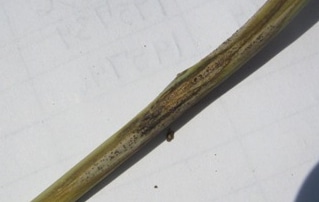
Some regions are reporting higher rates of blackleg (shown above) and most regions are seeing sclerotinia stem rot damage. Fungicide is not effective at this stage of the season, but the weeks leading up to harvest are a good time to scout. Its important to know which disease is present in order to plan rotations and varieties for next year. Blackleg lesions are greyish with black picnidia specks. Sclerotinia stem rot will leave stems brittle, and lesions will not have black picnidia specks.
Sclerotinia and swath timing
In fields badly infected with sclerotinia, swath when the healthiest plants are ready. These plants will provide most of the yield. Swathing early will not preserve seeds in badly infected plants — those seeds are unlikely to mature no matter when you swath.
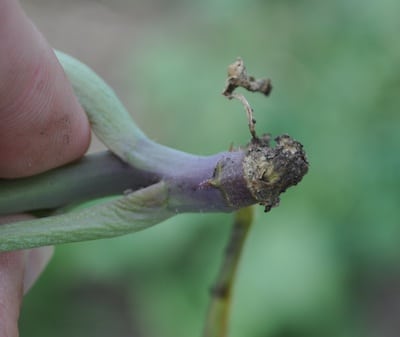
Disease update: Blackleg, sclerotinia, foot rot, clubroot
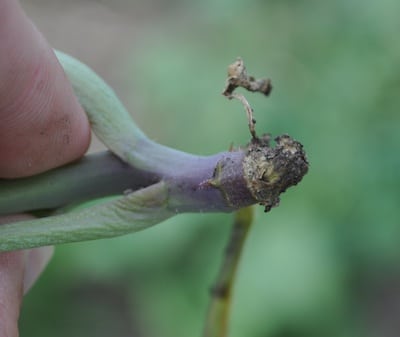
Sclerotinia could be bad this year but the window to apply fungicide has closed for most crops. Rhizoctonia foot rot, shown above, may explain some toppling plants. The weeks leading up to harvest are a good time to scout for blackleg and clubroot.
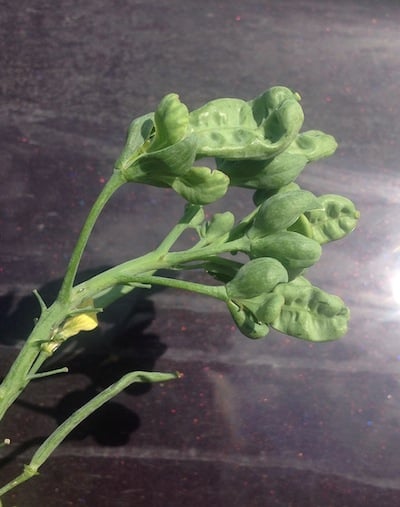
Lots of aster yellows
Fields all across the Prairies are reporting aster yellows. The phytoplasma infection causes misshapen pods and flower buds. Most fields don’t go above 1% infected plants, however, some fields are reported this year with rates at 5% to 8% of plants infected. A 10% infection rate results in 3% to 7% misshapen seeds or no seeds at all.
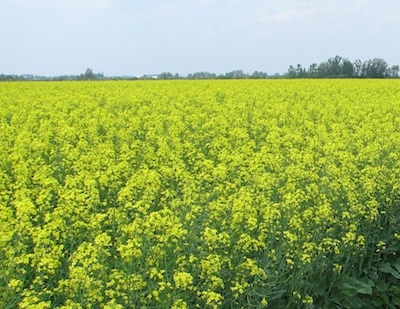
When would late applications work for sclerotinia?
Fungicide labels allow for spray up to 50% flower (some are up to 30%). Spraying this late may work well if the crop seems to be flowering for a long time, or the crop is at various stages — either scenario leading to an extended time at 50% flower. Extended flowering does extend the vulnerable period for sclerotinia stem rot infection. Also if conditions were not conducive to disease at early flower but moisture has returned and the risk is elevated, spraying at the end of the window may be effective — especially if there is a lot of branching or recovery from heat or drought stress which could extend flowering.
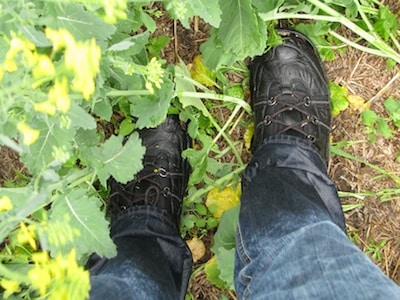
Heat alone will not eliminate sclerotinia stem rot risk
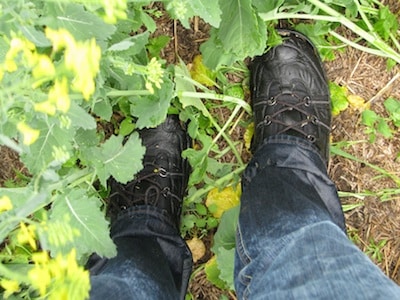
When it comes to the sclerotinia stem rot risk, moisture has a much larger influence than temperatures. Infection can be high in hot weather as long as the moisture is there. Moisture can come from rain, relative humidity in the high 80s, or morning dew.
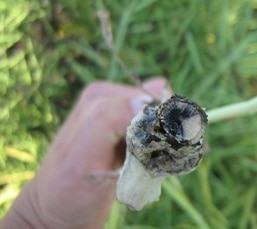
Blackleg heavy in parts of Manitoba
Growers are encouraged to check maturing crop for blackleg infection. It’s too late for fungicide to provide any benefit, but checking now can help plan for next year. Try to figure out why blackleg is worse than usual. It could be tight rotation. It could be use of a less resistant variety. Take steps to avoid that situation next time.

Sclerotinia stem rot: When to split-apply fungicide?
Split applications, which are approved for some fungicides, may be worthwhile in some cases. For instance, if the sclerotinia stem rot risk is questionable at early bloom, growers could use a split rate and then wait to see if the second application is needed. Another benefit to the split is if the crop is uneven and the flowering period could be longer than usual.