
Thin crops and high winds can lead to heavy shattering losses if swaths start to roll. Here are tips to reduce potential losses from swaths blowing:
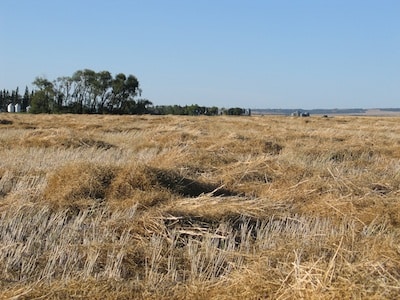
Thin crops and high winds can lead to heavy shattering losses if swaths start to roll. Here are tips to reduce potential losses from swaths blowing:
The ideal canola crop for straight combining is thick and well-knitted with even maturity. However, a case can be made for straight combining very thin crops with uneven maturity….
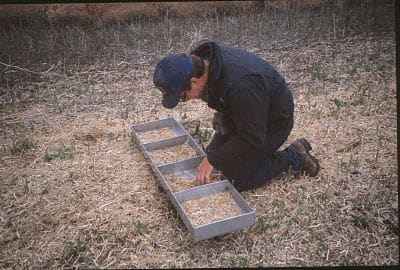
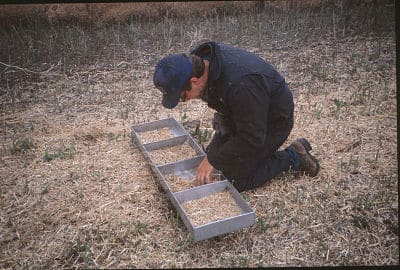
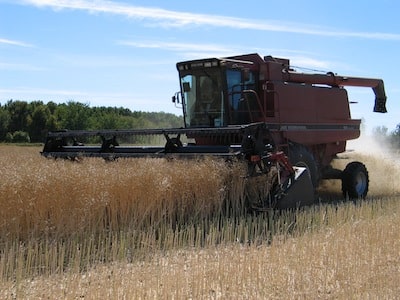
Canola growers can lose up to 5 bushels or more per acre if the combine isn’t adjusted properly. Here are tips to limit those losses.
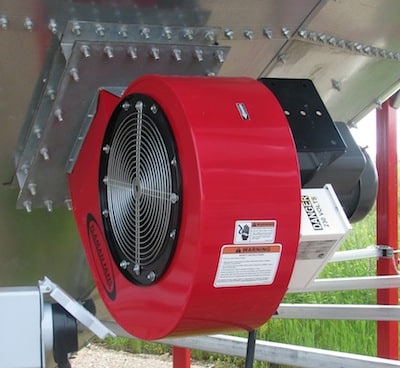
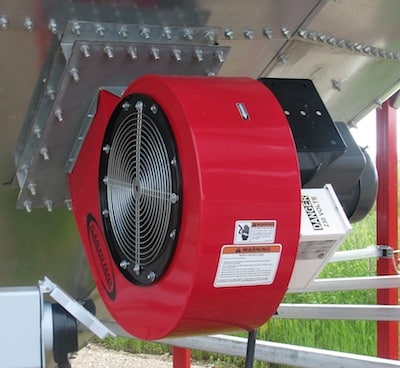
Canola combined this week could go in the bin very hot. Canola storage experts recommend that hot canola be put on aeration for cooling, even if it’s dry. There will still be convection currents and some moisture movement within the bin, which can concentrate moisture at the bottom of the central core — creating a possible start point for heating.

Here are a few of them. Click “Read more” for the rest…
8. Harvest as soon as possible after the seed falls below two percent green content and is dry enough to store. Delayed harvest increases shattering losses.
9. Consider your equipment options and take care to optimize header reel and knife position, speed settings, and anything else that may reduce shattering losses.
10. Aerate straight-combined canola for at least a day or two after combining. Even if it comes off dry, green or wet plant material often makes its way into the sample.

The ideal swath timing is when 60% of seeds on the main stem are showing some colour change from green to brown. Colour change is considered any amount of yellowing or browning on the seed. To determine ideal swath timing, fields need to be walked and pods need to be cracked. Pod colour change is not an accurate indicator or seed colour change. The swath decision becomes more difficult in crops with plants at multiple stages of growth….
With day time highs in the 30s or high 20s, growers should wait for cooler days before swathing the crop, if possible. Cutting canola in hot conditions will lead to rapid dry down and desiccation, which increases seed shrinkage — and leads to yield loss.
Hail damage can cause crops to mature unevenly. Judging when to swath multi-stage crops can be tricky. If the field has distinct late and early parts, the two parts could be swathed at different times. If not, then make the swath decision based on which plants are likely to contribute most to yield.
Glyphosate is registered for pre-harvest perennial weed control in canola. Glyphosate is to be applied when the majority of seeds are yellow to brown in colour and seed moisture is less than 30%. Heat fits between glyphosate and Reglone on the speed of dry down spectrum. Reglone is a contact herbicide (only kills what it contacts) and is registered in canola to dry immature green material to facilitate harvest. Reglone shuts the plant down quickly and basically STOPS it from maturing, which can lock in high green seed levels if applied prematurely.

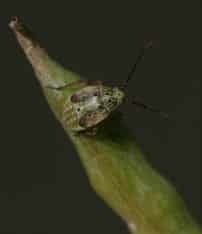
2. Less risk of green seed problems. Crops with uneven maturity can be difficult to manage at harvest. There may be uneven maturity within the field (between knolls and low spots) and within the plants (between main stem and side branches which is more critical in low density stands). Swathing too early can result in a significant proportion of green seeds that may not cure in the swath. The only way to clear green seeds in swath is to have moisture and most of western Canada does not need any more moisture. Waiting until the majority of the crop has reached 60% SCC on the main stem will reduce the risk of down grading. Canola swathing tips guide available here.
1. Higher yield. Research conducted by the Canola Council of Canada over approximately 28 site-years indicates that significant yield increases could be achieved by swathing at 60 to 70% SCC. Swathing at 60% SCC resulted in 8% more yield (which was equivalent to about 3 bushels/acre) than at 30 to 40% SCC, 12% more yield than at 10 to 20% SCC, and 19% more yield than swathing before 10% SCC.
Read more for the other eight.