
Delaying swathing while you wait for more plants to mature is generally positive for yield, unless soil moisture is inadequate to fill green seeds, or unless a season ending frost or snow could happen at any day.
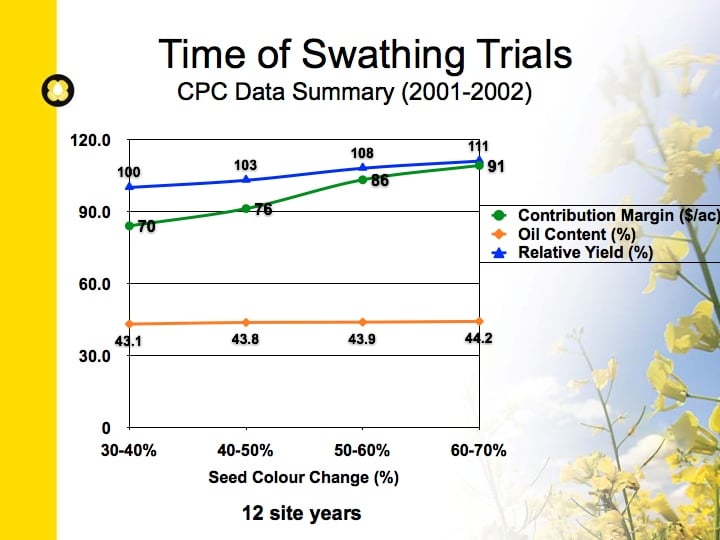
Delaying swathing while you wait for more plants to mature is generally positive for yield, unless soil moisture is inadequate to fill green seeds, or unless a season ending frost or snow could happen at any day.
Swath at the best time for the majority of the plants in the field with the least negative impact possible on the rest — the biggest yield with the least losses. Note that waiting, if the calendar allows, is often positive for yield. If late season hail damages pods, then these pods have a higher potential for shattering as they dry. Swathing early to save these pods may not be worthwhile if these pods represent only a small percentage of the yield potential of the crop.
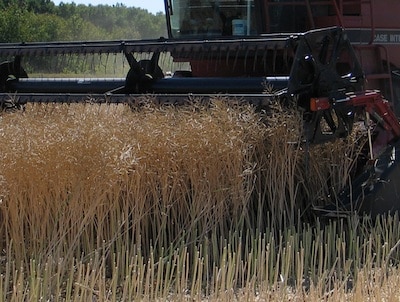
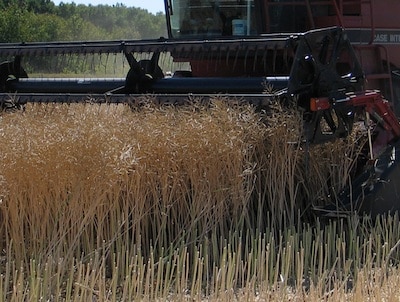
Growers straight combining canola for the first time may want to consider these tips: —Practice on a couple fields. —Choose fields that are well knitted to prevent whipping and shattering in the wind. —Be prepared to harvest as soon as green seed and seed moisture drop to acceptable levels, even if stalks are still green. And more…
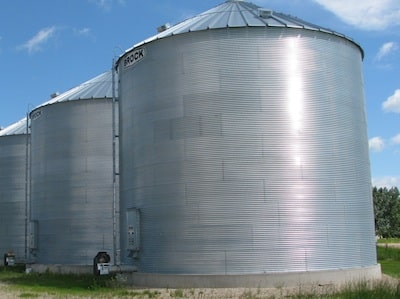
The higher the oil content of canola, the lower the moisture content required for safe long-term storage. Some research suggests that if canola at 40% oil can be stored safely at 8.5% moisture, then canola at 45% oil should be stored at 8% moisture. Growers can get an oil reading when they send sample to the CGC harvest samples program.
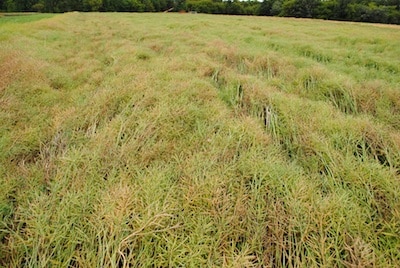
If infection rates are high, determine where most of the yield is. If it’s in the healthy plants, then make harvest decisions based on what’s best for the healthy plants. That means swathing at 50% to 60% seed colour change for ideal yield and quality. If most of the yield is in the infected plants, then earlier swathing — at 30% to 40% seed colour change — may be more appropriate.
Glyphosate is registered for pre-harvest perennial weed control in canola. Glyphosate is to be applied when the majority of seeds are yellow to brown in colour and seed moisture is less than 30%. If desiccation for direct harvesting is the primary goal then a true desiccant — Reglone — may be a better option.
Rather than focus on how many blank pods may be present, concentrate on yield assessment by examining the components that contribute to yield (ie. number of plants in a given area, number of pods per plant, number of seeds within the pods). The following equation can be used to estimate yield when seed size has a thousand kernel weight of 4.4 grams:
Yield estimate (bu/acre) =
Parts of central Alberta have canola fields that have been written off due to severe hail. However, a fair amount of plant growth remains. Canola silage may be one option. Canola silage (on a dry matter basis) averages 12 to 14% crude protein but can be as high as 16% or more. Total Digestible Nutrients TDN (energy) averages 55% to 60%. More information on canola silage as a feed source is
Combining of earliest canola fields is near, with the odd field already harvested in Manitoba where crops are most advanced. Remember that for safe, long-term storage, canola should be conditioned with aeration to less than 8% moisture and cooled to 15 C.
In fields badly infected with sclerotinia, swath when the healthiest plants are ready. These plants will provide most of the yield. Swathing early will not preserve seeds in badly infected plants — those seeds are unlikely to mature no matter when you swath.