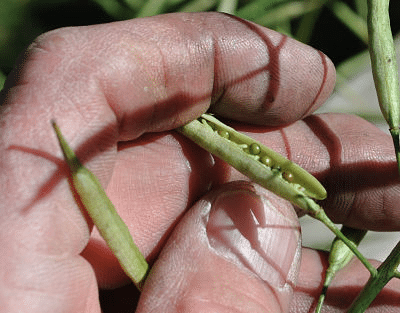
Canola can usually withstand a light frost, and immature crops are best left standing to finish. However, check anyway. The crop may look undamaged that morning but by lunch time, wilting, desiccation and pod splitting may begin. If you scout early and then not again, you may underestimate the damage and miss a chance to swath now to save some of the yield.
What to do with high-green canola
Canola needs to move back up to 20% moisture and temperatures need to be 15 C or warmer before enzymes to reduce chlorophyll will restart and function effectively. Growers with high green canola in the swath have time to wait, if they choose, to see if these necessary rains come along.
Weeds, green, heat increase storage risk
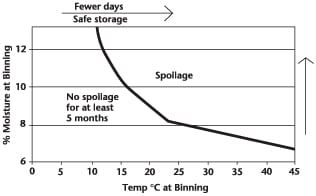
Weed seeds tend to contain more moisture than canola seeds, especially if they are green or immature. If these weed seeds congregate in pockets in the bin they can create localized hot spot for spoilage to begin — especially if that canola is also binned hot. Green canola seeds can also increase the storage risk, even if canola is dry and cool. Monitor closely.
Tips to reduce combine losses
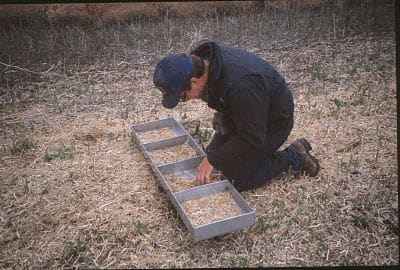
Canola growers can lose up to 5 bushels or more per acre if the combine isn’t adjusted properly. This article includes tips on how to measure combine losses. If losses are too high, growers can lower them by adjusting fan speed and sieves, for example, and by slowing down the whole combine operation.
Disease assessment at swathing
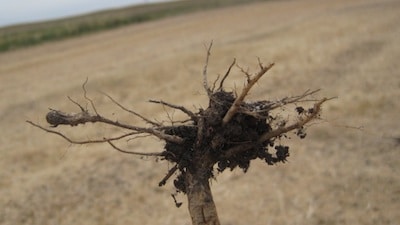
When doing their own disease surveys, growers may find it easier to check crops while swathing. Stop at five random spots in the field while swathing and check 20 standing plants at each spot. This will give you a good idea how much of the field actually had sclerotinia or blackleg or clubroot, for example.
Sprayed late, now what?
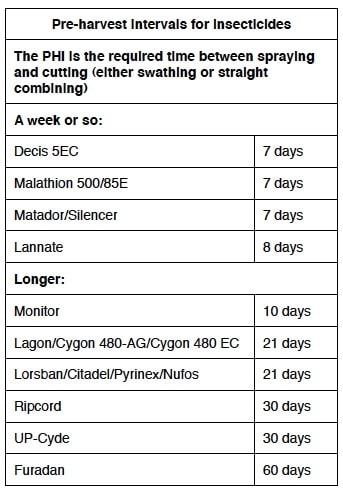
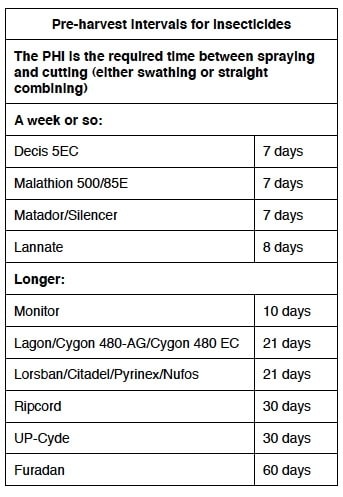
Many canola crops are maturing earlier than expected this year, in many cases due to hot weather. This has put some growers in a bind. They had sprayed insecticide expecting to be outside the pre-harvest interval (PHI) required between application and the planned cutting date, but now as the crop approaches swathing timing they realize that not enough time has passed. It is important that growers follow the PHI for all products, otherwise harvested seed could exceed pesticide residue limits for key markets. Samples from all grower deliveries are saved, so any infraction can be traced back. So what to do?
Dry canola should still be cooled
Even if canola is very dry, storage experts still recommend that hot canola be put on aeration for cooling. There will still be convection currents and some moisture movement within the bin, which can concentrate moisture at the bottom of the central core — creating a possible start point for heating.
Tips to reduce wind damage to swaths
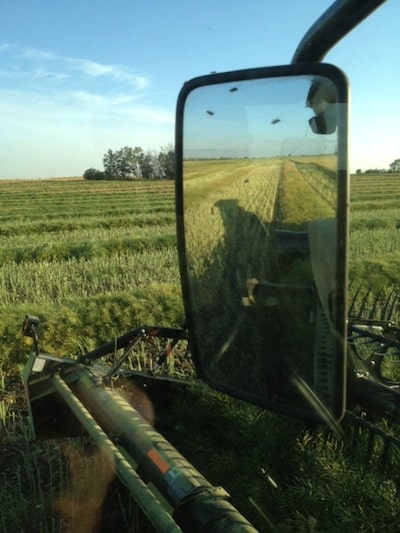
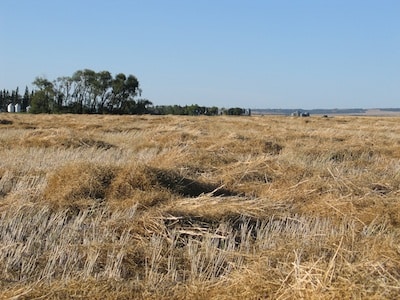
Thin crops and high winds can lead to heavy shattering losses if swaths start to roll. Here are tips to reduce potential losses from swaths blowing:
—Swath parallel to the typical prevailing winds in the area.
—Cut the plants as high as possible, just below the lowest pod.
—Using a properly adjusted swath roller, push down the swath so that the edges are nestled into the stubble. Because the swath will be on or close to the ground, curing and/or dry down time may take longer.
Alert: Must wait 21 days to cut after Lorsban application
Growers who are using Lorsban or the generics Citadel, Pyrinex and Nufos to control insects are advised to observe the pre-harvest Interval (PHI) for this product. The PHI for this product is a minimum of 21 days before direct combining or 21 days before swathing. Our canola industry relies on exports and countries that we export to have strict regulations on the types of trace residues they allow in canola. These residues are detectable and could be traced back to individual farms in parts per billion. That amounts to nine seeds in a super-B. Please protect the quality of your load and our canola exports by always following PHIs.