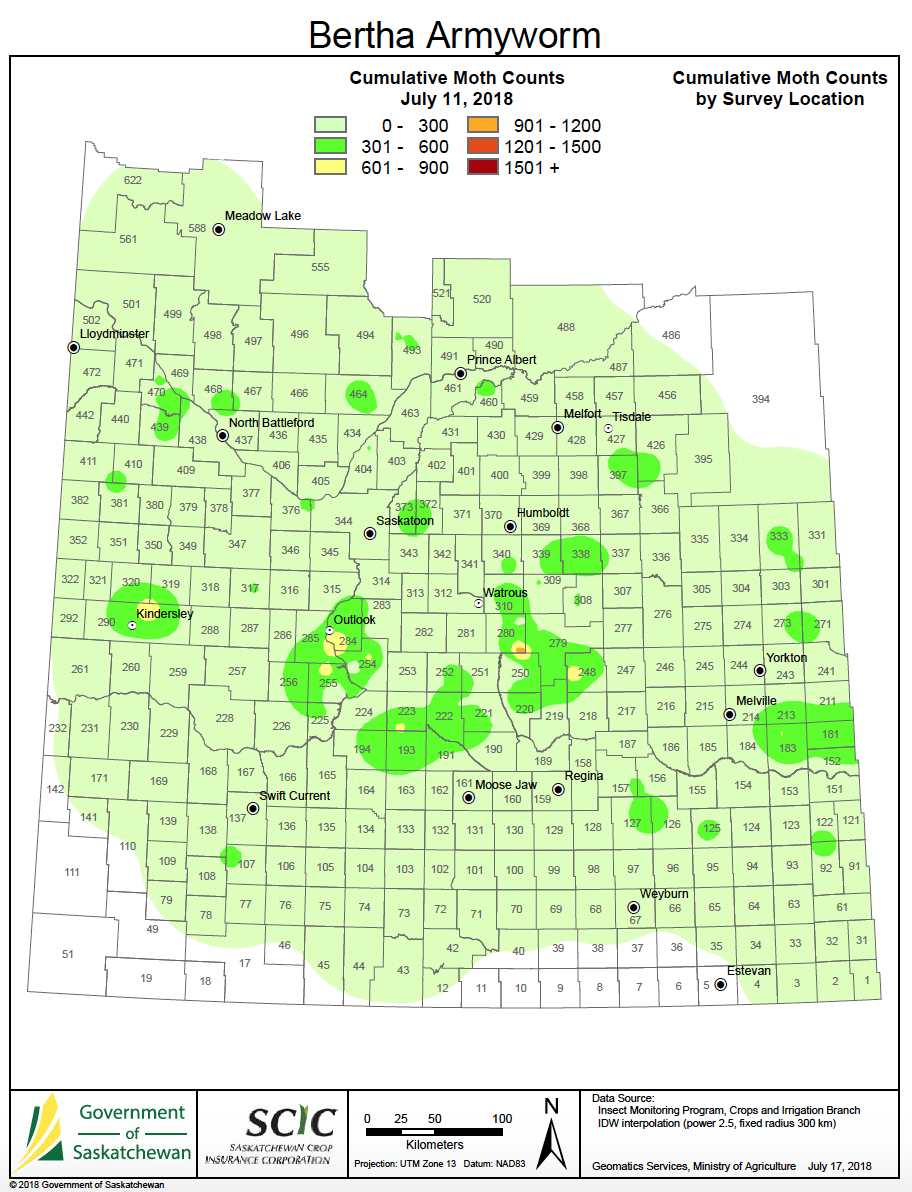
July 19, 2018 Map of the Week – Bertha armyworm countsA few hotspots with higher bertha armyworm moth counts are showing up in Alberta, Saskatchewan and Manitoba.
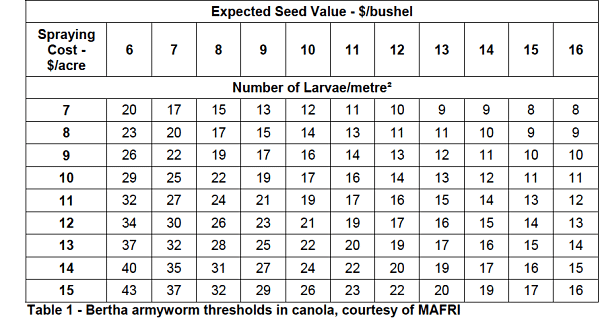
July 19, 2018 Bertha armyworm: ThresholdsThe economic threshold is the density of larvae where the economic value of the yield lost due to feeding equals the cost of control.
July 11, 2018 Insect update: Bertha, diamondback and weevil countsInsect trap counts are generally low across the Prairies, but bertha counts keep rising. Here are the latest provincial survey results.
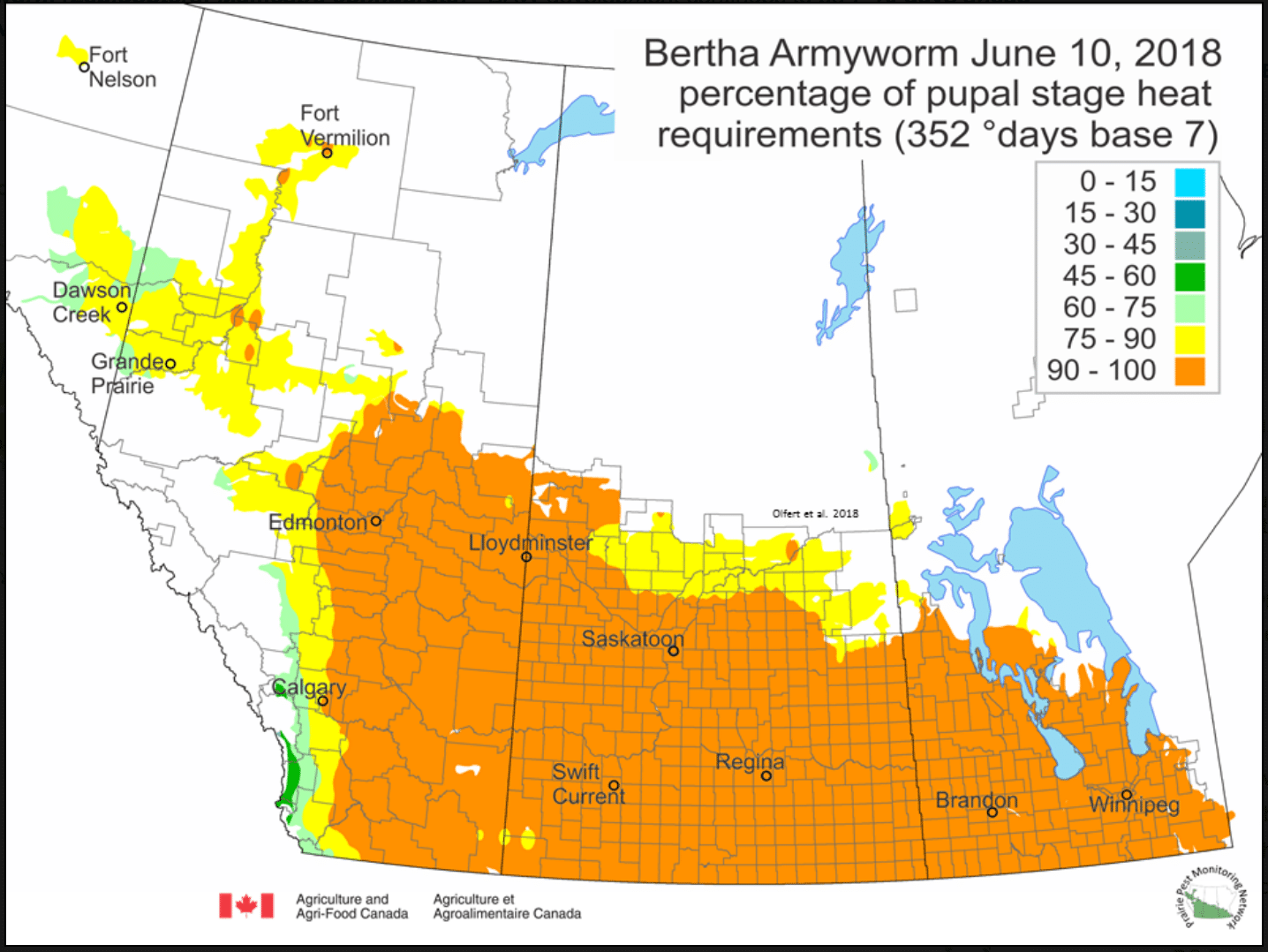
June 13, 2018 Map of the Week – Bertha armywormGrowing degree days across most of the Prairies have reached the threshold for adult bertha armyworm (moth) emergence from overwintering pupae. That is 7-10
January 17, 2018 Reader question: Do bertha armyworms in 2017 indicate higher risk for 2018?A reader from southeast of Saskatoon emailed this question: I had a field with bertha armyworms on the perimeter in 2017. Numbers were not
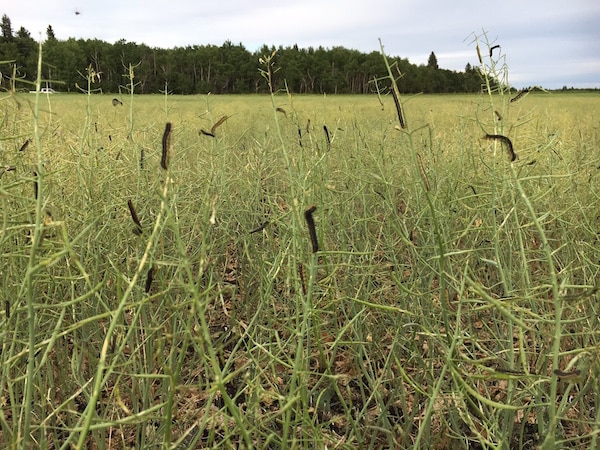
August 10, 2017 Bertha armyworm: Hot pockets, scouting, rainA heavily-infested field in western Manitoba (south of Riding Mountain National Park) generated a lot of interest on Twitter in the past week. It
August 2, 2017 Be on alert for bertha armywormsBertha armyworm adult moth counts were generally low across the Prairies in 2017. A few trap sites did enter the moderate risk level, but
August 10, 2016 Bertha armyworm: A few warm spotsWhile economic levels of damage have not been reported anywhere yet this year, individual fields could experience isolated high numbers.
July 27, 2016 Why so few insects this year?Pod-eating insects — including bertha armyworm, lygus and diamondback moth larvae — are at low levels in general in 2016. The biggest factors regulating
July 13, 2016 Insect update: Lygus, bertha, checkered white butterflyBerth armyworm moth counts are generally low (fewer than 300 per trap) across the Prairies, which means a reduced risk for worm damage over
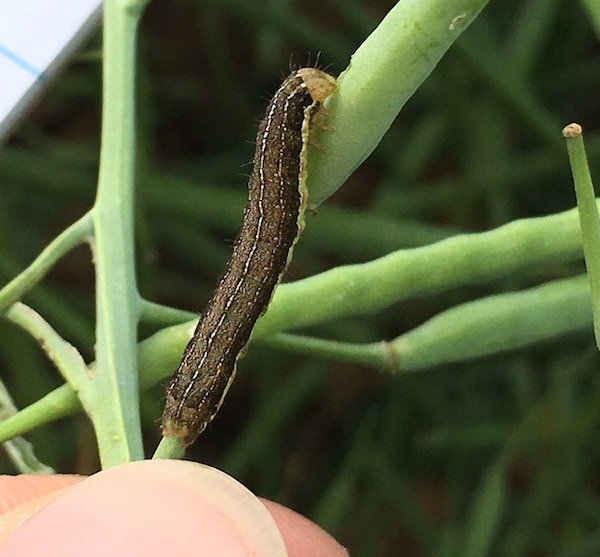
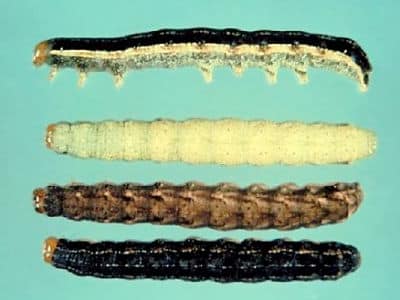
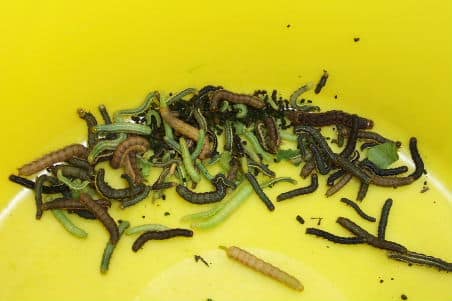
July 6, 2016 ID green worms accuratelyBefore spraying, make sure your canola is at the right stage to be damaged by the worms and that the worms are actually the
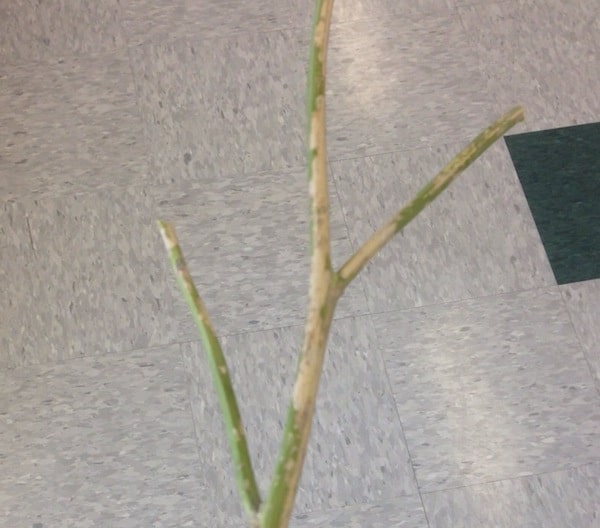
July 29, 2015 Insect update: Check to be sureDiamondback moth larvae and grasshoppers have been reported, but so far nothing of widespread significance. The photo shows what grasshoppers can do to a