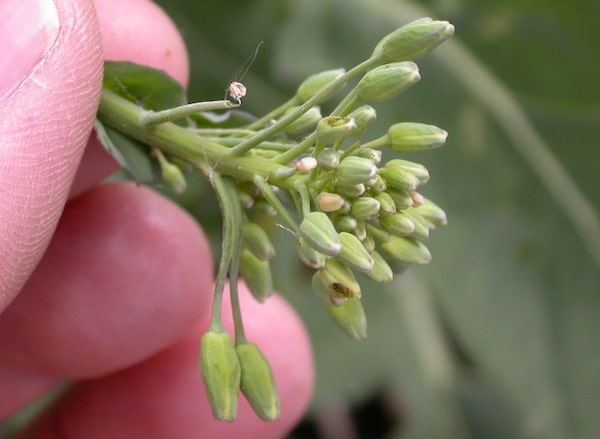
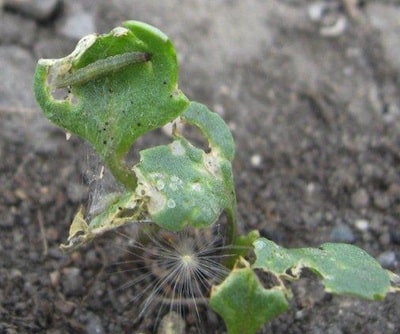
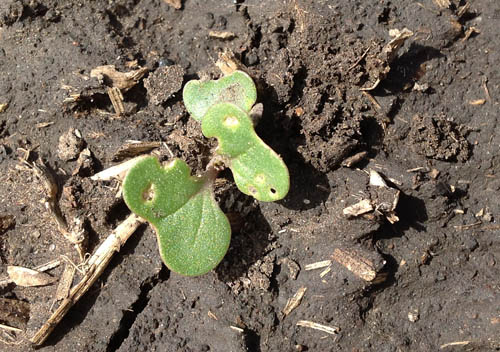
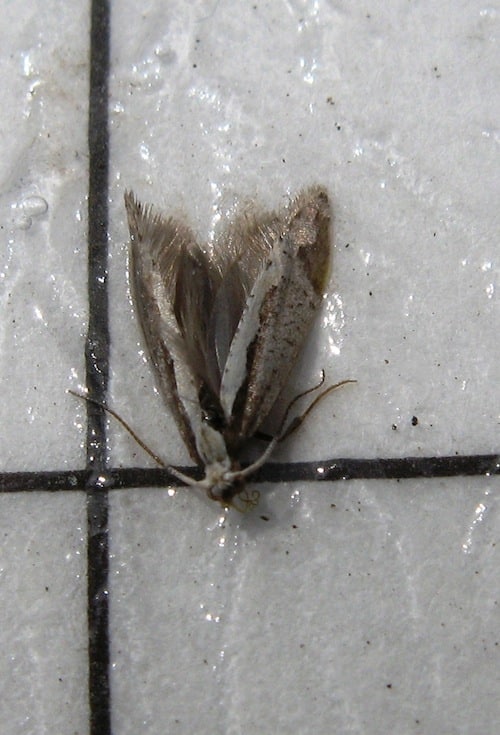
June 19, 2015 Assess the real cause of bud loss in pre-bolting canolaBud damage and insects are being found together in some canola fields, but that does not mean insects are the primary reason for the
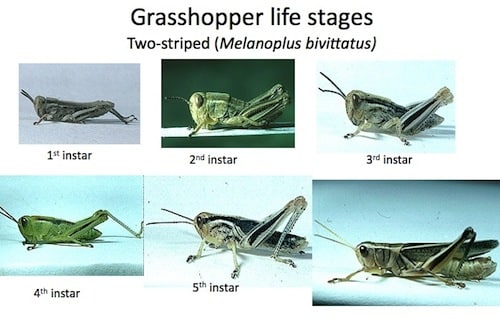
June 17, 2015 Insect update: Grasshopper, diamondback, lygus, CSPWGrasshoppers. If populations are significant and crop feeding has begun, a spray or bait application around field edges may be enough to reduce the
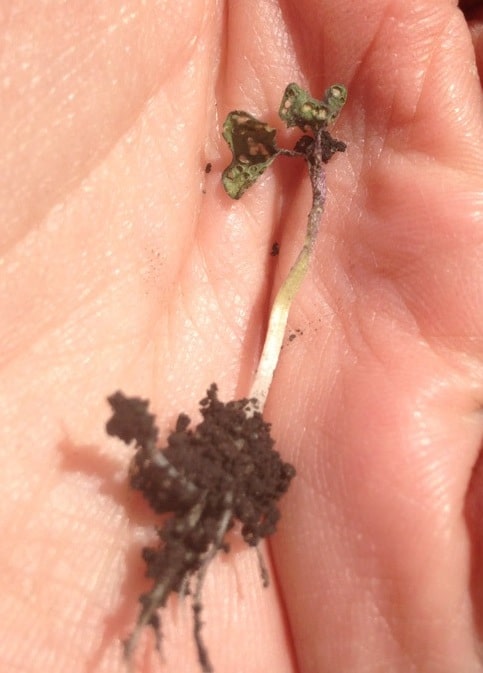
May 21, 2015 Insect update: Flea beetle thresholds and frostFlea beetle thresholds don’t change with frost, but frost may have changed the crop assessment situation. Here’s how….
July 30, 2014 Diamondback moth larvae — ThresholdsThresholds are 100-150 larvae per square metre in immature to flowering plants and 200-300 larvae per square metre (20-30 per square foot) in plants
July 31, 2013 Diamondback moth larvae scouting and thresholdsDiamondback moth larvae are showing up in canola fields. The most accurate method to estimate diamondback moth population density is to count larvae in
July 4, 2013 Diamondback moth scouting tipsThe most accurate method to estimate diamondback moth population density in canola is to count larvae in several locations throughout the field, and determine
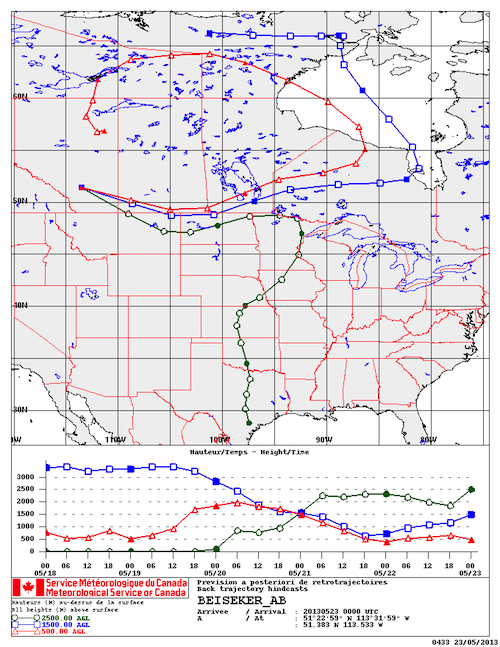
May 23, 2013 South winds arriveSouth winds from Texas and California/Mexico have reached the Prairies, as the maps show. Winds from the south central U.S. bring aster leafhoppers (which
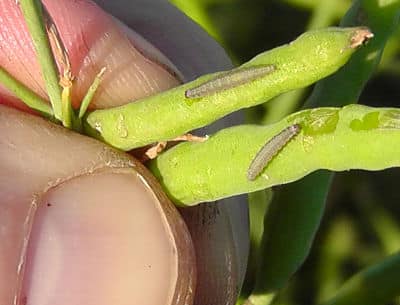
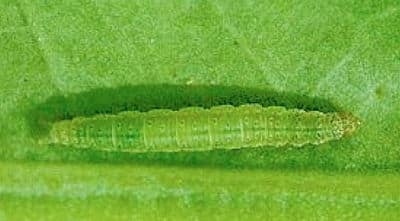
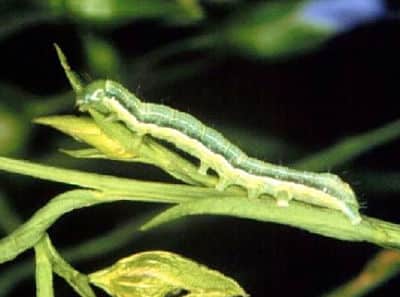
July 25, 2012 Lots of green worms. What are they?Some fields may have a variety of green worms feeding, including bertha armyworm, diamondback moth larvae, imported cabbageworm and alfalfa looper. Here’s how to
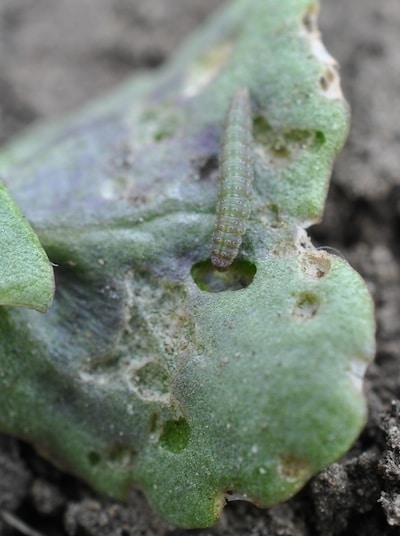
June 13, 2012 Diamondback larvae near thresholds in some canolaBefore spraying for diamondback moth larvae, make sure that: 1. Large areas within the field have reached the nominal threshold of 25% or more
June 8, 2012 Diamondback larvae near thresholds in some canolaAdd diamondback moth larvae to your early season scouting list. Growers cannot expect insecticide seed treatment to protect canola from diamondback moth larvae, so
May 9, 2012 Insect update: Flea beetles on volunteer canolaIf flea beetles are already out and on volunteers given the conditions we’ve had, as soon as it gets warm, they will be feeding
April 25, 2012 Insect update: Diamondback moths early, striped flea beetlesStriped flea beetles seem to be more common each year, especially in the northern canola growing regions. Research suggests that a population of striped