Tips from excess moisture meetings

Nutrient carryover is a common question from growers with unseeded acres. The standard answer is: Nitrogen is always variable throughout a field, and after a wet year without a crop, reserves might actually be better on the hilltops than in low spots. In low areas flooded for long periods, lack of oxygen limits microbial breakdown of organic matter. Therefore nutrients made available through mineralization will be lower than expected in these low-lying areas. Leaching of nitrogen and sulphur and de-nitrification of nitrogen will be higher in those areas as well. Test saturated areas separately.
Rotations for yield

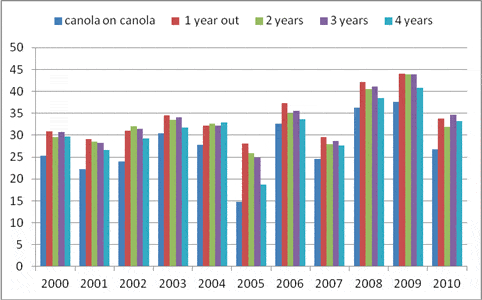
A recent Agriculture and Agri-Food Canada study found that growing peas and, to a lesser degree, lentils the year prior to canola can enhance canola yield. Canola on canola stubble will generally have lower yields than canola on other stubble.

Is that tillage really helping?

Growers have made great strides in advancing no tillage and conservation tillage practices. General benefits include reduced fuel use, reduced soil erosion, higher soil moisture reserves (which are welcome most years), and a general increase in profitability. Any return to tillage, even if only one field or across the whole farm for only one year, should be weighed carefully.

Planning for next year

Harvest is a good time to assess your canola results and prep fields for canola in 2012. If yields were disappointing given the large biomass of the crop, take time now to check for clues as to why.

Management for a thin stand

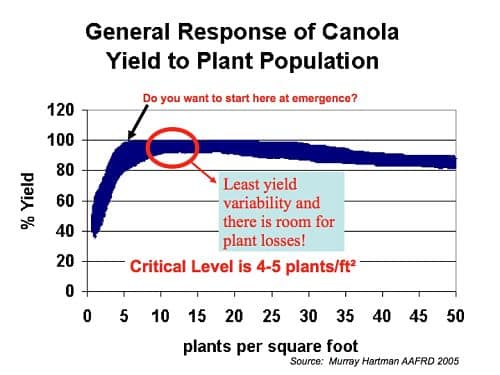
Step one with a thin stand is to determine the cause so it can be prevented next year. Step two is to scout closely and take extra care to protect those few plants from insect damage and weed competition.

Slow emergence adds to seedling disease risk

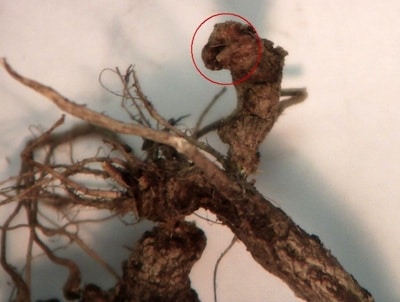
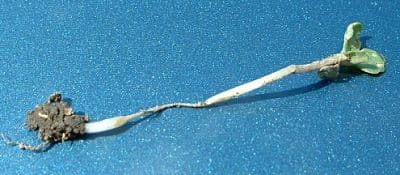
No foliar sprays are available for seedling diseases, but growers should still dig and look at roots and stems to identify whether disease is the cause for weak plants. Understanding what contributed to seedling disease in fields this year may help plan for better results in your canola fields next year.

Crusting: Rain is the only practical solution

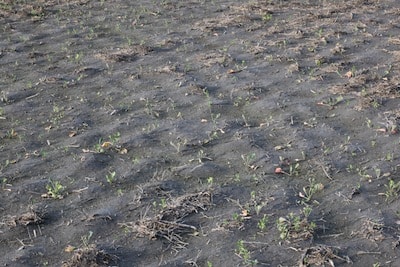
No research has been conducted to show the best ways to break up crusting and free the crop. If a few plants have emerged, it may be best to leave them be. One to 2 plants per square foot are better than none.

Did you walk your fields today?

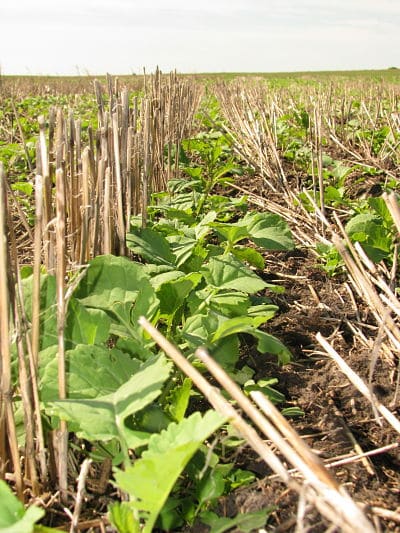
Small and vulnerable canola plants face many threats during their first three weeks. The crop may need your protection to get through these stages with its top-end yield potential intact. Canola growers are encouraged to walk their fields a couple times a week — or more — until plants are firmly established and growing strong.

Protect canola at this most fragile stage

Canola is most fragile during the first 21 days after emergence. The small plants are highly susceptible to flea beetles, cutworms, seedling diseases, weed competition and various other threats. Scouting may be required every day for at-risk crops, especially if a threat such as flea beetles seems to be building. At a minimum get out to each field a couple times per week during this period.