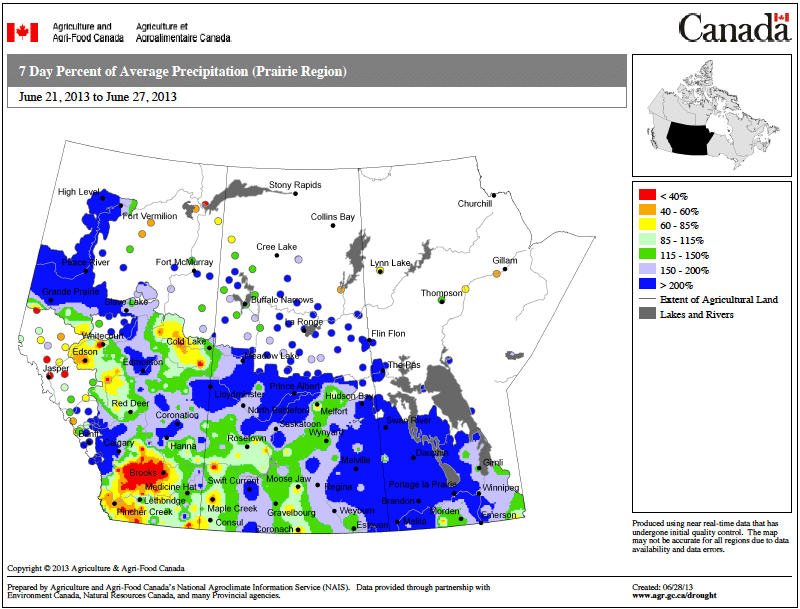
Moisture has a much larger influence than temperature when it comes to sclerotinia risk. Infection can be high in hot weather as long as the moisture is there. Moisture can come from rain, relative humidity in the high 80s, or morning dew. Dew and high humidity can provide enough moisture for sclerotinia stem rot. If your pants get wet walking canola fields in the morning, there’s enough moisture for the sclerotinia infection cycle.
Top 10 reasons to manage for sclerotinia stem rot this year
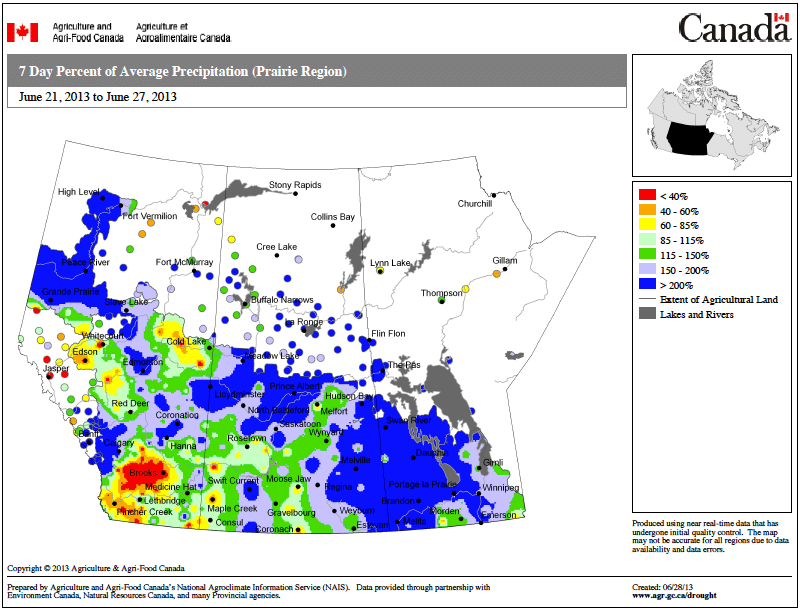
Three of the top 10 have to do with moisture, the key risk factor for sclerotinia stem rot.

Top 10 tips from the 2013 International Clubroot Workshop

1. Have a plan to manage clubroot. Don’t wait until clubroot manages you. Whether you’re a farmer, agronomist, county/municipal staff, extension, or from the oil & gas industry, you need a clubroot management plan. A plan should include answers to the following: How will you quarantine a field? How will you plan your field work? When will you sanitize your equipment? When will you use resistant varieties? Visit www.clubroot.ca for help with your plan. Read more to see the other 9.
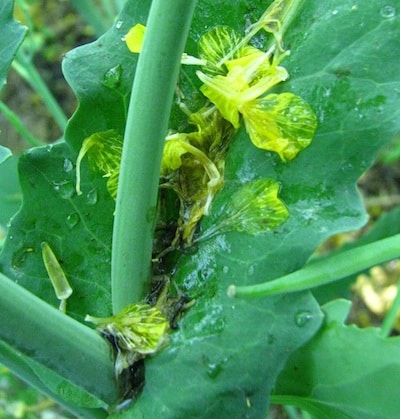
Moisture is the top sclerotinia risk factor
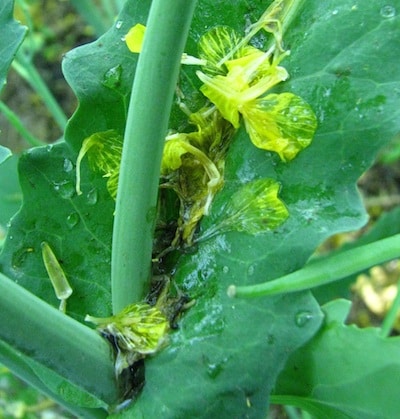
Growers with high risk conditions for sclerotinia stem rot may want to get their management plan in place. Booking fungicide may be worthwhile if you have a preferred product. This is pre-planning only. Fungicide applications must target flowers to be effective, so do not spray until a field reaches at least 20% flowering.
Aster yellows: No evidence of a problem in 2013
Aster leafhopper numbers are quite low so far this year, down considerably from 2012. Aster leafhoppers carry aster yellows phytoplasma, so without leafhoppers to transfer the disease, there is no infection. Based on what we know at this stage, there is no evidence of a significant aster yellows risk for 2013.
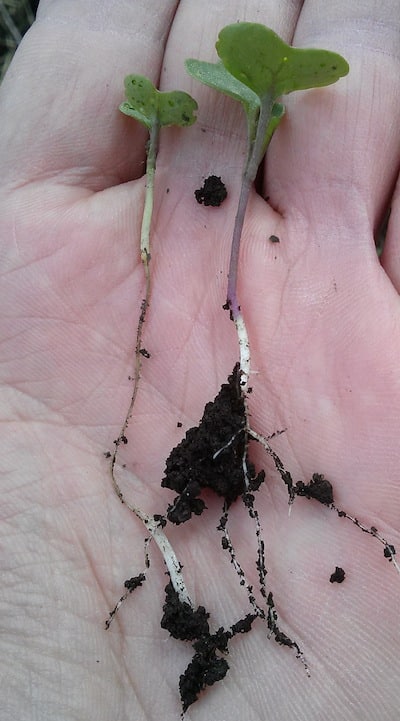
Seedling diseases in deep-seeded canola

Canola seeded too deep is at higher risk of seedling diseases. Deep seeding requires a long hypocotyl for the plant to reach the soil surface, which exposes more of the plant to soil-borne disease pathogens. Deep seeding also extend the days to emergence, which means the plant is at its vulnerable stage for longer.
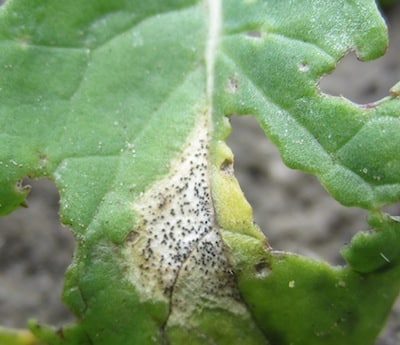
Blackleg: Use fungicide only where blackleg is a problem
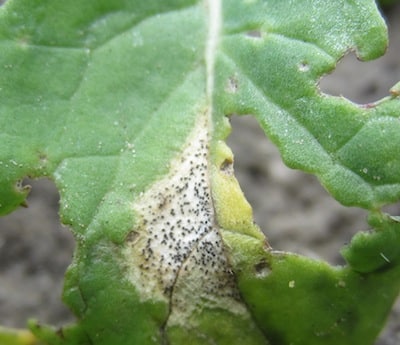
If your crop history and crop scouting suggest high risk for blackleg, consider fungicide as an additional tool to limit infection and yield loss. Headline and Quadris are available for blackleg management in canola.
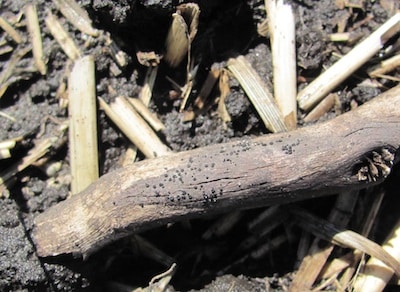
Blackleg: Use fungicide only where blackleg is a known problem
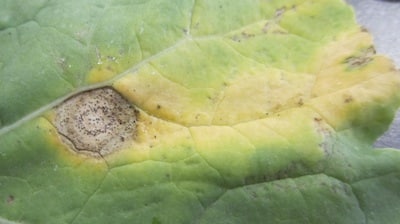
Growers in areas where blackleg infection was known to cause yield loss last year may choose to apply fungicide early in the season.
Here are factors that increase the blackleg risk. The more of these risk factors that apply, the greater the risk:
—Tight canola rotation
—Using the same variety in the rotation
—Yield loss to blackleg in previous years
—Using untreated non-certified seed
—Poor brassica weed control in previous years. These weeds can host blackleg in non-canola years
—Moist soils and warm humid conditions
—Lesions on leaves or cotyledons. These tiny lesions may be tricky to spot, and you probably won’t see many of them. When scouting, also look for blackleg pseudothecia (black spots) on old canola residue, which may still be present on fields with a tight rotation. Note: Even if you can’t spot lesions on new plants or black spots on old stubble, infection could still be happening.
Tank mixing herbicide with insecticide or fungicide
When spraying for weeds it may be economical to add an insecticide or fungicide to the tank mix to hit any insects or disease (blackleg) that may be present at the same time. However, consider these four issues before proceeding:
1. Is the tank mix supported by the product manufacturers? (See the next article for more on this.)
2. Be sure the insect or disease is apt to cause economic damage or yield loss.
3. Un-needed sprays put beneficials at risk.
4. Sustainability — of both our management tools and our farming system.
How many tank mixes are too many?
Growers must take extra precaution with any tank mix that is not identified and approved on the product label. The risks with off-label tank mixes include but are not limited to:
—Damage to the crop
—Antagonism or other reduction in control of one or more of the labelled pests
—Residues in excess of the limits of those set for the components of the mix in the harvested grain
—Creating a clogging lump in their spray tank
—Violent reactions – explosion.
The jar test may give the producer an indication of the last two problems (chemo-physical compatibility) but won’t tell them a thing about the biological compatibility of the components. The best source of information about all of the points is going to be the manufacturers of each of the components in the mix.