What to look for when disease scouting

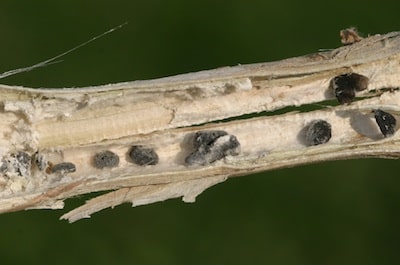
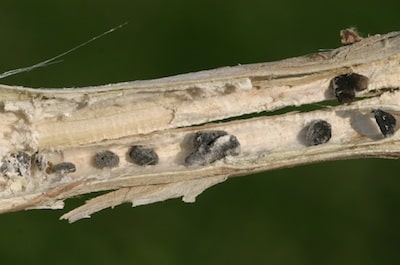
Sclerotia inside the stem. Source: Beth Hoar

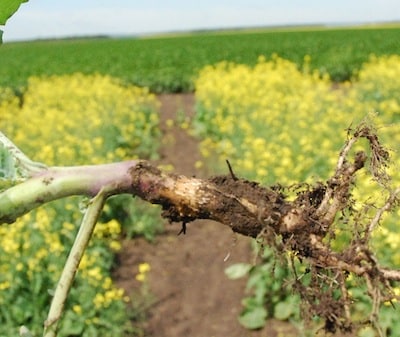
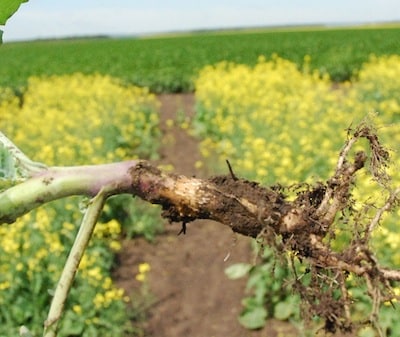
Check those patches of pre-mature ripened canola before or during swathing. Try to identify what cause this pre-mature ripening. Use the Canola Diagnostic Tool at www.canoladiagnostictool.ca to help with the assessment. It could be blackleg, clubroot, sclerotinia, root rot or something else entirely.

Growers can use this scouting information to plan rotations, choose varieties, and update fungicide decision-making for next year. Here’s how to identify the major diseases of canola as fields get close to swathing stage:
How to rate a crop for blackleg

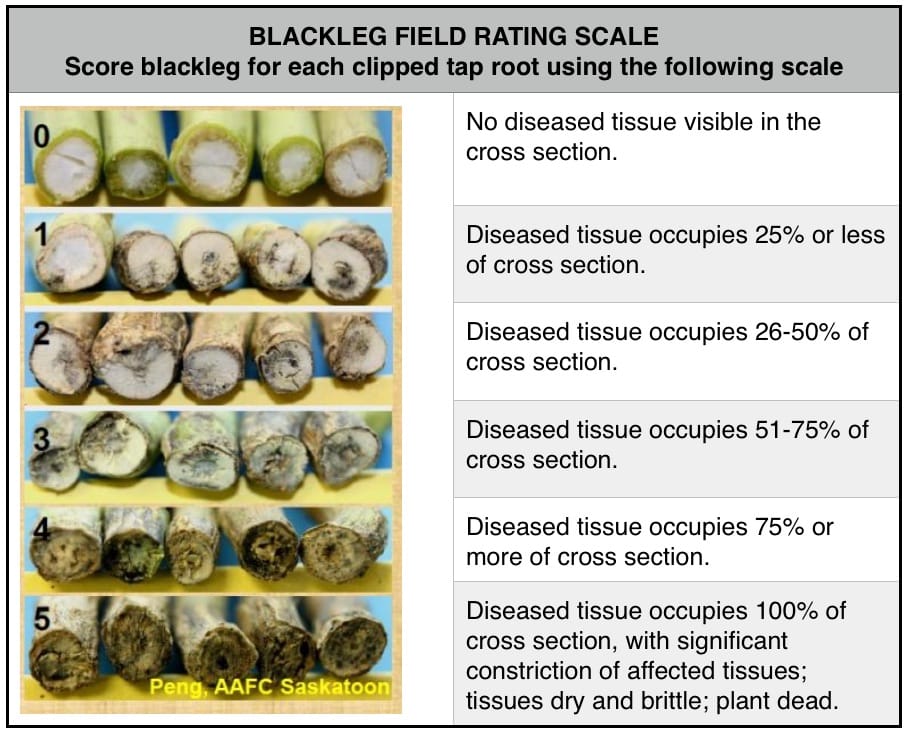
Blackleg field rating scale

Plant pathologists from across the Prairies are surveying canola for disease levels. For each field surveyed, they select 20 random plants at 5 random locations for a total of 100 plants.

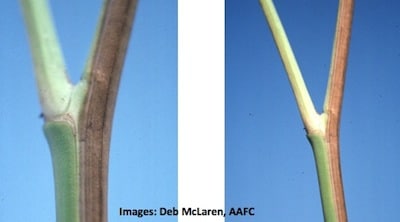
For blackleg, they pull up each plant and clip the stem just below ground level. Each stem is then rated for what percentage of the stem cross section is discoloured by blackleg infection. A rating of “0” means no blackleg stem discolouration. A rating of “5” means the stem is completely discoloured and blackleg has killed the plant.

Read and follow pre-harvest intervals (PHIs)

Pre-harvest interval (PHI) refers to the amount of time that must lapse (in days) after a pesticide application before the crop is cut (ie. swathed or straight cut). Failing to comply with a product’s pre-harvest interval is a contravention of the Pest Control Products Act (PCP). The PCP Act was put in place to protect human health and safety and the environment by regulating products used for the control of pests. It is important to adhere to the PHI to ensure no unacceptable chemical residues will be found in harvested seed. Adhering to the PHI ensures canola is safe for domestic consumption/use or export. With 85% of Canada’s canola crop exported around the world, it is critical that our canola meets the requirements of our export customers.

A good way to learn more about blackleg

Blackleg lesion starting at stem base. Source: Anastasia Kubinec

A 5-year project to investigate changes in blackleg needs 20-25 growers per Prairie province to volunteer fields for the survey. This would be a great way for growers to learn more about blackleg management.

Clubroot lookalikes

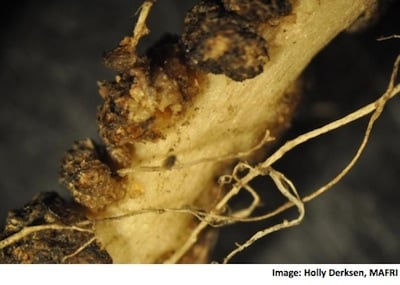
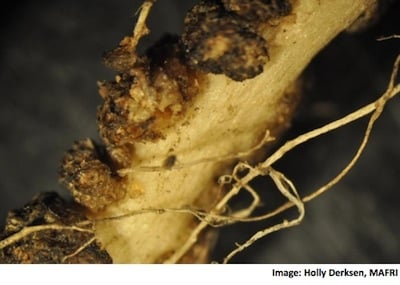
Hybridization nodules 2

Some fields are already showing a lot of gall growth, probably because the wet spring promoted early infection. These galls are most likely clubroot, especially if the fields are in known clubroot hot zones. However, not ALL root galls are clubroot. Galls could also be hybridization nodules (shown above) or phenoxy damage.

Top 10 diseases to look for in August

They are:
10. White rust
9. Fusarium wilt
8. Grey stem
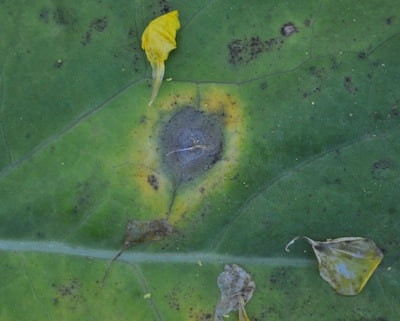
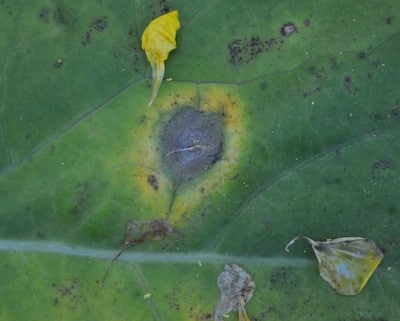
7. Alternaria black spot
6. Downy mildew
5. Root rot and foot rot
4. Aster yellows
3. Clubroot
2. Sclerotinia stem rot
1. Blackleg

Scouting late July for disease

Sclerotinia stem rot infection starts as leaf or stem infection around a rotting petal.

The window to control disease in canola is closed, so why scout? Well, because the period from podding to harvest is the easiest time to see diseases. And if you can identify which diseases are present, you can adjust your variety choice, crop rotation and fungicide use for subsequent years.

Hail at flowering

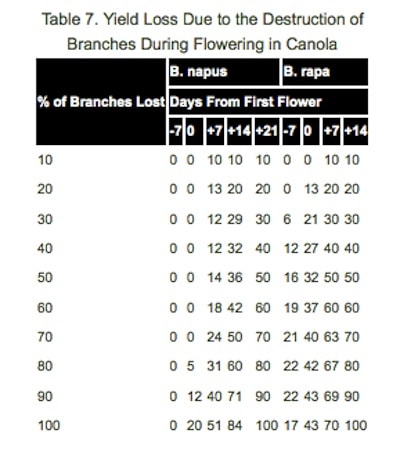
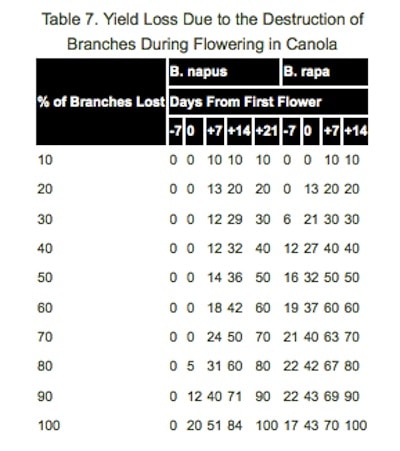
Yield loss will be lower if hail hits before flowering than at late flowering. Source: Canola Growers Manual

Canola is quite resilient to light hail at up to 20% flower. The crop can flower longer to compensate, and may recover with only minimal to moderate yield loss. Canola has also shown remarkable recovery from more intense hail at 20% flower. However, a crop flattened by hail is unlikely to recover. If regrowth occurs, which is possible, plants are set back so far that maturity becomes a major factor.

Root maggots and disease

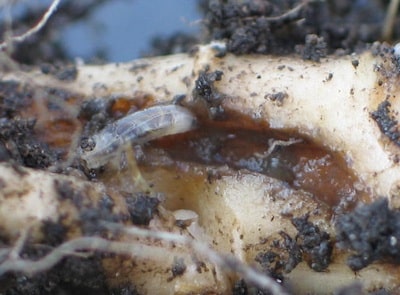
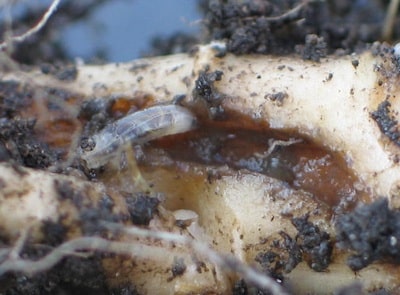
Root maggots can increase dramatically in canola on canola rotations.

Root maggots and root disease often show up together in the same field. Root maggots are white and up to 10 mm (half an inch) long — just like maggots. Maggot feeding can damage root crowns and impede water movement, causing wilting. Severe feeding can cause plant death.

Severe root maggot damage can occur in fields with back to back to back canola — another reason to rotate crops. Here’s an excerpt from an article Jay Whetter wrote for Crops Guide magazine in 2012 that may explain the situation…