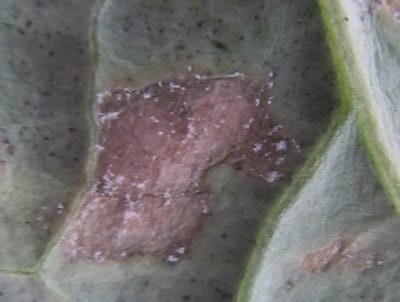
Crop diagnostics often come down to good photography skills, especially since so many people have smart phones with cameras, and since agronomists cannot get to all fields in a timely manner.
The rules to agronomy by phone and photograph are…
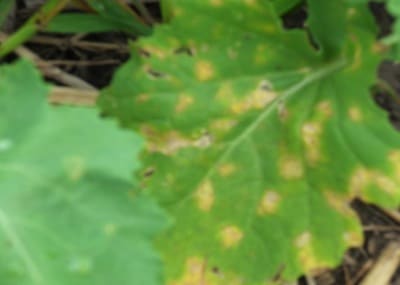
Crop diagnostics often come down to good photography skills, especially since so many people have smart phones with cameras, and since agronomists cannot get to all fields in a timely manner.
The rules to agronomy by phone and photograph are…
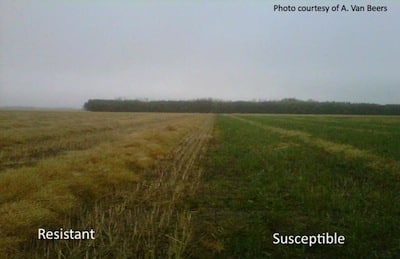
Clubroot resistance is an important part of clubroot management, and growers are advised to start using clubroot-resistant varieties as soon as clubroot is identified in their area. This will help keep clubroot at low levels in fields, and reduce the risk of selecting for resistant clubroot races.
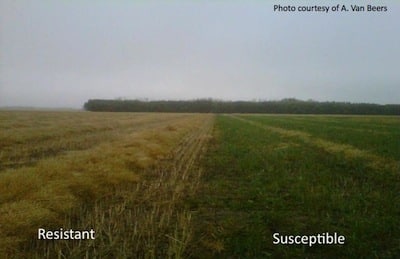
Clubroot resistance is an important part of clubroot management, and growers are advised to start using clubroot-resistant varieties as soon as clubroot is identified in their area. This will help keep clubroot at low levels in fields, and reduce the risk of selecting for resistant clubroot races.
Clubroot-resistant canola is the best tool available to limit disease damage in fields infested with clubroot. However, an effective overall clubroot management strategy has to be top of mind in all years, not just canola years.
As a soil borne disease, clubroot can spread no matter what crop is grown on a field. Any pass with the drill or cultivator, for instance, will pick up and move soil — and, therefore, clubroot spores. Even with a one in four canola rotation, clubroot can be spread all around the farm in the intervening years.
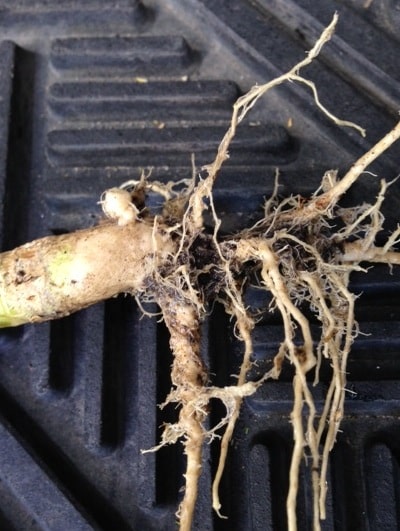
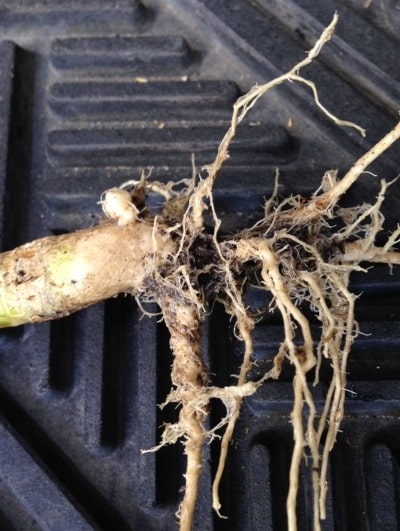
Manitoba has had two canola fields confirmed this month to have clubroot symptoms on plants. Last year, clubroot was confirmed in two soil samples in the province, but plant symptoms were not observed.
Clubroot is expected to spread across the Prairies eventually. The disease was first detected in Manitoba in vegetable crops in 1925. It is not a surprise to find it in canola fields. The key is to become more aware of the disease, what it looks like, how to scout for it, and how to prevent its spread. With early detection, use of resistant varieties and equipment sanitation practices to keep it from moving around, growers can manage the disease.
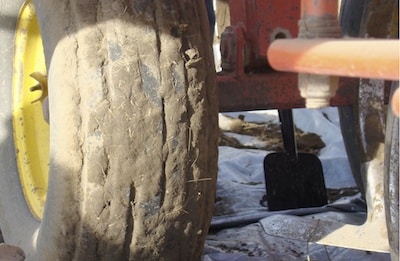
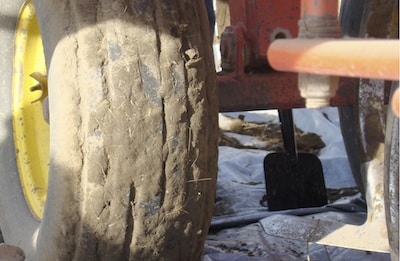
Early detection makes clubroot easier to contain. By the time patches of clubroot infection are obvious in fields, clubroot spores may have been present for a while and may have already spread to neighbouring fields. Clubroot disease management plans will vary depending on the amount of disease and its severity, but growers in all regions should watch for the disease.
Read more for prevention and management tips for infested and non-infested land.
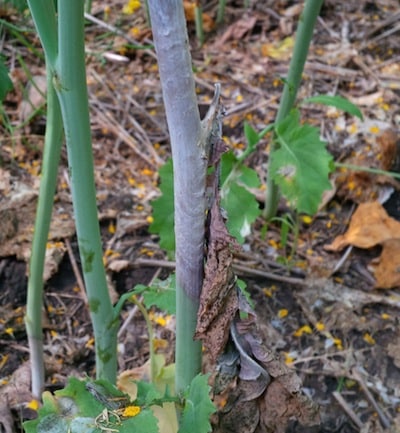
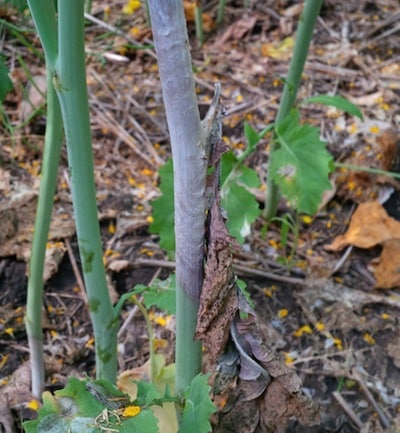
Lots of sclerotinia stem rot. As harvest progresses, we’re hearing reports of higher levels of sclerotinia stem rot in some regions. Some fields that did not get a fungicide spray are at 40-50% infection. That works out to an estimated 20-25% yield loss, or 10-13 bu./ac. on a canola crop with 50 bu./ac. yield potential. Fungicide applications for sclerotinia stem rot may not provide a return on investment every year. But if conditions leading up to flowering suggest an elevated risk, spraying is warranted. Conditions after flowering are almost impossible to predict, so we can’t predict sclerotinia stem rot severity at flowering. But using the example above, one properly-timed spray can pay for 10 years worth of fungicide applications.
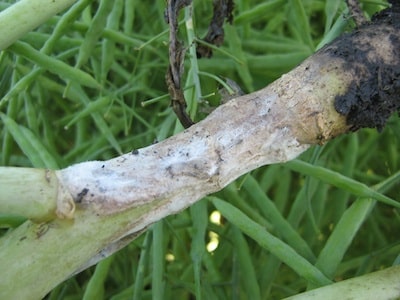

Sclerotinia stem rot infection is being found lower down the plant in many fields this year. Some fields are lodging because of sclerotinia infection. In some cases, sclerotinia infection is right near ground level, which is where blackleg is also found.
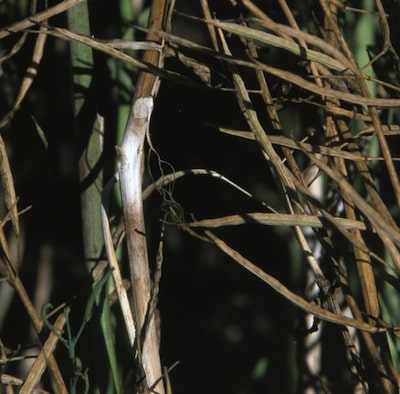
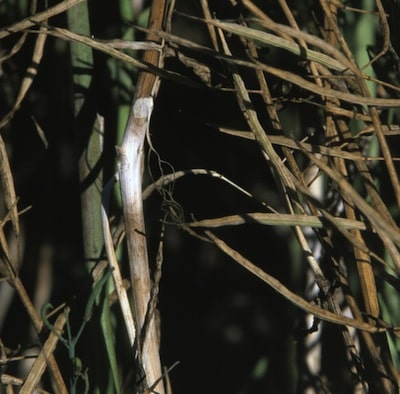
Sclerotinia stem rot (above) and blackleg can both cause what looks like pre-mature ripening. Both diseases, when severe, can cut off nutrient flow up the stem, resulting in a whitened dead plant. Both can cause increased lodging. However, long-term management requires an accurate identification of which disease is the cause. Disease identification will make sure you make the correct seed and rotation decisions for next year.
Here’s what to look for just before harvest:
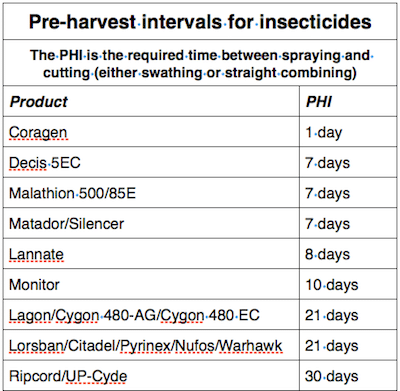
Many canola fields are within 5 to 10 days of swathing, which limits the choices for insecticides — based on pre-harvest intervals. Here are the pre-harvest intervals for insecticides registered for insect control in canola. Try the interactive PHI tool at www.spraytoswath.ca.
