Four questions to help assess the sclerotinia stem rot risk situation for 2021.
Topics for June 30, 2021
Heat stress | Sclerotinia spray decisions | Cabbage seedpod weevil | Lygus bugs
Seed recommending committee tackles canola diseases
Changes to canola disease labeling systems, protocols and cultivar screening – which all work toward ensuring high quality canola can be produced with minimized disease pressure – are covered by the pathology sub-committee of the Western Canada Canola/Rapeseed Recommending Committee (WCC/RRC). A recent sub-committee meeting on February 2 included discussion and changes on blackleg, clubroot and verticillium stripe.
Updated clubroot maps and survey results
Clubroot is confirmed in more counties and municipalities in Alberta, Saskatchewan and Manitoba in 2020.
Sign up your land for pest surveys
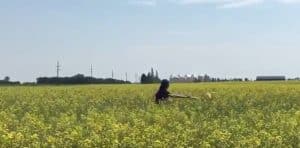
Insect and disease surveys across the Prairies have moved to a permission-based system to access fields for monitoring. Canola Watch uses this information to improve canola pest management. How to grant permission….
Rotations and risk management
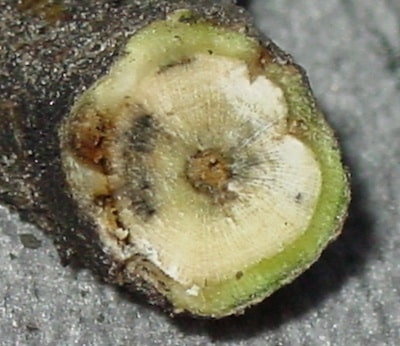
Scientific research in Western Canada shows lower yields for canola in short rotations. Blackleg (shown above), clubroot and many other factors can cause this yield loss.
Watch Verticillium stripe webinar
Justine Cornelsen, agronomy specialist with the Canola Council of Canada, provided an overview of verticillium stripe disease for a Saskatchewan Ministry of Agriculture webinar. View the webinar recording. The Canola Encyclopedia has more on verticillium stripe.
How to collect soil samples for clubroot
Soil sample the fall after canola harvest or the spring immediately following. This gives galls time to break down and release spores. If sampling this fall, target fields that are going into canola next year…not fields that were in canola this year
How to identify verticillium stripe

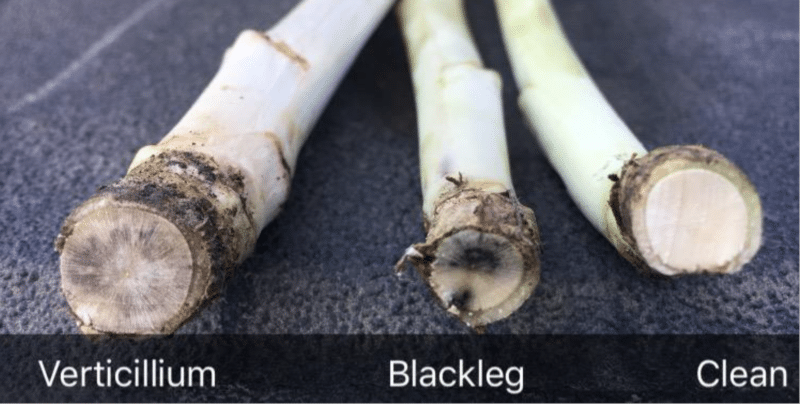
The fungal pathogen Verticillium longisporum causes stem cross-section discolouration that can look somewhat like blackleg and bleaching of the stem that can look somewhat like sclerotinia stem rot. But these diseases are all quite different in terms of yield risk and management, so it’s important to be able to tell them apart.

Clubroot testing – Provincial programs
Canola grower organizations in Saskatchewan, Manitoba and Alberta encourage farmers and agronomists to do more field testing.