Blackleg: Scouting, identification and next steps

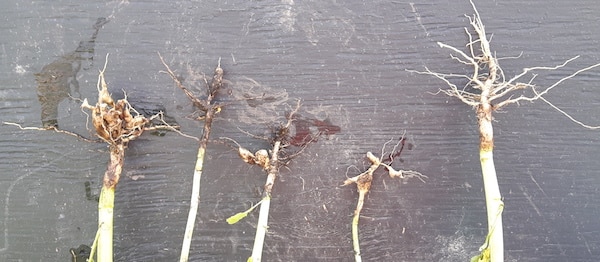
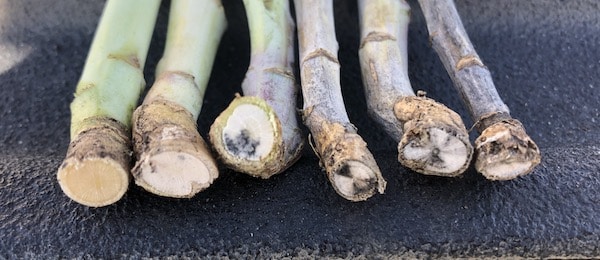
Around 60 per cent seed colour change (swath timing) is the best time to scout for blackleg as the basal cankers, which cause significant yield loss, are easy to see. Check fields – even if growing resistant (R) rated hybrids. An R rating is not immunity and does not tell much about if it will be effective against the races in a individual field.
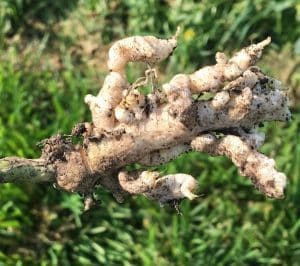
What to do when you find clubroot?

This article runs through a series of questions and scenarios, a bit like “choose your own adventure”, to help farmers and agronomists come up with an appropriate management plan for each situation.

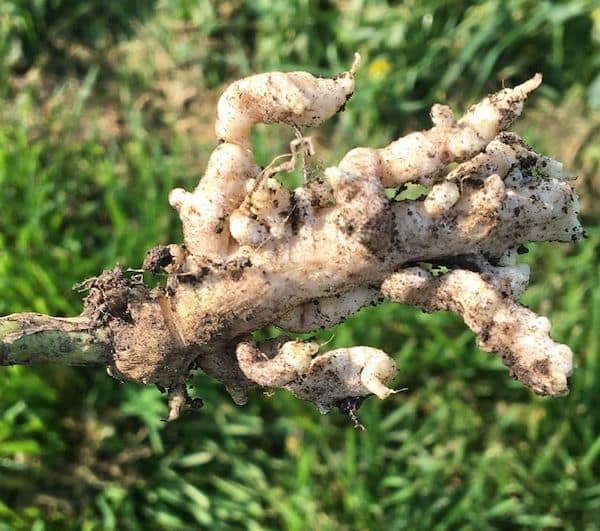
Clubroot patch? Collect galls and bag them for disposal

You have been actively scouting and found clubroot early. The disease is confined to “patches” or small areas in your field, typically around field entrances, drainage paths or low spots in the field. Here’s what to do with them…

Clubroot: Scouting for pathotype shift

Researchers have identified at least 36 clubroot pathotypes in Western Canada, and roughly half are not controlled by the common clubroot resistance source – often referred to as first generation or “gen 1” resistance. That is why hybrids with clubroot resistance (CR) can still have clubroot galls.

Quiz – Clubroot/not clubroot

Jay Whetter Leave a Comment

Through the pod filling time between flowering and harvest, growers and agronomists will want to take time for a more intense session of clubroot scouting. But what are you looking for? This quiz will help train your eye.

Scouting for clubroot: How and why now?

Vigilantly scout all canola fields for symptoms, even if growing a clubroot resistant (CR) variety. Clubroot galls can start to form about three weeks after emergence, but typically it takes about six to eight weeks for visible galls to form in fields. So galls – if present – will be visible by this stage of the season.

Will hot, dry weather stop sclerotinia stem rot?

Not really. If infection got started, then this fungus is in the plant. When conditions are ideal (relative humidity over 80 per cent and temperatures of 20°C to 25°C) then pathogen grows aggressively eating up more tissue. When conditions are not ideal, the disease slows…waiting, patiently.

Scouting for clubroot: Why now?

One reason… If clubroot is found, you have time to take some focused action on these areas. If the patch is small enough, pull up all the plants that have galls, then cut off the galls and dispose of them.

Did you use a sclerotinia prediction tool?

CCC agronomy director Clint Jurke is looking for farmers who made the decision to spray or not spray fungicide for sclerotinia based on what a sclerotinia stem rot prediction tool – sclerotinia checklist, spore testing or weather station predictions – told them.