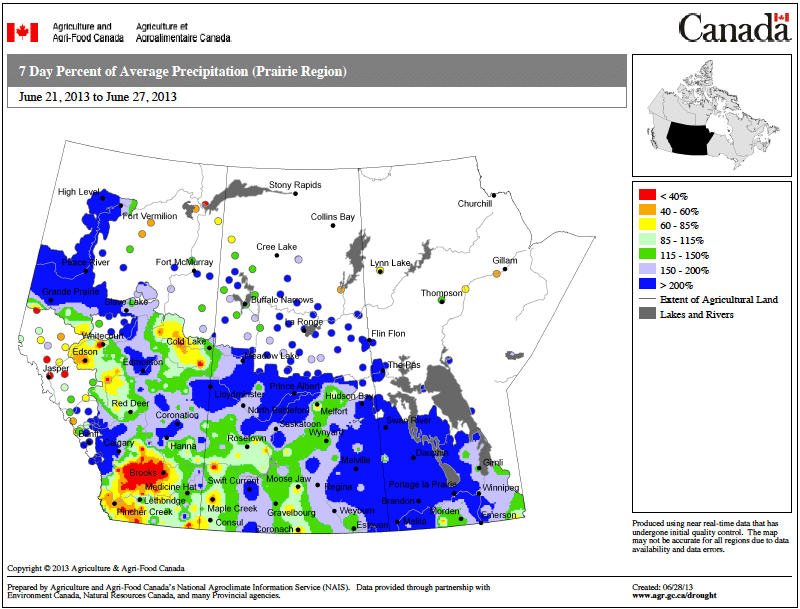
Moisture has a much larger influence than temperature when it comes to sclerotinia risk. Infection can be high in hot weather as long as the moisture is there. Moisture can come from rain, relative humidity in the high 80s, or morning dew. Dew and high humidity can provide enough moisture for sclerotinia stem rot. If your pants get wet walking canola fields in the morning, there’s enough moisture for the sclerotinia infection cycle.
Top 10 reasons to manage for sclerotinia stem rot this year
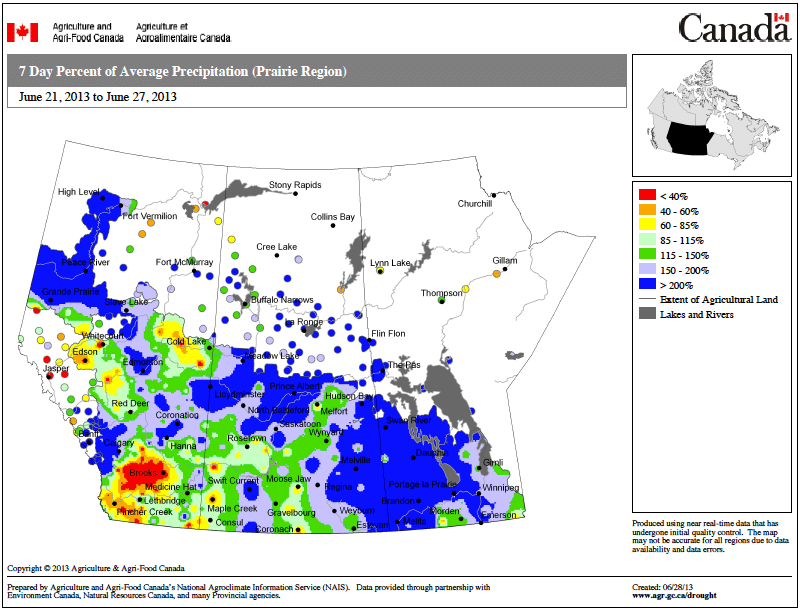
Three of the top 10 have to do with moisture, the key risk factor for sclerotinia stem rot.
Moisture is the top sclerotinia risk factor
Growers with high risk conditions for sclerotinia stem rot may want to get their management plan in place. Booking fungicide may be worthwhile if you have a preferred product. This is pre-planning only. Fungicide applications must target flowers to be effective, so do not spray until a field reaches at least 20% flowering.
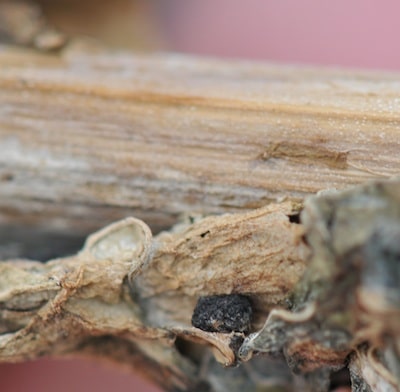
Sclerotinia stem rot management
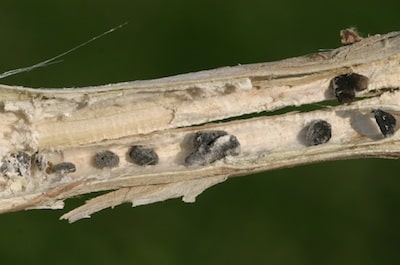
—All areas of the Prairies are at risk. Geography does not provide immunity to this disease.
—Prevalence of sclerotinia stem rot has a direct correlation to above-average moisture. If a field has regular rains or high humidity or both from two weeks before flowering and through flowering, then infection will occur. If these conditions continue after flower, severity of the disease will be high and yield loss will be significant.
—If these conditions are present and canola has yield potential of 30 bu./ac. or greater, then a fungicide application at 20-30% flower is warranted. Fungicide may also pay for yield potential below that level.
—Swath based on the best time for the healthy plants, not the diseased plants.
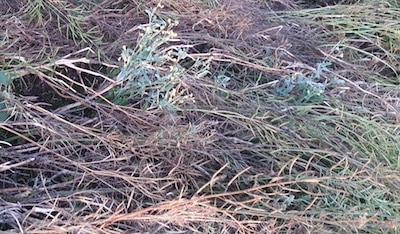
Diseases to look for while harvest scouting
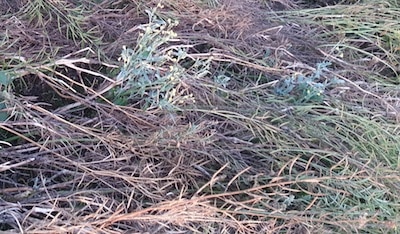
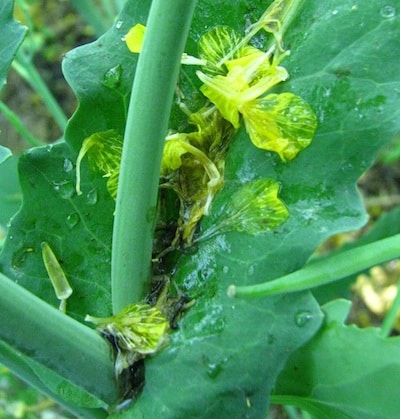
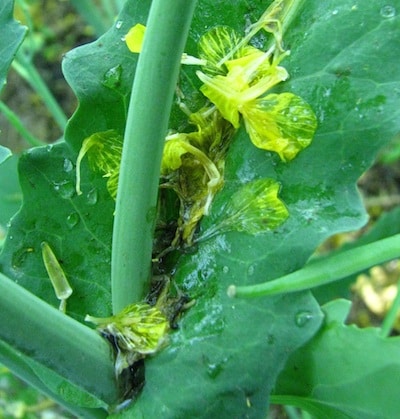
Pre-harvest is a good time to scout for disease severity. The photo above shows severe sclerotinia infection. This article includes sclerotinia and various other diseases to look for.
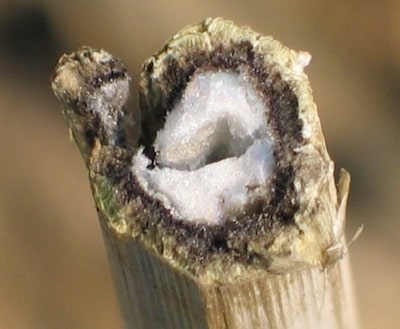
Pre-harvest scouting for disease
Pre-harvest is a good time to scout for disease severity. Fields with lots of diseased plants may also be poorer candidates for straight cutting due to the increased shattering risk. Read more for tips on how to identify blackleg, sclerotinia and alternaria.
More sclerotinia than your neighbour – why?
It is not surprising that sclerotinia stem rot disease levels differ from field to field even if fields are in close proximity. Sclerotinia disease level is very dependent on the microclimate within the field. Moist growing conditions (ie. frequent rainfall or high humidity or heavy dews) promote disease development but factors that result in moisture-laden canopies can
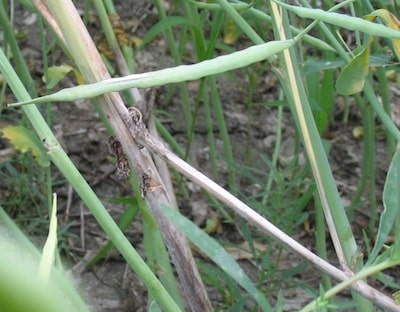
Why more sclerotinia stem rot this year?
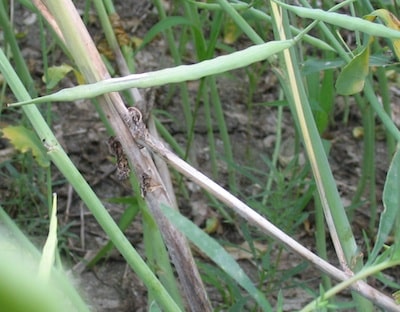
Moisture before and during and following flowering was the biggest factor driving up sclerotinia stem rot infection this year. Moisture as rain or high humidity or dew through the period from two weeks before flowering through early podding has increased the sclerotinia risk considerably, no matter the rotation history of the field. Most regions had these conditions this year. Fungicide use will reduce but not completely eliminate the disease when pressure is high. Rotation has limited benefit for sclerotinia stem rot management.
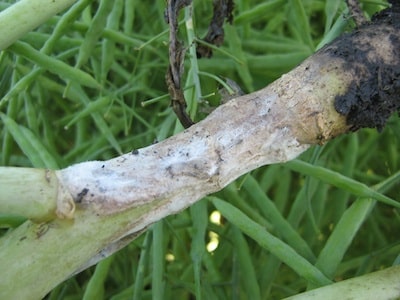
How to tell blackleg from sclerotinia stem rot
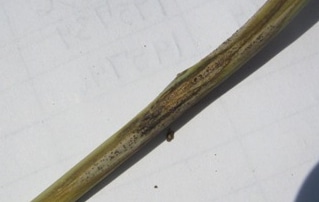
Some regions are reporting higher rates of blackleg (shown above) and most regions are seeing sclerotinia stem rot damage. Fungicide is not effective at this stage of the season, but the weeks leading up to harvest are a good time to scout. Its important to know which disease is present in order to plan rotations and varieties for next year. Blackleg lesions are greyish with black picnidia specks. Sclerotinia stem rot will leave stems brittle, and lesions will not have black picnidia specks.
Sclerotinia and swath timing
In fields badly infected with sclerotinia, swath when the healthiest plants are ready. These plants will provide most of the yield. Swathing early will not preserve seeds in badly infected plants — those seeds are unlikely to mature no matter when you swath.