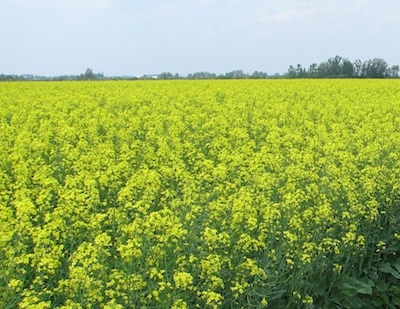
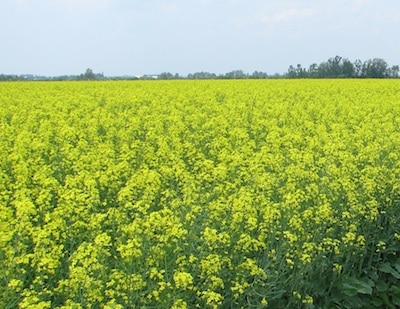
The risk of sclerotinia stem rot infection is still present on later crops that have not reached full flower, especially given the rain and high humidity in some regions this week. Highly variable crops may also be at “full flower” or their “most yellow” — other terms for 50% flower — for longer than typically expected, which also extends the risk.
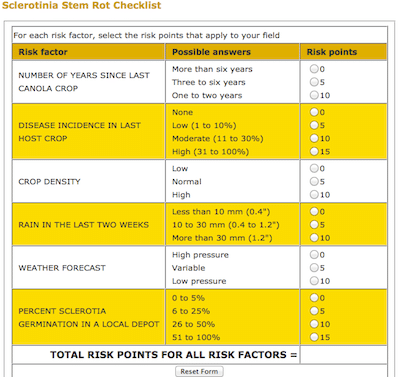
Sclerotinia stem rot risk re-assessment
Hot, dry conditions the past number of days and variable field staging have made the decision to spray fungicide to manage sclerotinia stem rot even more difficult this year.
Moisture is the key risk factor for sclerotinia stem rot. Without moisture before, during and after flowering, disease severity and the return on investment from fungicide will be lower than if moisture is present all through these periods. Moisture can come as rain, dew and/or humidity above 80%.
Irrigation and sclerotinia stem rot management
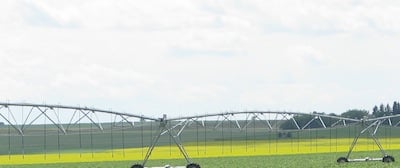
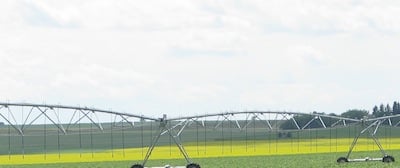
Canola’s need for water is highest during the flowering growth stage, which means growers using irrigation have to provide more water during this stage. However, moisture at this stage also increases the risk of sclerotinia stem rot infection.
Alberta’s irrigation scheduling strategy recommends less frequent and larger irrigation volumes during the flowering growth stage. This will provide the water the crop needs, but by increasing the time between irrigations, the canola canopy has a chance to dry out to discourage sclerotinia stem rot.
Sclerotinia stem rot: Common questions

The table above shows fungicides available to manage sclerotinia stem rot. The article answers a few common questions on sclerotinia stem rot management….
Sclerotia depots: A new early warning system
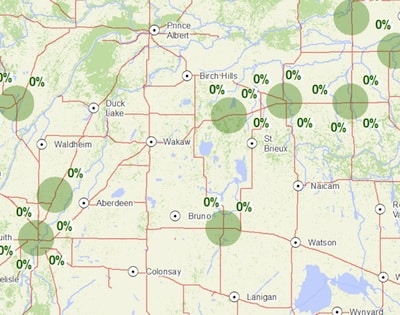
Scientists at Agriculture and Agri-Food Canada are testing an early warning system for sclerotinia in canola. The project is in its first year and involves 35 volunteers in Saskatchewan monitoring the emergence of apothecia in 67 sclerotia depots across the province. Each depot consists of 50 sclerotia (fungal resting bodies) buried at the soil surface. Sclerotia in the depots are expected to germinate at a similar rate as the thousands of sclerotia naturally occurring in the soil (as a result of past sclerotinia white mould incidence). The volunteers report percent sclerotia germination two to three times per week when the canola is flowering. Sclerotia germination data from all depots are available on SaskCanola’s website (www.saskcanola.com). Click on the “Percent sclerotia germination map” icon. The provincial map can be moved in all directions and zoomed in or out.
Disease update: Sclerotinia, clubroot, blackleg, alternaria
Lots of sclerotinia stem rot. As harvest progresses, we’re hearing reports of higher levels of sclerotinia stem rot in some regions. Some fields that did not get a fungicide spray are at 40-50% infection. That works out to an estimated 20-25% yield loss, or 10-13 bu./ac. on a canola crop with 50 bu./ac. yield potential. Fungicide applications for sclerotinia stem rot may not provide a return on investment every year. But if conditions leading up to flowering suggest an elevated risk, spraying is warranted. Conditions after flowering are almost impossible to predict, so we can’t predict sclerotinia stem rot severity at flowering. But using the example above, one properly-timed spray can pay for 10 years worth of fungicide applications.
How to tell blackleg, sclerotinia and clubroot apart
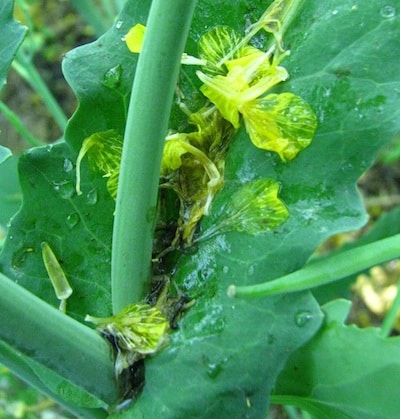
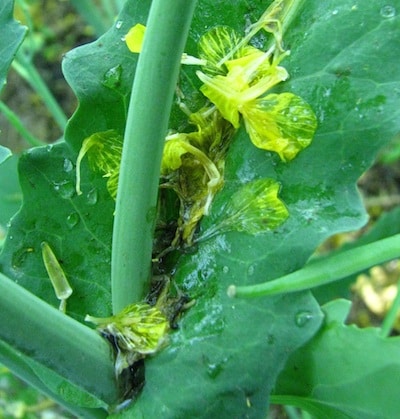
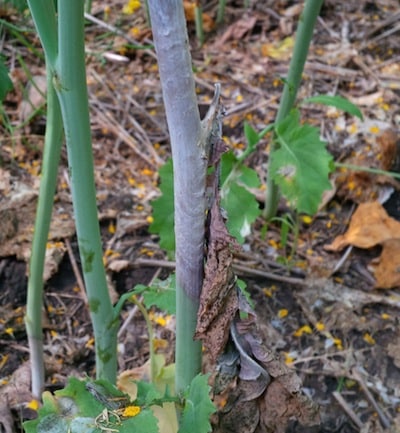
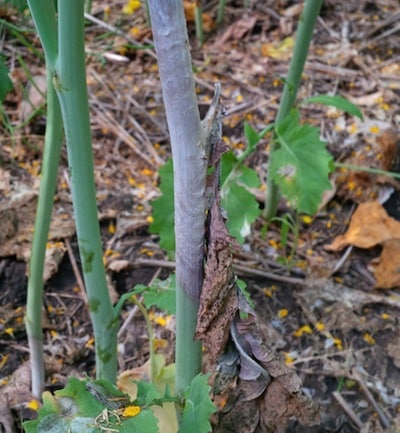
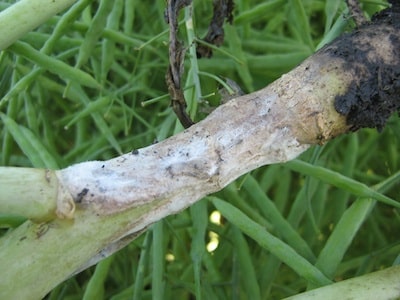
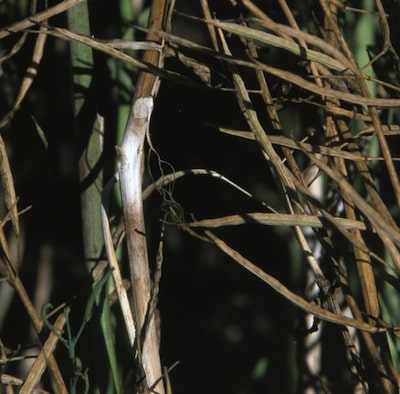
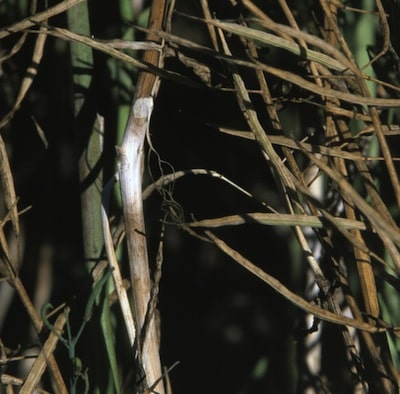
Sclerotinia stem rot (above) and blackleg can both cause what looks like pre-mature ripening. Both diseases, when severe, can cut off nutrient flow up the stem, resulting in a whitened dead plant. Both can cause increased lodging. However, long-term management requires an accurate identification of which disease is the cause. Disease identification will make sure you make the correct seed and rotation decisions for next year.
Here’s what to look for just before harvest:
Biologicial fungicide: Serenade use tips
Because Serenade works differently from other fungicides, we want to share these instructions for best results, as provided by Bayer CropScience: