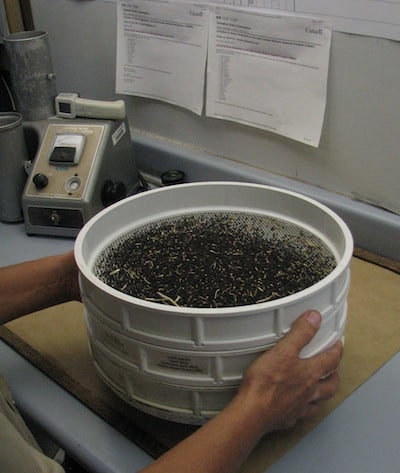
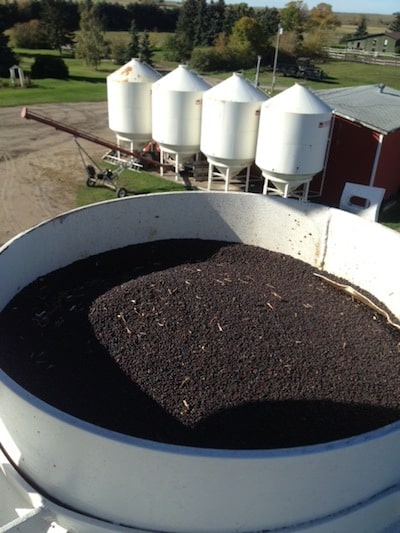
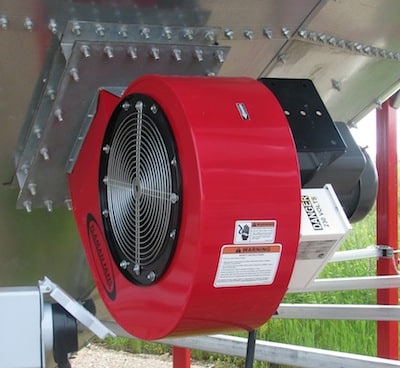
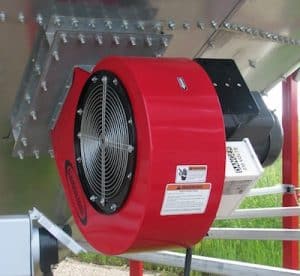
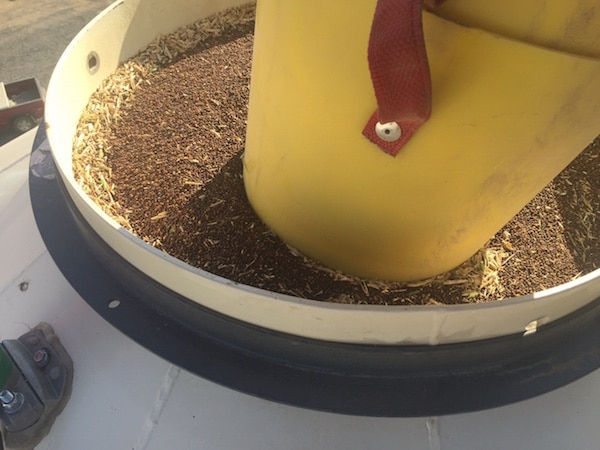
Ideally, growers will want to put canola on aeration as soon as it comes of the field. Cooling hot grain within the first 24 hours is important for safe long-term storage. Removing moisture that sweats from all canola — but especially tough canola (10-12% moisture) — is also important. Conditioning achieves both of these steps. Here are a few handy tips…
Dockage, tough stems and combine settings

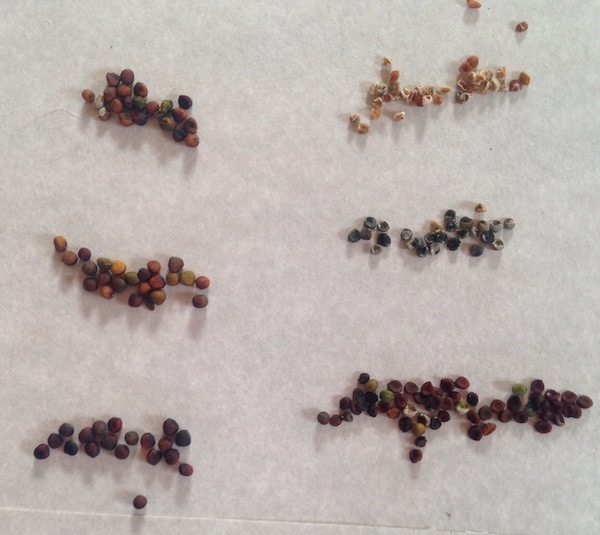
Three concepts to consider while setting the combine this harvest: (1) Can dockage be too low? (2) Change combine settings based on crop conditions. (3) Frost damaged seed might not be a total write off.
Reassess reseeding: Check yield and quality
Reseeding looked like the right idea in many areas throughout the summer, but the real test is at harvest. If there was no risk of frost and the significant loss of grade and yield that results, we’d have a lot more canola go in after the soils reached 10°C and the spring frost risk was essentially over. Those are the …
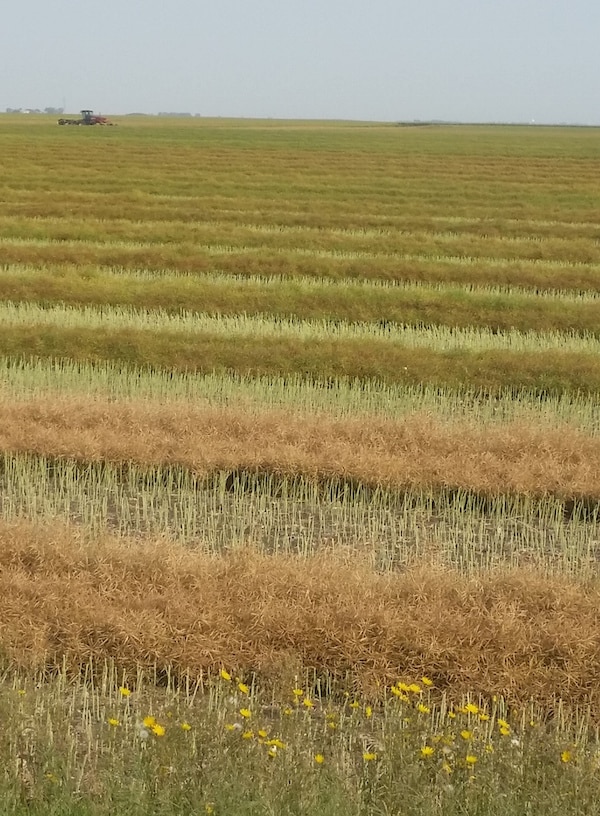
Already swathing, then had frost. Can I keep going?
Yes, keep going. The recommendation to wait at least 4-6 hours after a frost to assess the extent of frost damage only applies to canola that was not quite ready to swath. If you were already swathing or were going to swath a crop that day, there is no benefit to waiting.
September 2 Quiz — Storage
Are you up to speed on the basics of safe canola storage? Take the quiz to find out.

Condition canola immediately after harvest

Storage risk is reduced significantly when canola moisture is 8% or lower and temperature is 15°C or lower. Turn on the fans to cool that hot canola.
Swath timing tips for various scenarios

Read more for paragraphs on:
Early swathing leaves yield on the table
Swathing ahead of a frost forecast
Cut timing must meet pre-harvest intervals
How to tell when uneven crop is ready to swath?
Sun-scalded pods may not be mature
How much canola does your combine throw over?

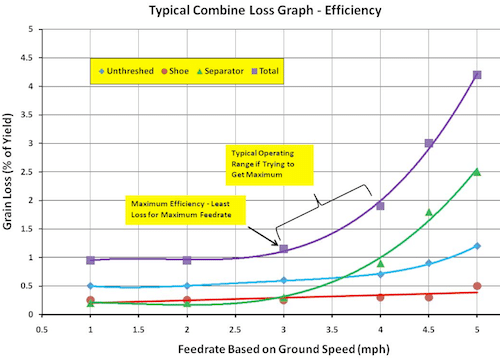
Canola growers often lose 2 bu./ac. out the back of the combine, and losses can easily reach 5 bu./ac. if the combine is pushed beyond its threshing capacity. Every combine will have a sweet spot where the settings and ground speed are just right for the conditions and losses are within the acceptable range of 0.5-1 bu./ac.
Residue management starts in the fall

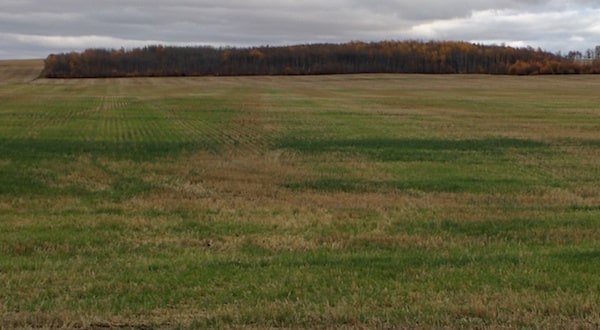
Good residue management in the fall will help enhance drill performance, allowing for increased seed survival and an overall better field uniformity in the spring. Changing the angle of vanes on the back of the chopper will help with the width and uniformity of residue spread.
Bin prep: Storage insects and canola
Canola rarely has an issue with storage insects. Primary stored product insects such as rusty grain beetle, red flour beetle and saw-toothed grain beetle can occasionally be found in stored canola if cereal grain or weed seeds are mixed in with the canola. Mites can carry mold spores that can build up in warm and moist canola, contributing to heating risk. Canola that goes into a clean bin will not usually encounter a problem with stored grain insects.