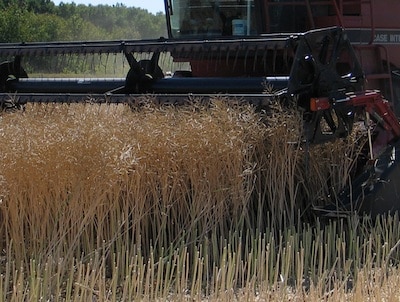
1. When you pull out the combine to get it ready for the season, look it over for holes and cracks in the pickup, feederhouse, elevator, shoe seals, separator covers and the grain tank. Canola seed can dribble out these openings even before it reaches the back end…
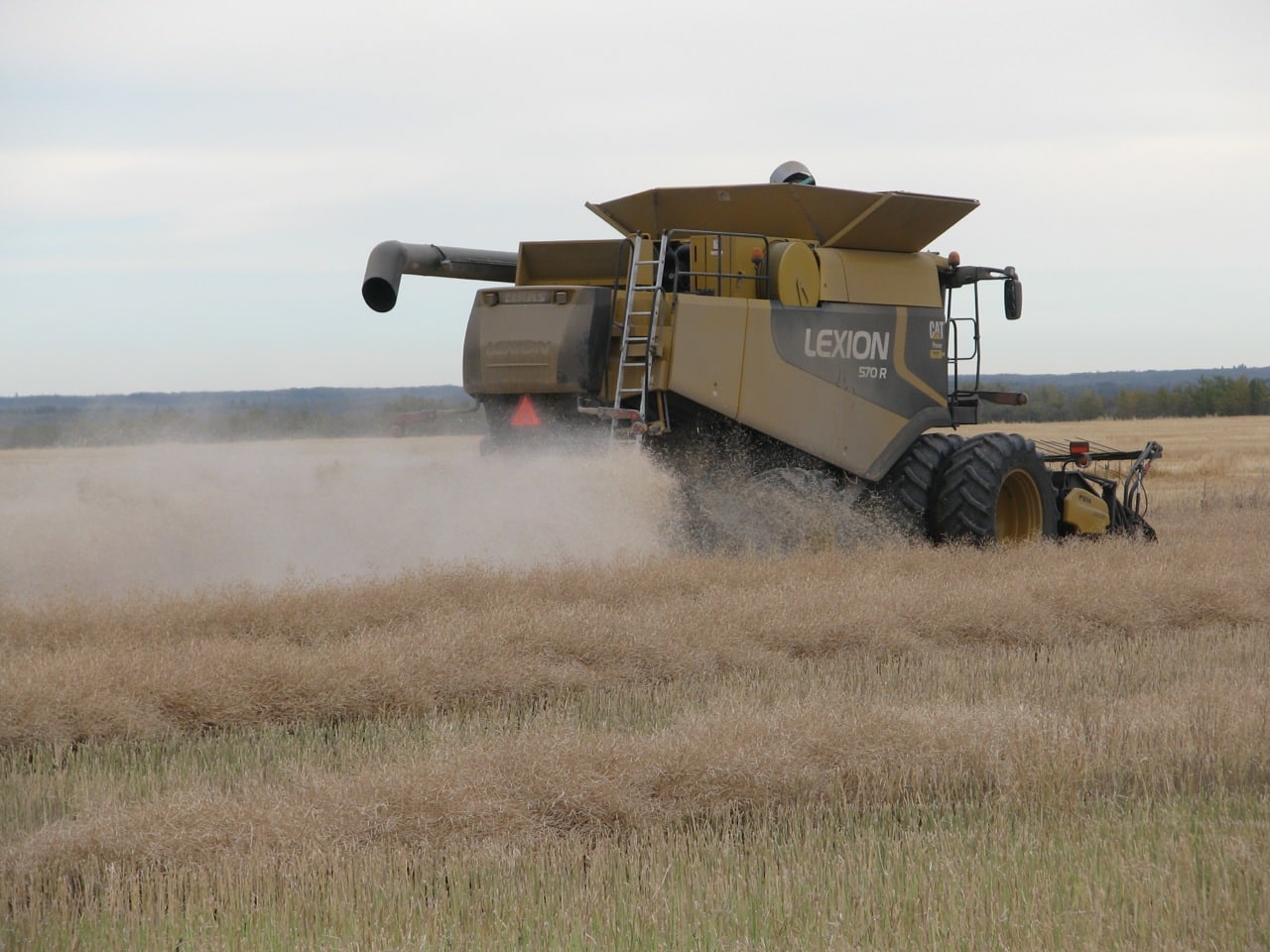
Swath timing for higher yield
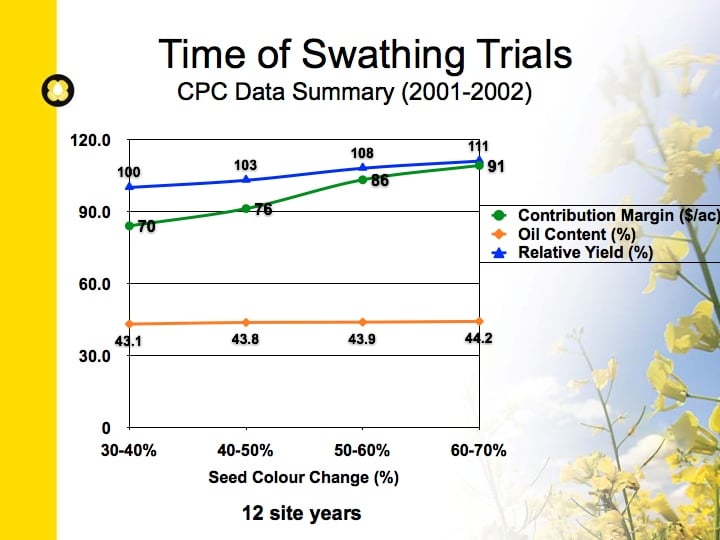
The optimal swath timing for canola yield and quality is when 60% of seeds on the main stem are showing some colour change. Seed colour change (SCC) is considered any amount of yellow or brown on the seed. This increases crop yield because side branches have longer to fill and average seed size for the whole plant is larger.
Straight combining canola: Reducing the risk

Growers who want to try straight combining for the first time, keep these risk scenarios in mind….
Proactive steps for a safe harvest
The following tips are from the SAFE Farms Harvest TIP sheet. Download the complete document.
Uneven crops and swath timing
The swath timing decision becomes more difficult in crops with plants at multiple stages of growth. Here are some tips to help with the swath decision on these fields….
Keep it Clean: PHI and storage tips
When spraying, stick to the pre-harvest interval unique to each product. When prepping bins, follow canola storage recommendations….
The silage option for canola
Dry conditions could mean a hay shortage in parts of the Prairies. Growers with poor-looking canola crops may want to estimate the seed yield potential and weigh that against the potential feed value of the biomass.
Swath timing for uneven canola fields
Earliest canola in southern Alberta and here and there across the Prairies will be close to swath timing in the next week or two. Many of these early fields are not looking good, with patchy emergence, uneven emergence and short stature due to moisture stress. The swath timing decision becomes more difficult in crops with plants at multiple stages of growth.
Do you straight combine thin and multi-staged canola?
The general view is that uniform well-knit canola crops are the best for straight combining, but it can be argued that leaving thin multi-stage canola for straight combining may also be lower risk than swathing.