Warm winter days can increase storage risk

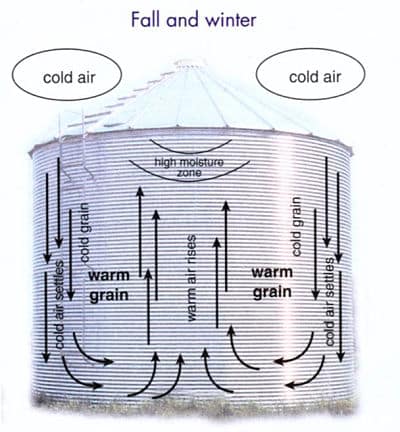
How air moves in the bin in fall and winter.

Moisture migration in a canola bin peaks when the temperature difference between inside and outside the bin is high. If canola in the bin is -20C and the outside air warms up for a week, this can increase air flow and moisture concentration inside the bin.

Check bins and bags on cold November days

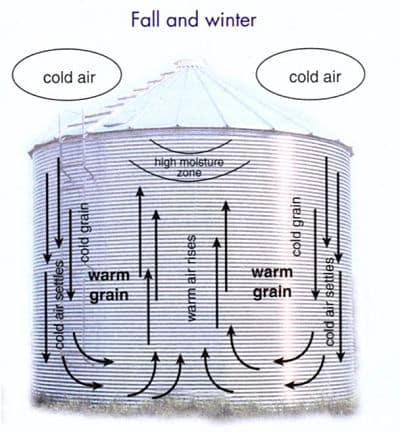
When outside air is colder than stored canola, another moisture cycle begins within the bin. The grain mass on the outside edge cools first. This colder air migrates down through grain along the bin wall then up through the central core, picking up warmth and moisture along the way. This creates a pocket of humid and warmer air at the top of the central core where spoilage and heating can start.

Cool days + hot canola = bad combo

How air moves in the bin in fall and winter.

Canola binned hot, even if it has low moisture, low dockage and low green, should still be put on aeration. Target a core temperature of 15°C before stopping the aeration fans, and watch throughout the winter to make sure it doesn’t start to increase.

Combining super dry canola

Some canola is coming off very dry — 5-6% moisture. Canola at 8% moisture is considered safe for long term storage. Canola at 6% is even safer. (Although it can still heat if very hot when stored.)

Canola seed can absorb more moisture if left in the field during a rain. Both 6% and 8% moisture canola can be safely stored when cool, however increasing moisture from 6% to 8% would add the weight of a bushel/acre to a 50-bushel crop. Growers may not choose to leave a crop out in the rain, but this situation may influence which crop you combine first.

Need more bin space?

bin in river

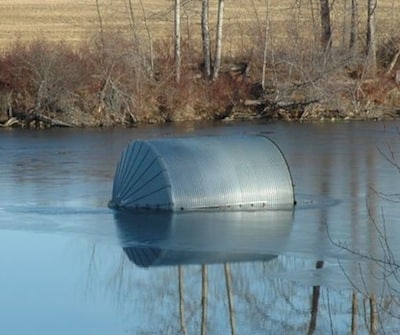
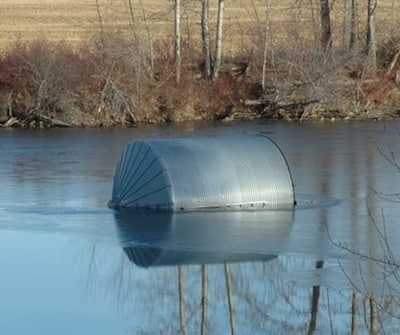
With a bumper harvest predicted for many areas, bin space will be at a premium. Not all canola will be able to go on aeration right away. And not all canola will be going into bins originally planned for canola. This has its risks.

Top 10 risky situations for canola storage

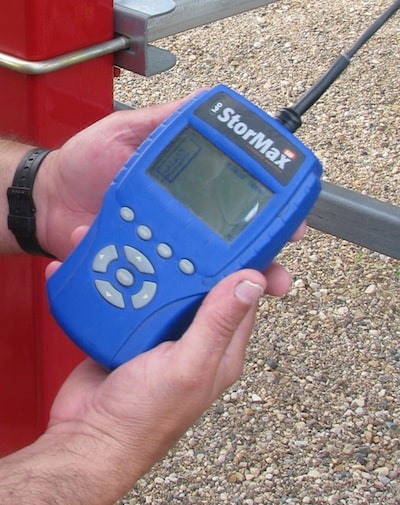
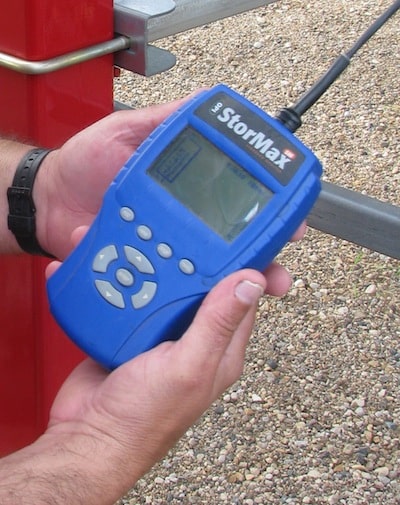
Bin cables give you an easy way to check temperatures inside the core.

The number one risk: Neglected bins. Growers are busy enough at harvest just getting the crop off, but take time to check all bins within the first two weeks after filling, and then again a couple more times until the canola is cool and winter sets in. Canola seed continues to sweat during the first 4 to 6 weeks after harvest, making this a critical period to move air through the bin and remove that moist air. It cannot always wait until after harvest. Canola can jump from 30°C to 50°C and beyond in two weeks or less.

Frost hits standing canola: What to do?

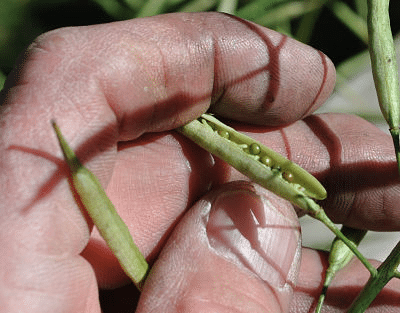
This was taken 4 hours after a minus 7°C frost. Green pods are already turning white and popping open.

Check standing canola the morning after a frost, but wait at least 4-6 hours after frost to allow the full extent of severe frost damage to become evident. The crop may look undamaged that morning but by lunch time, wilting, desiccation and pod splitting may begin. If you scout early and then not again, you may underestimate the damage and miss a chance to swath now to save some of the yield. Conversely, light to moderate frost damage may take longer to become evident, so scout again after 2 to 3 days to reassess and make a decision.

Dry-down herbicide for straight combining

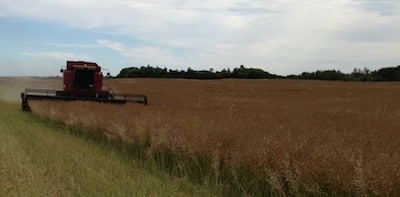
Straight cut Brackenreed

Some growers who straight combine canola that is not a glyphosate tolerant variety will apply glyphosate to even out the crop for easier harvest. When using glyphosate in this fashion, make sure a majority of the field is mature. Growers using Reglone on canola to be straight combined take note: Reglone can increase both pod shatter and pod drop if harvesting is delayed, so be prepared to combine as soon as green seed and seed moisture have reached suitable levels.

Harvest safety: Tips to save a life

Harvest is a farmer’s busiest time of the year and unfortunately one of the most dangerous. Fatigue and stress often lead to shortcuts and unsafe practices during this time. It is essential to take breaks, slow down, follow safe practices, and ensure everyone on the farm is trained to do the task at hand.

Earn an extra $1,920 per quarter

combine canola smalll

Canola growers often lose 2 bu./ac. out the back of the combine. Losses can easily reach 5 bu./ac. if the combine is pushed beyond its threshing capacity. Every combine will have a sweet spot where the settings and ground speed are just right for the conditions and losses are within the acceptable range of 0.5-1 bu./ac.

The only way to find that sweet spot is to first set the combine concave spacing, cylinder/rotor speed, fan speed, and sieve and chaffer spacing to match the canola harvesting conditions. And then second, to get out and measure the losses.