The export effect: your spraying choice now may affect your worldwide market tomorrow

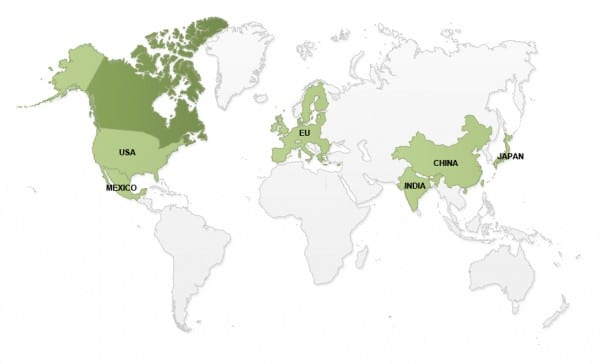
Insects or disease may only have minor impacts on your yield at first, but spraying for them at the wrong time can have huge impacts on viable international markets by the end of the season. The canola industry works hard to keep a competitive, stable and open trade environment for canola and build strong relationships with customers around the world because international customers love clean Canadian canola. Make sure you help keep it clean by:

Respecting Pre-Harvest Intervals (PHIs)
Only using pesticides registered for use on canola
Following canola storage recommendations
Planting only R (resistant) or MR (moderately resistant) rated canola varieties
Not growing de-registered varieties
Swath timing tips

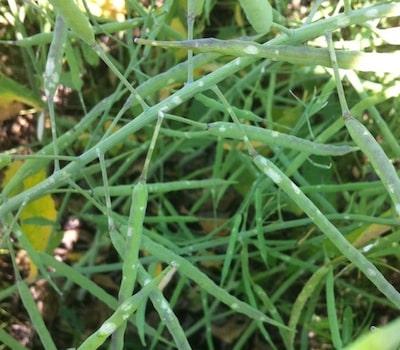
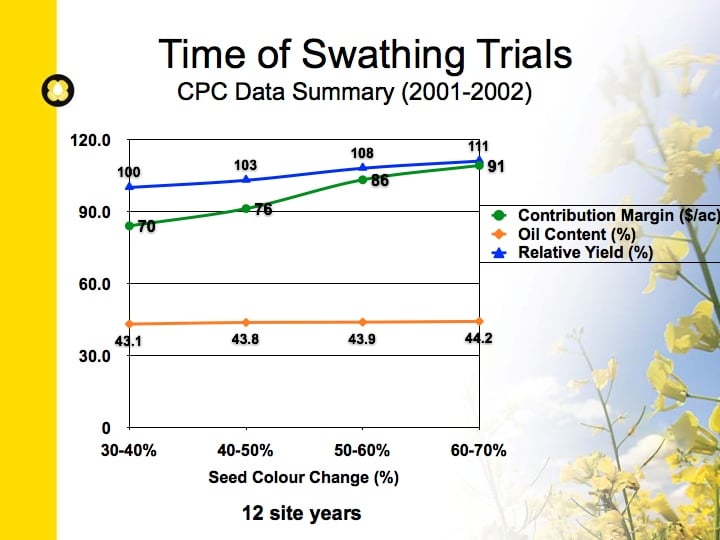
The ideal swath timing is when 60% of seeds on the main stem are showing some colour change from green to brown. Colour change is considered any amount of yellowing or browning on the seed. To determine ideal swath timing, fields need to be walked and pods need to be cracked – remember you are looking for seed colour change, not pod colour change.

Cut later for higher yields

Summary results pooled for both 3 and 5 lb/ac seeding rates at all locations based on similar trends observed. Straight cut treatments at 10 of 12 locations produced relative yield of 107% vs 30-40% SCC.

Cutting canola after 50% seed colour change will increase crop yields because side branches have longer to fill and average seed size for the whole plant is larger.

Best headers for straight combining canola

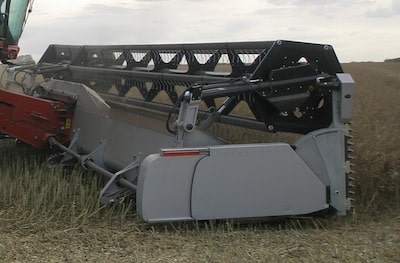
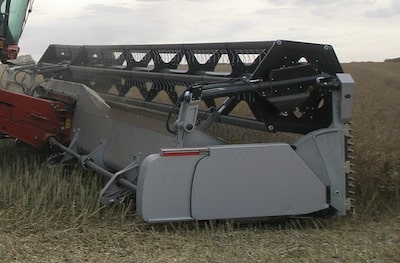
Biso header for straight combining canola

Specialty headers designed to straight combine canola seem to provide an improvement over standard straight cut headers. These specialty headers have the cutterbar out in front of the reel to catch seed that drops on impact from the reel bats.

Summer can be dangerous for stored canola

We have reports of an “alarmingly high” rate of canola spoilage across the Prairies. Have you checked bins lately? Hot conditions increase the storage risk, even if canola is dry. Take a look, and turn the bin or turn on the fans if necessary.

Click here for an update on PAMI’s summer storage research. This research will help us determine whether canola is best left alone (although checked regularly), turned or aerated for safe summer storage.

Keep It Clean: Keep treated seed out of hauled grain

As growers transition from seeding back to grain hauling to get bins cleaned out and ready for harvest, there are two timely “Keep It Clean” messages to keep in mind:

1. Carefully clean all treated seed and seed treatment dust out of the trucks and augers. Elevators are watching for this, and may reject loads where treatment is detected. This also presents a potential trade risk for any canola customers who may find seed treatment traces in a shipment.

2. Do not use malathion on bins planned for canola. Malathion is used to control grain storage insects in bins, but malathion can be absorbed by canola seed stored in those bins. Therefore, malathion cannot be sprayed in canola bins any time within six months of canola going into those bins.

BLOG: Summer storage of canola

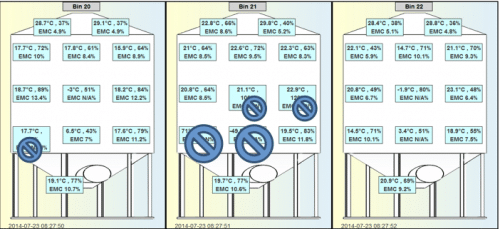
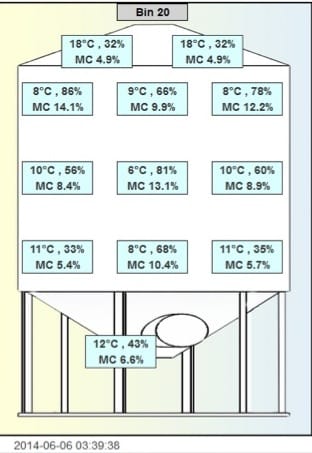
A screen capture of the real-time display for Bin 20 (as of 3:39 pm June 6, 2014)

The Canola Council, in collaboration with PAMI and the provincial canola grower commissions, is gathering information to help define best management practices for summer storage of canola.

We do not have enough practical information to answer the question “How does the warm summer air affect the temperature, moisture and potential spoilage of cooled canola?” There was also no way to validate the recommendation that cooled canola should be warmed slowly to reduce the risk of spoilage during summer storage. Nor was there any evidence that “turning” a bin will help even out the temperature distribution in the grain. In May 2014, the Canola Council secured funding for a project to help answer these questions. This blog will follow the progress of this project.

Residue rescue: Survey results

High cereal yields last year mean more residue issues this spring. If the drill cannot cut through or dig under the residue to place seed into soil, then some sort of residue management may be the lesser of two evils. We ran a survey the past two weeks asking Canola Watch readers for their thoughts on effective spring management for residue.

Following are the detailed responses we received. Note that the opinions expressed are not necessarily those of the Canola Council of Canada and may not represent the best management practices….

Put bin checks on your spring to-do list

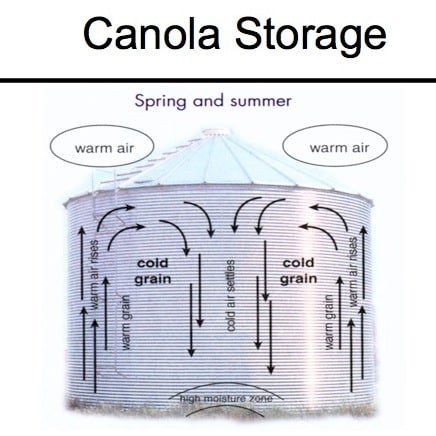
As outside air warms up, moisture migration cycles in the bin can concentrate warm moist air, creating a potential start point for spoilage.

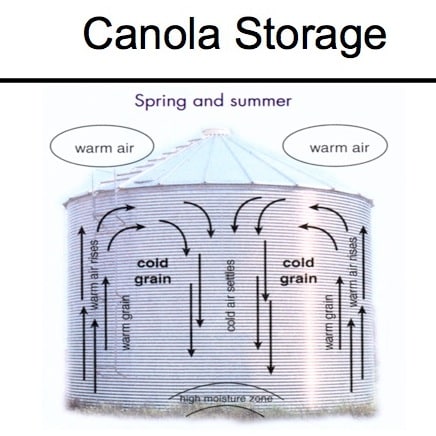
Canola may be stored longer than usual and in bigger quantities this year. As outside temperatures warm up, it becomes important to check bins again to make sure canola inside safely makes the transition from winter to spring and summer. Movement of air and moisture inside bins is greatest when the temperature difference between inside and outside is greatest. Increased air movement inside bins moves moisture to concentrated areas, and increases the spoilage risk. (See the diagram.)