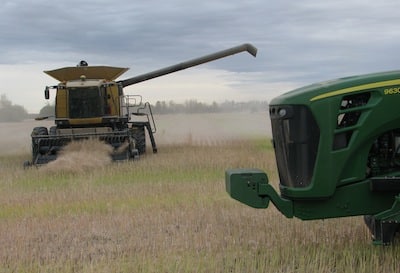
Set the combine to reduce losses

combine canola smalll

Growers have three steps to assess combine losses:

1. Measure the losses. Drop pans are required, given that combine loss monitors are not always accurate or calibrated properly. How to measure losses.
2. Determine whether those losses are acceptable.
3. If not acceptable, take measures to reduce the losses.

Les Hill is the manager of technical services and business development for PAMI in Humboldt, Sask. He has 8 tips to reduce losses at the combine…
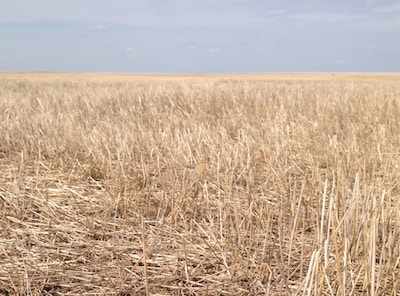
Residue management starts at the combine

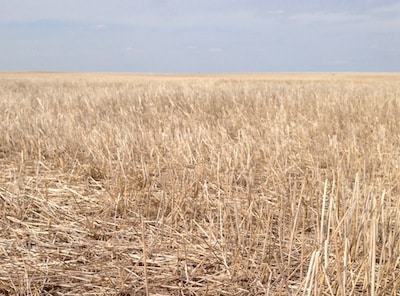
Spread cereal residue evenly and chop it well to improve seed placement next spring.

An important factor in canola stand establishment next spring is the crop residue situation this fall. An even mat of cereal residue is preferable to clumpy distribution that can affect drill performance, seed survival and overall crop uniformity next year. Fall is the best time to make sure residue is spread evenly. A properly adjusted combine straw chopper and spreader is key, and may eliminate the need for harrowing or stubble burning.

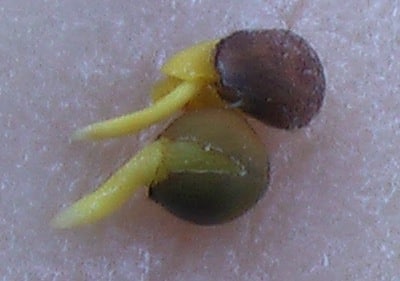
Sprouted canola seed — grading guide

Sprouted canola seed.

Excess moisture has caused some canola to sprout inside pods. There is not much growers can do to avoid this, and combining early is not an option — given the storage risk.

Sprouted seed is categorized as “damaged” seed, which is a grading factor. No.1 canola can have a maximum 5% damaged seed. No.2 can have up to 12% damaged seed. No.3 can have up to 25% damaged.

Swathing after a frost

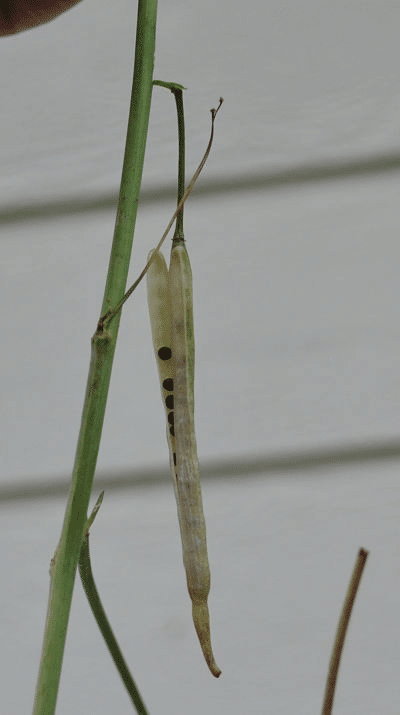
This was taken 4 hours after a minus 7°C frost. Green pods are already turning white and popping open.

Frost on pods can stop plant development and lock in green. It can also cause pods to split. However, a light frost may have no effect at all, and the crop will be better left to mature fully. To determine which situation applies in a frost situation, do the following….

Early, hot swathing can increase green

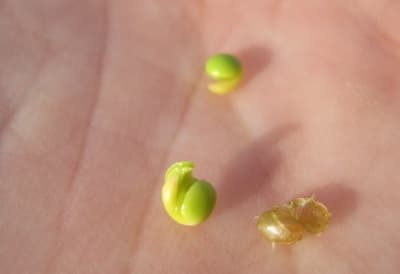
Green seed cropped

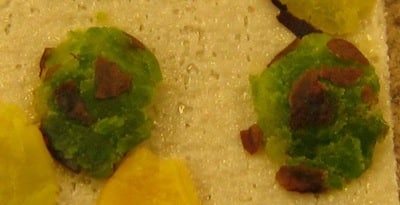
Swathing too early and in hot windy conditions can contribute to high levels of green seed.

Cutting canola in hot conditions leads to rapid dry down and desiccation, which doesn’t give chlorophyll time to clear from immature seed. Waiting until less mature seed is at least firm to roll between thumb and forefinger will help minimize yield reductions from early swathing, but significant curing will still need to take place in the swath to remove green seed.

Swathing variable fields

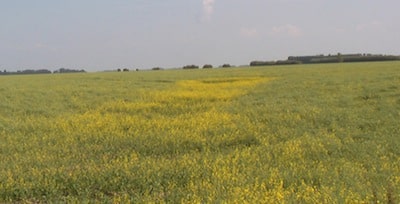
cw2-image-harvest-management-field-podded-low-area-flowering-2-martinkat

The swath decision becomes more difficult in crops with plants at multiple stages of growth. For example, if some plants are at 60% seed colour change (SCC) on the main stem and other plants are still flowering, growers may want to hold off on swathing. Or if plants are large with many secondary stems, the main stem may be at 60% SCC, but seeds in side branches are still mushy and green. These seeds would wither up and amount to nothing if the crop is swathed at 60% SCC on the main stem.

Here are some tips to help with the swath decision on these fields….

Have bins ready for canola

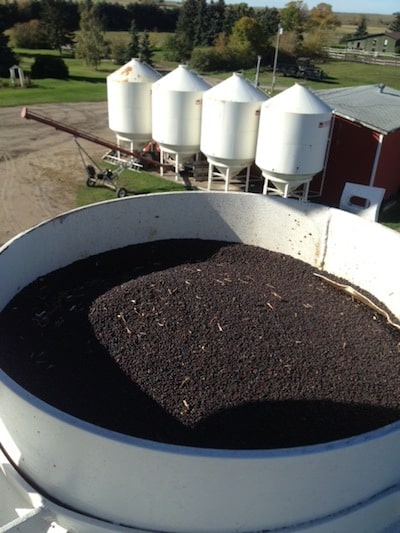
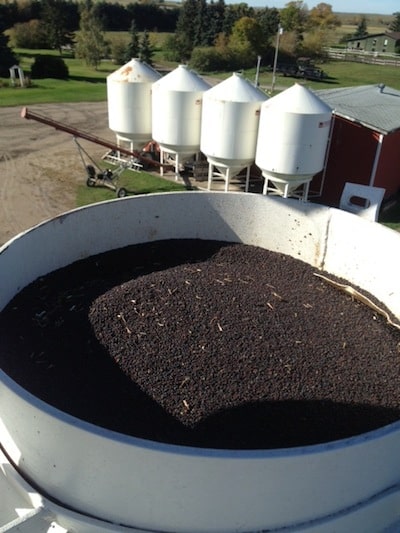
Full bin canola

Canola growers have three quality and trade issues to keep in mind when storing the crop:

1. Do not put canola in bins treated with malathion. Malathion is often used inside bins to control grain storage insects, however this insecticide can enter canola seed in storage and should not be used on bins storing canola.

2. Completely remove treated seed from bins, augers and trucks.

3. Clean out any animal protein (blood meal or bone meal, for example) from bins used to store canola.

Farm safety at harvest

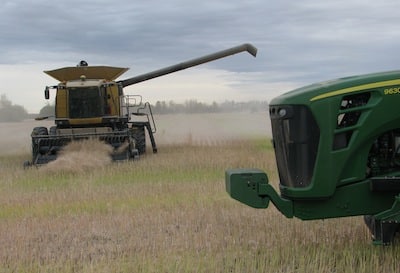
Harvest combine and tractor

Harvest is a farmer’s busiest time of the year and unfortunately one of the most dangerous. Fatigue and stress often leads to shortcuts and unsafe practices during this time but it is essential to take breaks, slow down, follow safe practices, and ensure everyone on the farm is trained to do the task at hand. Safe Work Manitoba provides the following safety tips at harvest…

Swath timing: is close, close enough?

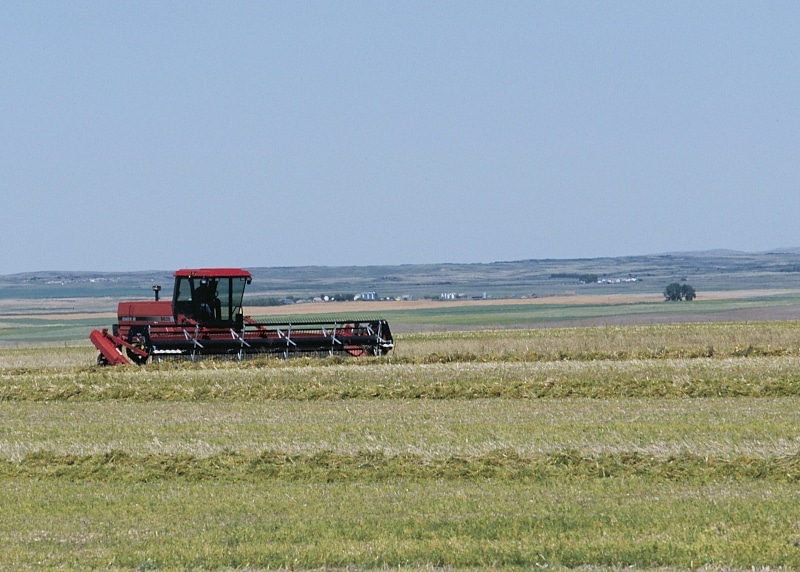
Swathing

If your crop is looking healthy and strong with uniform maturity, you will likely have no problem deciding when to swath. However, if you have some variability in the staging of your stand due to hail damage, drowned out areas, dry areas, heat blasting, insect damage, disease or weed issues, it will make swath timing a more complicated decision.

Bin combining? Here are some points to consider.

Bin

Whether you’re waiting to get into the field or already cutting your crop, having a proper storage facility is critical. If you had last year’s grain in your bins for longer than usual, and into the spring when grain temperatures were no longer cold enough over specific durations to kill most insects, you may want to confirm your storage locations are ready for this year’s crop.