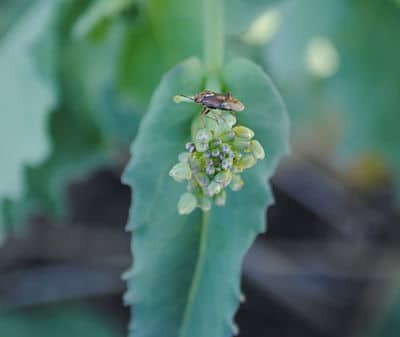
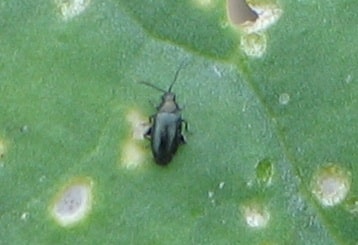
June 27, 2012 Insect update: Lygus scouting tipsInsecticide control at the bud stage is rarely effective or economical even when counts are 15-20 per 10 sweeps. Under good growing conditions, canola
June 27, 2012 Insect update: diamondback, weevil, cutworm, bertha, beneficialsProbably too early to spray cabbage seedpod weevil, diamondback continue feeding, bertha moth numbers are high in some regions, cutworms near the end but
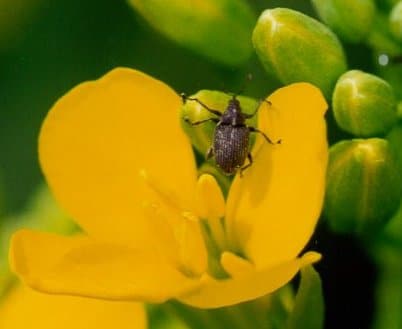
June 20, 2012 Insect update: Cabbage seedpod weevilBegin sweep netting for cabbage seedpod weevil when canola enters the flowering period. Select 10 locations within each field and at each location, count
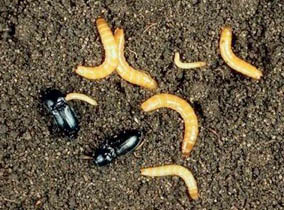
June 20, 2012 Insect update: leaf rollers, wireworms, bertha, flea beetlesLeaf rollers probably aren’t worth controlling. Wireworms will live up to 4 years as a larvae and will feed on canola. Bertha monitoring begins.
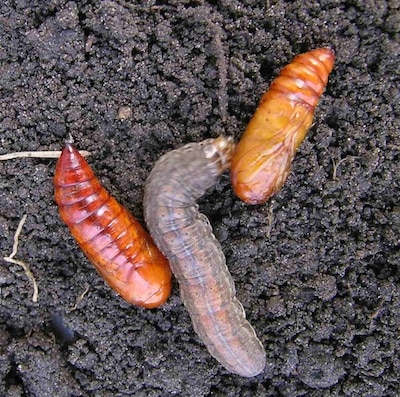
June 13, 2012 Cutworm scouting and control tipsCutworms can leave canola fields with bare patches, clipped plants and large chunks out of stems and leaves. Flocks of birds — crows, gulls,
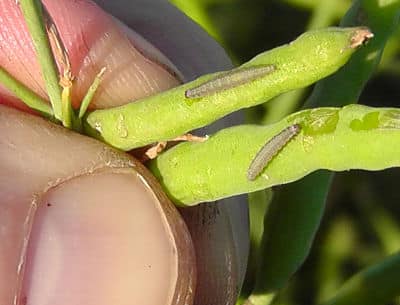
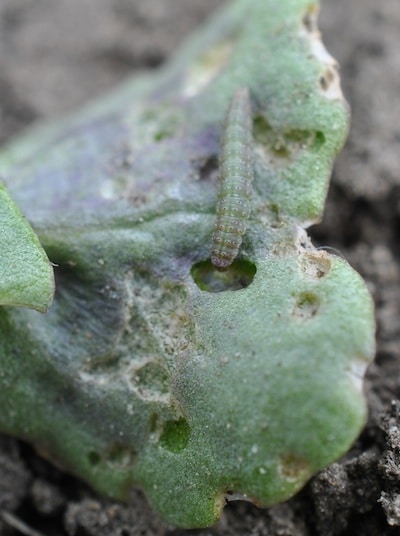
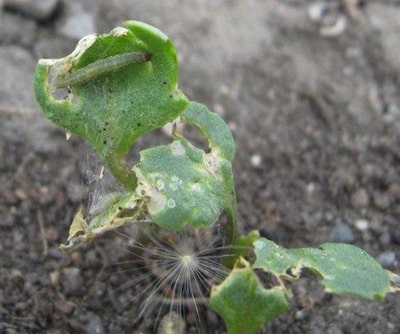
June 13, 2012 Diamondback larvae near thresholds in some canolaBefore spraying for diamondback moth larvae, make sure that: 1. Large areas within the field have reached the nominal threshold of 25% or more
June 8, 2012 Diamondback larvae near thresholds in some canolaAdd diamondback moth larvae to your early season scouting list. Growers cannot expect insecticide seed treatment to protect canola from diamondback moth larvae, so
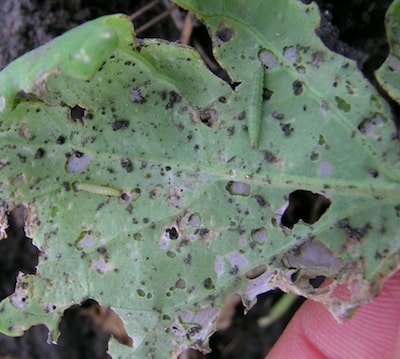
June 6, 2012 How to ID insects by feeding damageDiamondback moth and flea beetle damage can look similar in some cases. So can wireworm and cutworm underground feeding. Look for the damage and
June 6, 2012 Tank mixing herbicide with fungicide or insecticideIf an insect or disease threat is present at economic thresholds and within the weed control window, applying herbicides with other pest control products
June 6, 2012 How to leave a check stripKeep it simple — compare only treated and untreated strips. Mark the strips and take them to yield. Do an economic analysis. Work with
May 31, 2012 Are you sure it was flea beetles?You maybe went to a field to scout for flea beetles, but take time to look around. Consider all possible causes when you notice
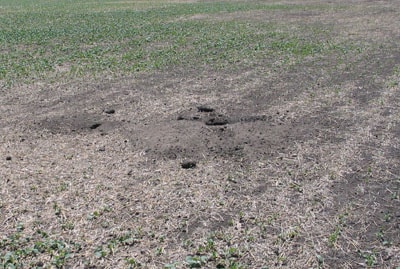
May 31, 2012 Gopher managementGophers can eat up large areas within a canola field. Strychnine baits and, in some jurisdictions, mix-it-yourself strychnine liquid is available for gopher control.