
This figure show the yield response of hybrid canola to applied and soil nitrogen. The blue line is what matters when assessing the return on investment and your risk assessment with regard to nitrogen. Here’s how to read the figure…
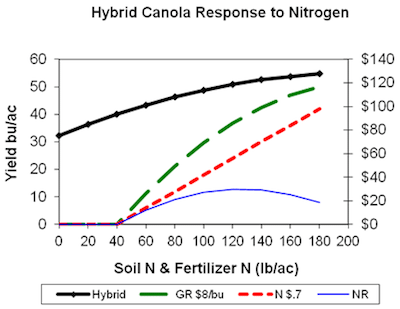
This figure show the yield response of hybrid canola to applied and soil nitrogen. The blue line is what matters when assessing the return on investment and your risk assessment with regard to nitrogen. Here’s how to read the figure…
The 4 Rs, as described by the Canadian Fertilizer Institute and other crop nutrition organizations, are the right fertilizer source at the right rate, at the right time and in the right place. The 4 Rs will help you make the most of your fertilizer investment.
Here are the three basics of canola crop nutrition…
One goal in the Canola Council’s new strategic plan is to reach an average yield of 52 bu./ac. by 2025. This, along with acres holding at around 2012 levels, will achieve the production target of 26 million tonnes — which is the forecast market for Canadian canola by 2025.
Here are five keys to achieving the yield target…
Nutrient reserves vary from field to field, and from zone to zone within each field. This has encouraged some growers to create different blends for each field, and to use variable rate application to adjust rates based on management zones within a field. A soil testing program is essential to determine the right blend for each field.
The question, from an overall profit perspective, is what return can one expect from varying these rates, given the investment of time and money in soil tests, in variable rate equipment, and in handling and preparing all the different blends? For some growers, one blend might be the most practical option.
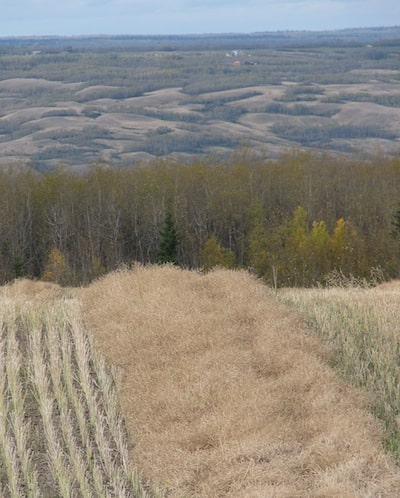

If overall crop yields are 15-20% higher than average, as some forecast, then nutrient depletion is likely to be greater than normal. Standard fertilizer rates may need to be increased as a result, but soil testing will be necessary to confirm.
High yielding canola and cereal crops will have drained the soil of a lot of nutrients. Taking good soil samples will help determine how much is left, and how to adjust fertilizer rates for the 2014 crop.
Avoid sampling areas that may exaggerate the soil test readings. These areas include low spots, sandy ridges, old yard sites, hilltops, saline areas and old burn piles. If hiring a custom soil sampler, advise or accompany the person taking the samples to be sure those areas are avoided.
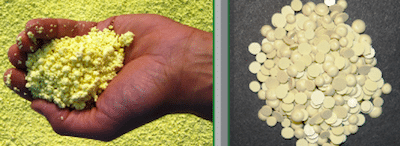
For growers who want to use elemental sulphur, fall is the time to apply it.
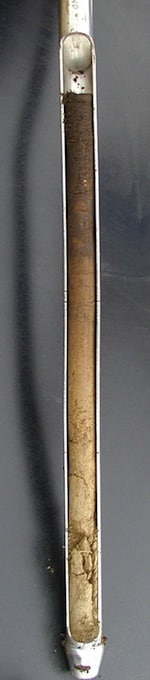
With reports of high yielding crops across the Prairies, fall soil tests are a good way to see how much nutrient reserves are left. It might not be much. Or, if yields were variable, some areas may have more than you think.
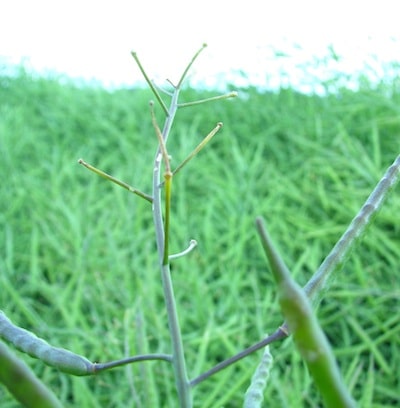
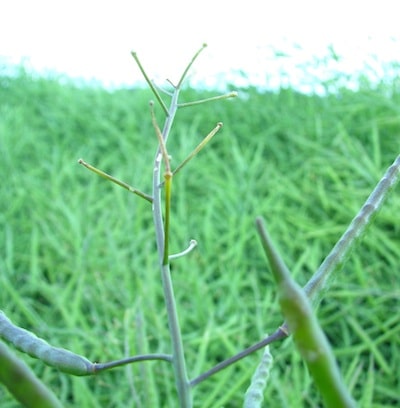
Some canola fields are exhibiting missing or stunted pods at the top or middle of stems. Pods in some fields have been described as green on the ends and translucent in the middle. The most likely cause is environmental. The few days above 30°C in early July would certainly cause flower abortion, and the hormone response to a couple days of heat could stretch the effect on podding to a week or more. However, other factors can be at play…
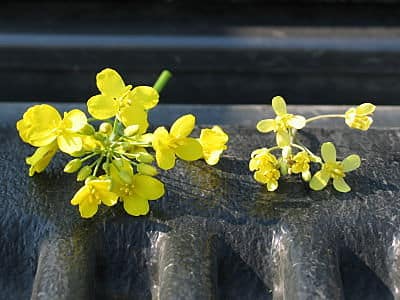

The ideal time for a sulphur top up is any time before flowering, but a top up at early flowering may pay off if plants are showing signs of sulphur deficiency.
The ideal time for a nitrogen top up is before the 5-leaf stage of canola, but AAFC research out of Indian Head, Saskatchewan, shows that nitrogen top dress as late as 5-10% flower can still provide a yield benefit.