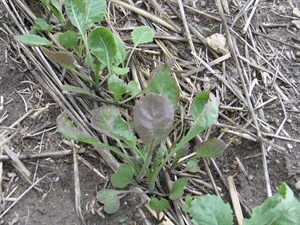
Two potential top dress situations are showing up in canola fields across the Prairies this week:
1. Excess moisture and poor nutrient availability.
2. Crop runs out of nutrients.
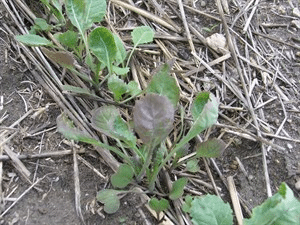
Two potential top dress situations are showing up in canola fields across the Prairies this week:
1. Excess moisture and poor nutrient availability.
2. Crop runs out of nutrients.
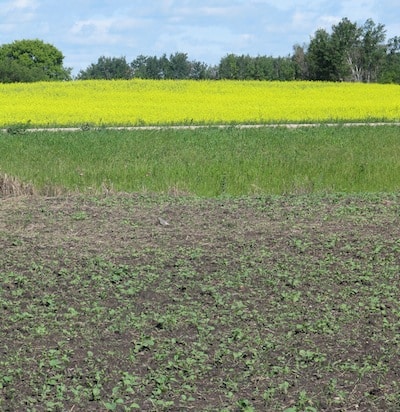
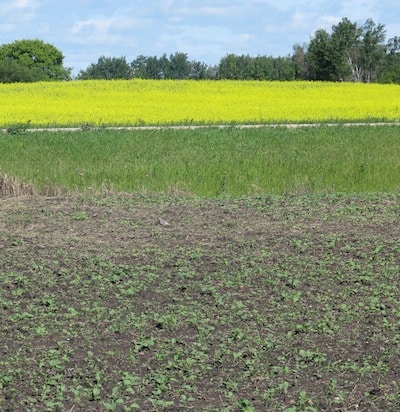
Canola crops side by side can have different risk factors, and often do not require the same crop management for nutrients, weeds, insects and disease. Crop rotation, fertilizer rates, plant population, stand uniformity and crop stage are a few factors that can influence whether one crop needs a treatment while the other right beside may not.
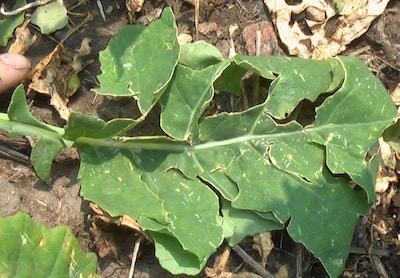
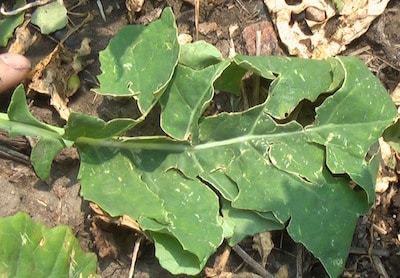
We had a “follow up question” to last week’s article “Hail damage: Economic loss depends on cro stage.” The grower was asking about foliar nutrition after a hail storm. He had 2” of rain a week after a hailstorm and he feels that a foliar application could be worthwhile. The hail hit canola at the 5-6 leaf stage with a lot of main stem breakage. The grower asked for any other information on hailed canola and what he can do to help it recover.
We reached out to a few crop nutrition experts, and here are the answers we got:
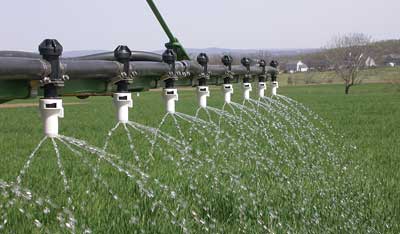

Excess moisture can reduce soil nitrogen levels through leaching and denitrification. A top dress could address this. But excess moisture and other weather factors that set back the crop may also reduce overall yield potential, which means the crop may not take up as much nutrient anyway.
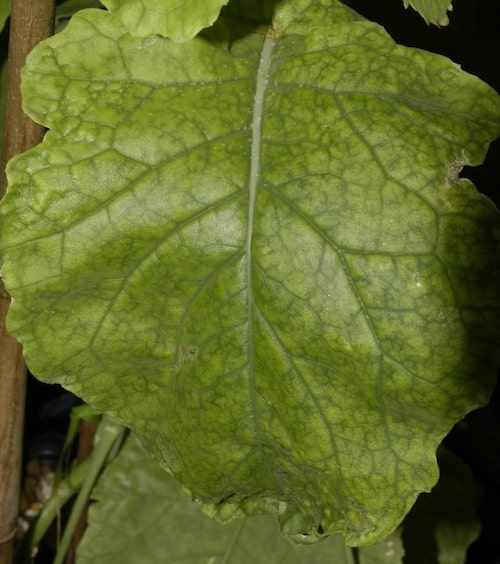
Canola needs a little bit of boron, and most Canadian Prairie soils have enough to meet this demand.
Top dressing fertilizer usually occurs after emergence, often as a response to increased yield potential or as a remedy for noticeable deficiency symptoms.
However, growers are looking at top dressing this year as a logistical aid in getting the crop seeded faster. Here are some agronomy messages to help in your decision making.
In an Alberta study, fertigation was put on at three different stages — 5-leaf, bolting, and flowering — and then compared to plots where all nitrogen was applied at the time of seeding. The study has only one year of results, and so far they show that with canola, fertigation is — at best — equal to the treatment that received all nitrogen at the time of seeding.
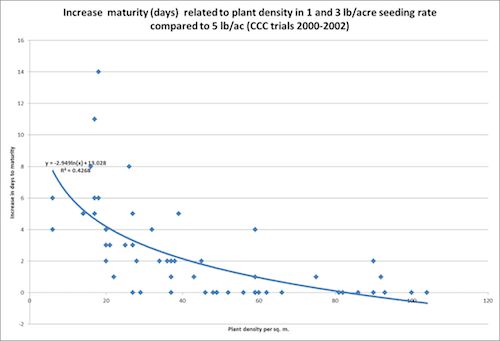
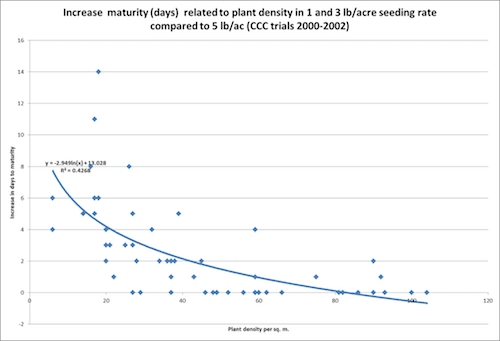
This graph shows that a higher seeding rate that will ensure a stand of at least 60 plants per square metre (6 per square foot) will mature a lot earlier than a stand with 20-40 per square metre. A higher seeding rate is just one way to reduce the days to maturity for a late seeded canola field.
Good soil moisture may encourage some growers to increase planned nutrient rates to capture an increase in yield potential. However, before increasing fertilizer rates, you may want to make sure you can get timely delivery of that extra fertilizer. Talk to your supplier. You don’t want to run out of fertilizer and still have 15% of the crop to seed.
Canola profits tend to benefit most from a nutrition plan that includes nitrogen, sulphur and some seed-placed phosphate. But what about potassium? Or micros? The Canola Council of Canada’s Ultimate Canola Challenge (UCC) will continue for 2014, with 15 sites across the Prairies. UCC will include many of the same comparisons as 2013, looking at various micronutrient treatments to see how they stack up against best management practices using N, P and S.