Here is a list of labs that service canola growers in Canada. Labs are organized under the following headings: Soil nutrient analysis, Plant tissue nutrient analysis, Seed quality tests, Disease diagnostic on plant tissue, Soil analysis for clubroot, Herbicide resistant test for weeds, Herbicide carryover in soil, and Pesticide residue in plant tissue
Taking a good soil sample
Not a regular soil sampler? If you’re interested in starting, this is as good a time as any to start. The more you test, the more you can learn from the numbers. Benchmark samples collected from the same places for years will tell you more than a random sample done once. To see trends, you need several years. You can also learn to identify sample results that don’t seem right.
Fall field work for canola growers
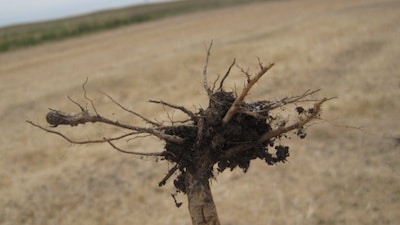
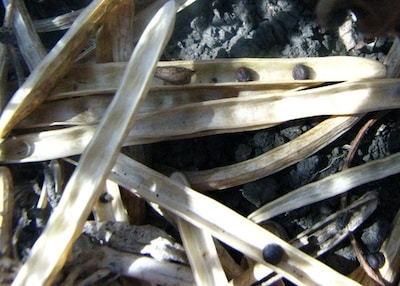
A long fall provides a few extra weeks to look back on the year that was — to reassess plant stands, fertilizer rates and disease levels. A long fall also gives growers an opportunity to control weeds and distribute residue in fields planned for canola in 2013.
Factor: Crop nutrition
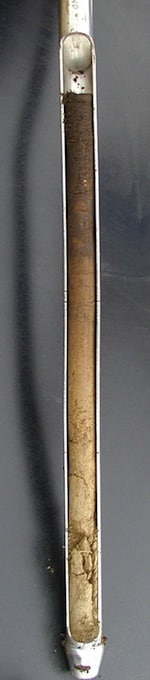
If nutrient reserves were not utilized because of environmental extremes, where are these reserves? How big are they? Soil tests will help determine this carryover. Because some may be concentrated at lower depths, growers may consider submitting 0-6” and 6-24” samples. If crops (including non-canola crops that will precede canola in 2013) had heavy biomass but low yield, nutrient in the biomass will remain in the field but might not cycle back into available forms in time for next year’s crop.
Fall soil tests: Now or before freeze up?
If you want to use soil test results to see whether this year’s crop had enough nutrients, sampling now would be the better option. To plan for next year, soil samples taken closer to freeze up are a more accurate estimate of levels next spring.
Safe rates of seed-placed nitrogen
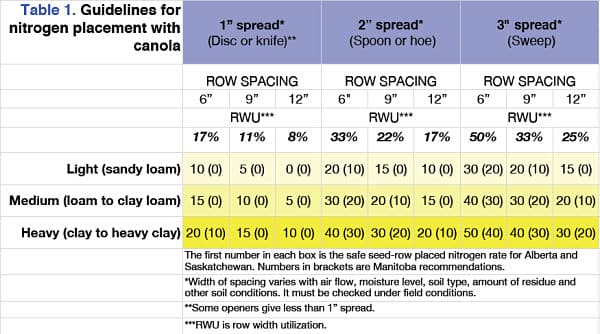
Safe rates of seed placed fertilizer depend on seedbed moisture conditions, soil type, row-width utilization, and nitrogen source. For example, the safe rate of seed-placed nitrogen is only 10 pounds of actual nitrogen per acre when using a 1” knife on 9” spacing and seeding into moist, medium soils.
When trying a new fertility product…
A number of new fertilizer products are on the market, including seed coatings that contain small starter amounts of macro- and micronutrients. On canola seeded at the equivalent of 5 lb./ac., the rates per acre of any seed-coated nutrient will be very low. Growers considering these products are encouraged to leave test strips (link to tips on how to do …