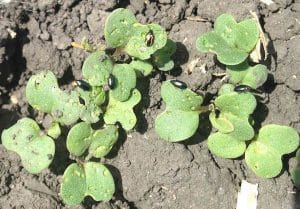
Flea beetles are just one thing to look for while scouting one to three weeks after seeding.
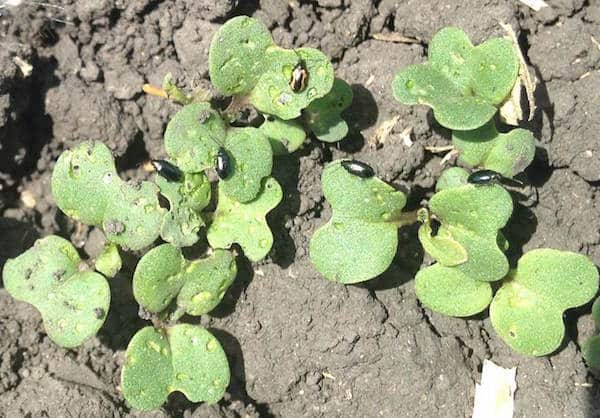
Flea beetles are just one thing to look for while scouting one to three weeks after seeding.
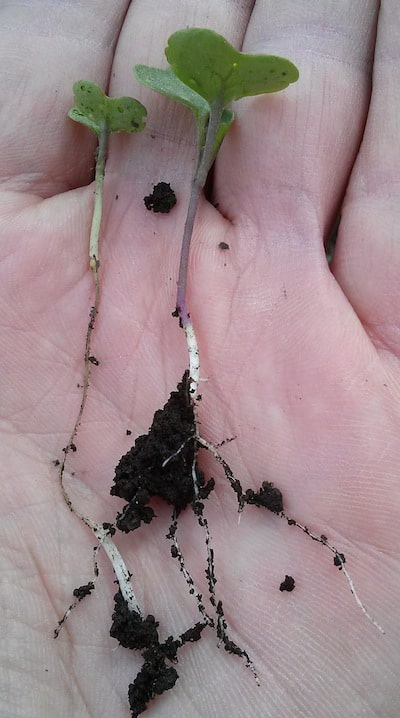

The week after seeding is a good time to verify seeding depth and to check seeds and seedlings for rots and blights. Disease damaged seed and seedlings die quickly, and may be gone within a few days, which is why this timing is important to an accurate diagnosis.
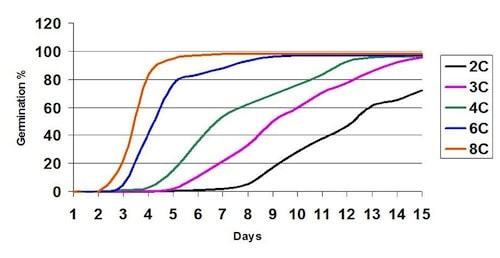
Crop yield has a lot to do with weather — rainfall, temperature, frost and hail are the biggies. Agronomic steps to reduce weather related risk can go a long way to help canola achieve higher yields under stress.
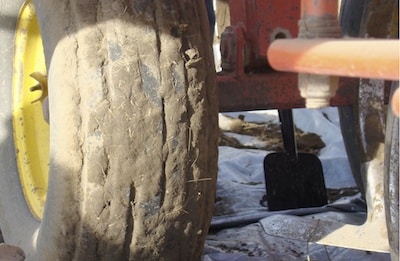

Make sure soil is cleaned off any used equipment recently purchased from areas known to have clubroot. This is good biosecurity practice. Ideally, this should be done at the purchase location before bringing it home.
CR varieties deployed now to keep clubroot levels low is part of a long-term management approach to keep clubroot from ever reaching yield-damaging levels. CR varieties are recommended if growers are in communities where or near where clubroot is known to exist AND they….
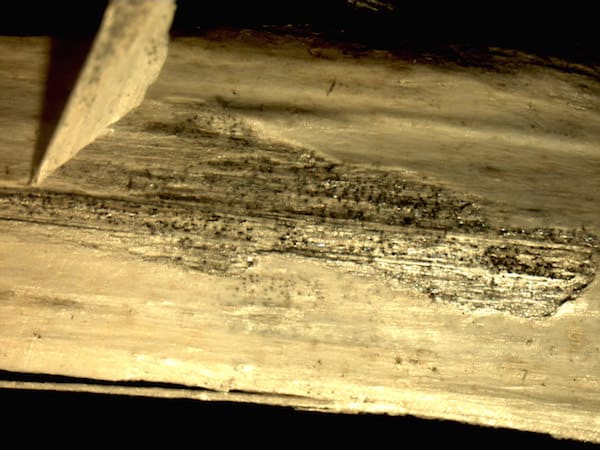

Verticillium wilt of canola has been renamed verticillium stripe. Why? The pathogen in question, Verticillium longisporum, does not appear to produce wilt symptoms in canola, so the “wilt” name used to describe the potato and sunflower disease caused by the related fungus V. dahliae infection does not apply. Photo credit: Department of Crop Sciences, Plant Pathology and Plant Protection Section (von Tiedemann Lab), University of Goettingen, Germany
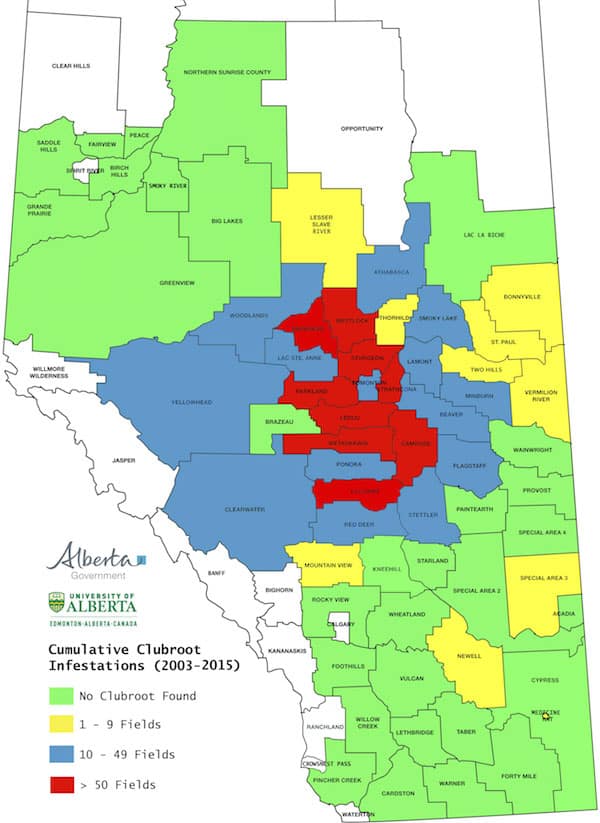

Alberta and Manitoba have maps showing the range of clubroot across each province, but the maps are based on different criteria.
Think of clubroot like a grass fire. The best way to contain the spread of clubroot is to work diligently outside the hot zone using whatever tools available to keep the “fire” from spreading to your farm. Seeding clubroot-resistant (CR) varieties is a good early action.
At least 10 new pathotypes have been discovered in fields in central Alberta. While varieties with improved resistance to 5x may provide a benefit, this resistance may not work on all new pathotypes. Infection from the other virulent pathotypes could still occur.
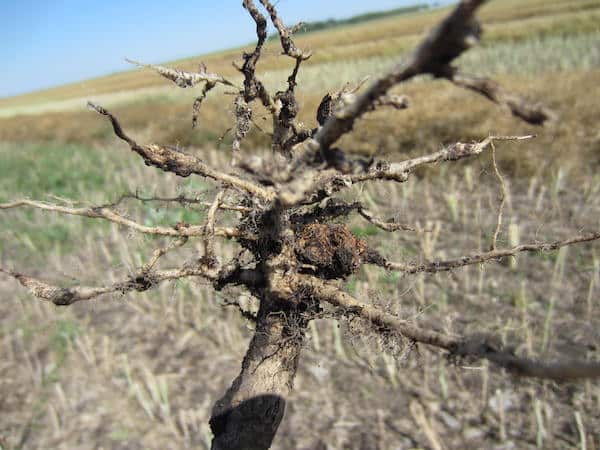

Manitoba has a few confirmed cases of clubroot in 2015. One field with galls was found in the R.M. of Pembina, and fields with galls were found in the Swan River Valley.