
Canola storage experts recommend that hot canola be put on aeration for cooling – even if it’s dry. That’s because air currents within the bin can concentrate moisture at the bottom of the central core — creating a possible start point for heating.
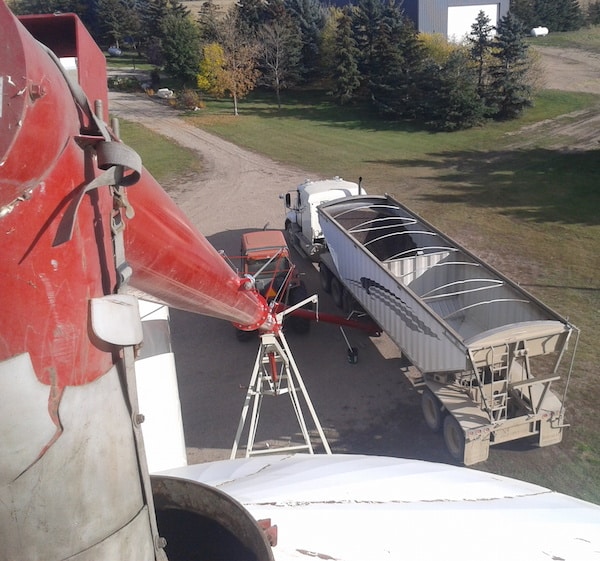
Canola storage experts recommend that hot canola be put on aeration for cooling – even if it’s dry. That’s because air currents within the bin can concentrate moisture at the bottom of the central core — creating a possible start point for heating.
Fan capacity is an important consideration in a canola bin. Airflow of 0.1 to 0.2 cfm/bu is needed to condition (cool) a bin of canola. If adding supplemental heat to dry canola, airflow of at least 0.75 cubic feet per minute per bushel is recommended. If fan size is insufficient for the job, fill the bins part way to improve airflow.
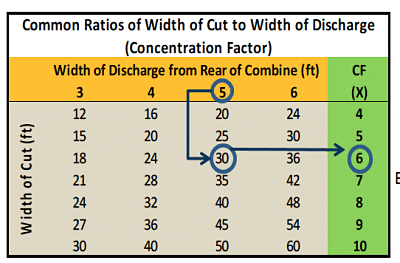

This is what a 5 bu./ac. loss looks like. There’s nothing to see. That’s why you need to follow these steps to find out how much you’re really throwing over.
Straight-combining canola can be made easier with a pre-harvest herbicide. Here are the options: glyphosate, Heat LQ/glyphosate and Reglone (diquat).
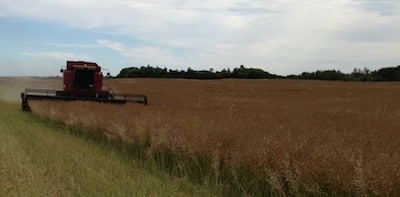

Here are factors that create the ideal situation for straight combining canola….
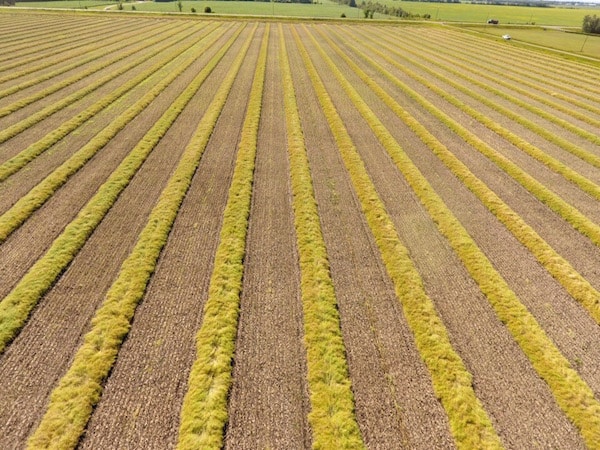
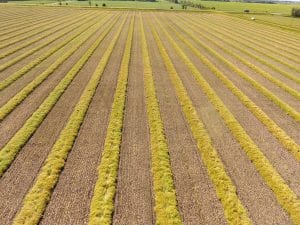
Optimal swath timing for canola yield and quality is when at least 60% of seeds on the main stem are showing some colour change. Seed colour change (SCC) is considered any amount of yellow or brown on the seed. (See scouting tips below.) This increases crop yield because side branches have longer to fill and average seed size for the whole plant is larger.
Here are 10 things to think about and get tuned up in preparation for harvest:
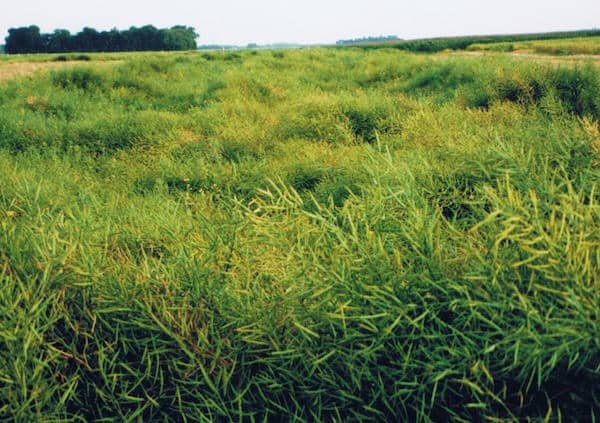

1. Green and bendable canola stems can often straighten up again (somewhat) if lodged due to wind and heavy rain.
2. If lodged due to disease, these plants are unlikely to straighten up. Plants lodged this early due to disease usually contribute little to yield once harvest rolls around.
3. Lodged plants can be more susceptible to spread of sclerotinia stem rot and alternaria from plant to plant.
4. Lodging can influence harvest management decisions, including whether to swath or straight combine the crop.
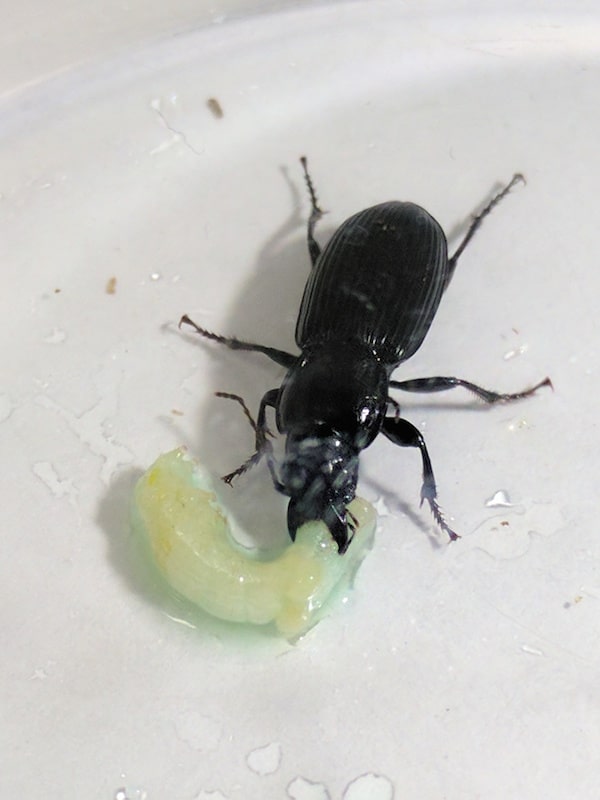

Some farmers harvesting crops this spring have noticed higher numbers of insects in their samples. These are primarily seed-eating carabid beetles and fungus-eating beetles (shown above).
Canola combined this spring has been coming off dry and cool. Should it go on aeration?