
Snow on swathed canola will delay harvest, just like a rain would, but all a grower can do in this situation is wait it out. Snow on standing canola could be another matter.
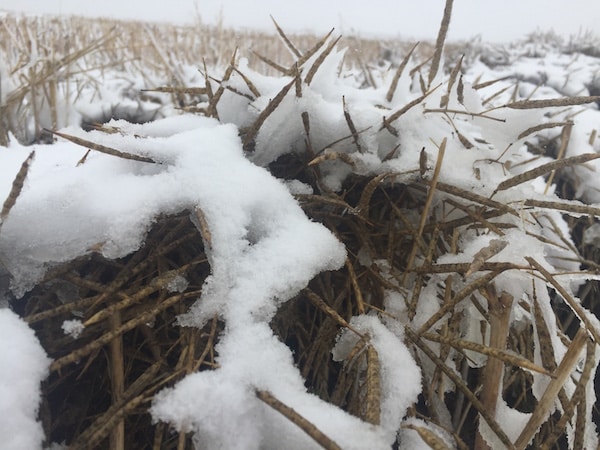
Snow on swathed canola will delay harvest, just like a rain would, but all a grower can do in this situation is wait it out. Snow on standing canola could be another matter.
We heard a report this week of tough canola starting to heat after just two days in the bin. This is a good reminder to put canola on aeration right after harvest, especially if it’s tough or hot or both. Waiting a couple weeks until all the combining is done may be too late.
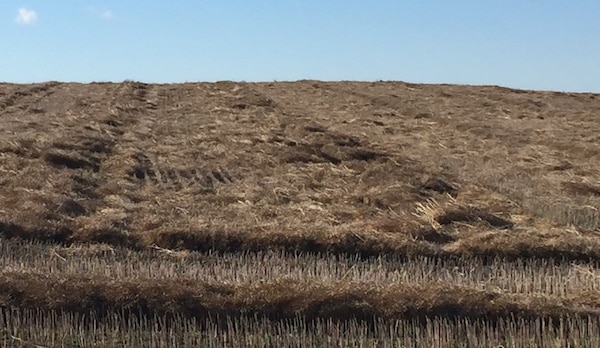

Step 1: Contact crop insurance
Step 2: Combine once the crop is cured
Step 3: Thanks about volunteer management
Step 4: Consider how this may be prevented
Frost provides some natural desiccation that may help dry weeds and green stems in fields left for straight combining. Some growers actually wait for frost before combining, using it as a tool to aid in crop dry down — but this may not be advised if the field is ready and no frost is forecast.
Harvest is a great time to assess the incidence and severity of canola diseases, an important step in management for next year.
Harvest delays due to soggy soils, frequent rains and even mist have canola growers wondering about risk to the crop and what, if anything, they can do reduce these risks. Really, the only approach is to wait out the weather. When fields are able to support the swather, decide then whether the staging suits swathing or straight combining. This article answers these and other questions: What is the “point of no return” for swath timing? Will canola seeds sprout with all the rain? How much does cool, wet weather extend curing time?
Questions that arise with long rain delays:
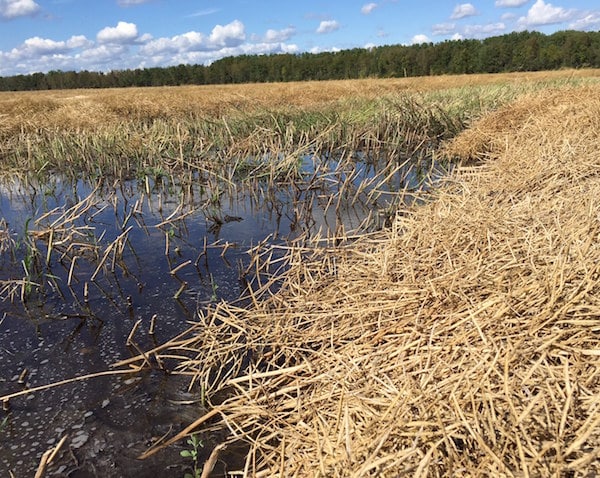

When rain stops harvest progress, consider this job — “Do an end-of-season plant count” — and nine others outlined in this article.
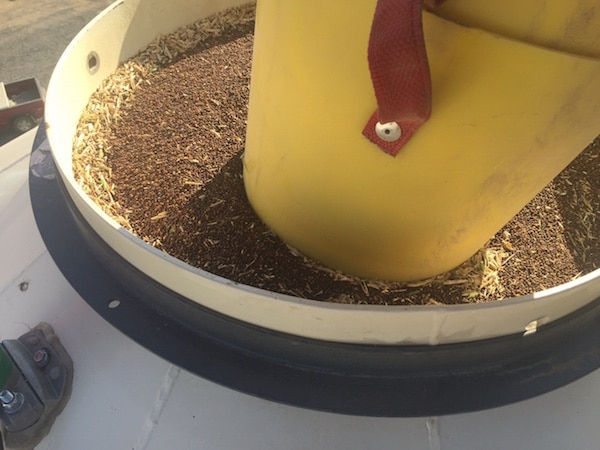

Ideally, growers will want to put canola on aeration as soon as it comes off the field. Cooling hot grain within the first 24 hours is important for safe long-term storage. Removing moisture that sweats from all canola — but especially tough canola (10-12% moisture) — is also important. Conditioning achieves both of these steps.
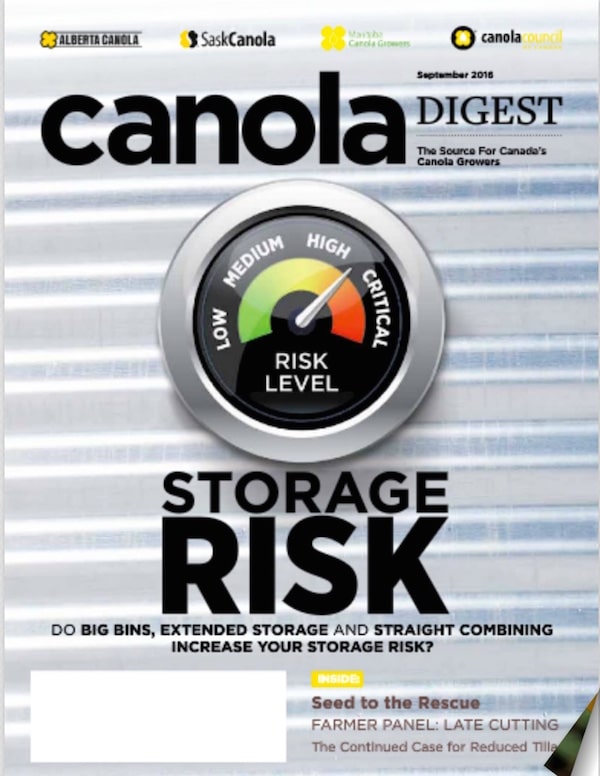

Recent trends in the way farmers choose to harvest and store canola are raising questions about current safe-storage guidelines. Bins are getting larger, more farmers are leaving their canola stand to maturity for direct-cutting and, increasingly, farmers want the option to keep canola in the bin longer as a marketing tool.
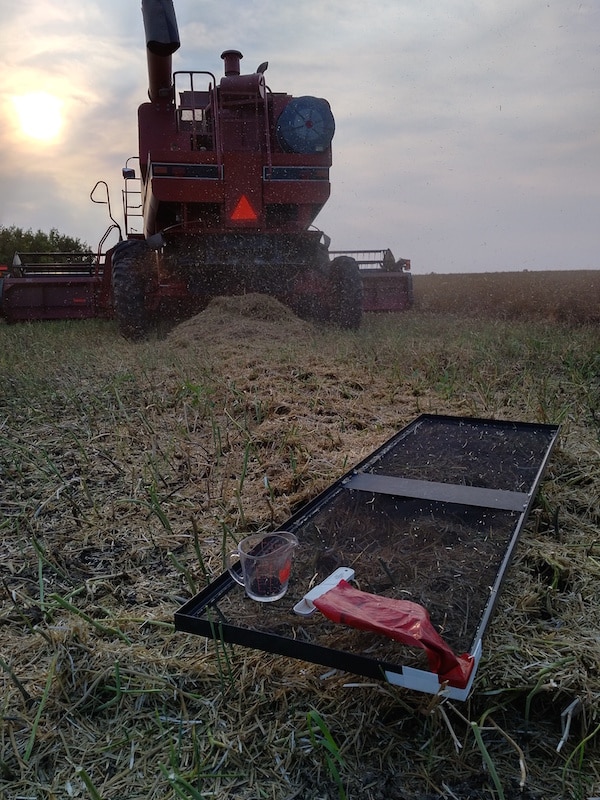

Step one is to measure the amount of loss. This article describes all the steps in detail. Step two is to determine whether that loss is acceptable. Step three is to take steps to reduce losses.