
Counting stubble density in the fall can help growers determine if their spring seeding rate was adequate to reach the crop’s yield potential. Canola generally needs a bare minimum of 4-5 plants per square foot to reach its yield potential.
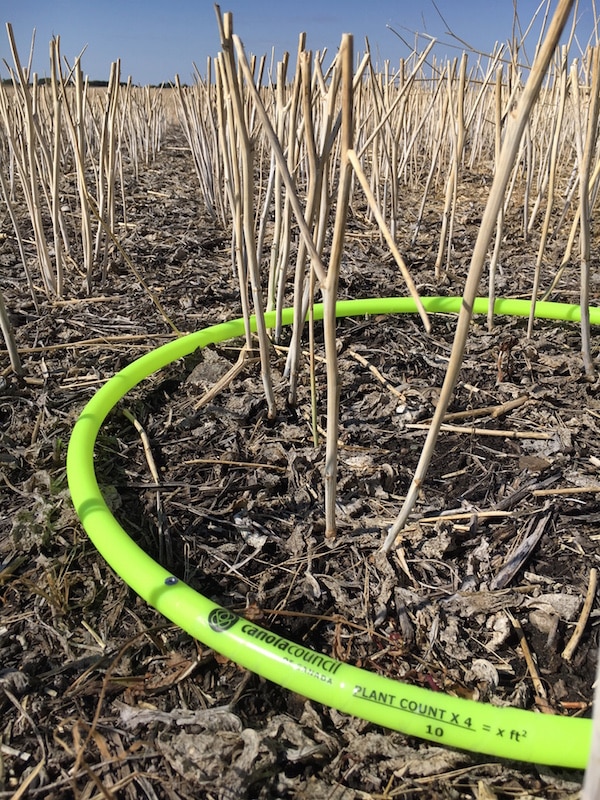
Counting stubble density in the fall can help growers determine if their spring seeding rate was adequate to reach the crop’s yield potential. Canola generally needs a bare minimum of 4-5 plants per square foot to reach its yield potential.
In one case this year, a grower seeded 2.2-gram thousand seed weight (TSW) canola seed at 5 lb./ac. With very good seed survival due to warm, moist soils, the crop now has 20 plants per square foot. Is the intense competition between these crowded plants likely to result in lower yields?
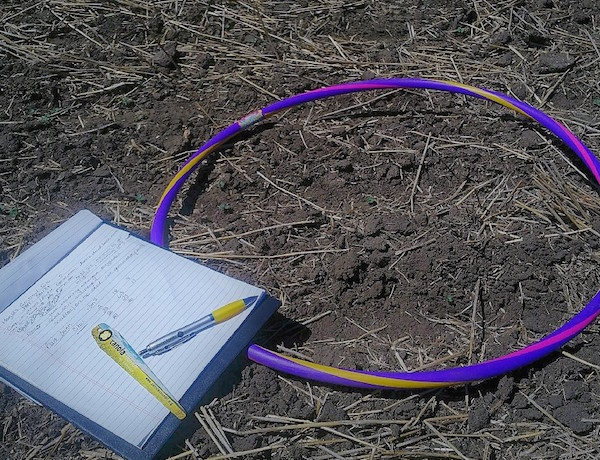

One plant count after emergence may not be enough to tell you about seed survival and whether the seeding rate and seeding tool did the job it was supposed to do. Seedling diseases, flea beetles, frost and other factors can influence seed survival, and unless scouting and counts are done repeatedly through the first few weeks after seeding, these influences may be missed and the seeding tool or other seedbed conditions may be unfairly blamed.
Crusting occurs in clay soils that get wet then dry quickly. No research has been done on how to break the crust and free the crop.
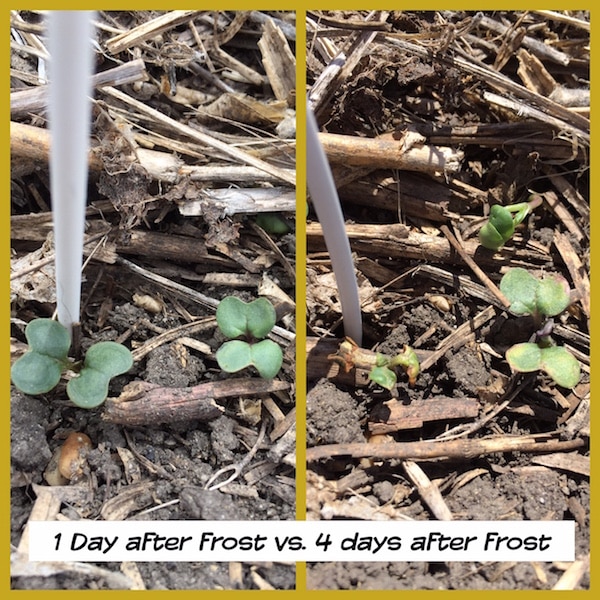

About a week after seeding, growers and agronomists can start to evaluate stands to make sure they’re emerging as expected. Look throughout the field for issues that could be related to drill performance, frost, excess moisture, insects or disease.
Factors in this decision are maturity of the variety, average date of first fall frost, crop insurance deadlines and profit potential of alternative crops.
Growers have two common questions after a spring frost:
1. Did the crop survive? (Do I need to reseed?)
2. When can I resume weed control?
Here are our answers….
AFSC in Alberta has extended its recommended seeding date deadlines for yield and quality coverage to June 5 for Argentine canola and June 15 for Polish canola. The original deadline was May 31. Yield-only insurance deadline is still June 20. Read more.
For seeding deadlines in Saskatchewan contact your local SCIC office. Find office contacts and more information here.
Seeding deadlines for Manitoba are June 15 for Argentine canola in risk area 1, June 10 for Argentine canola in risk area 2 and June 20 for Polish. Read more.
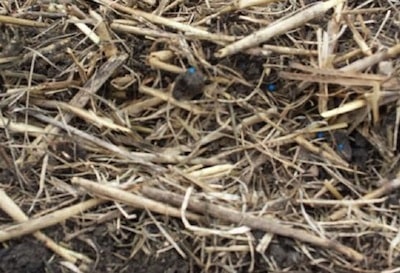
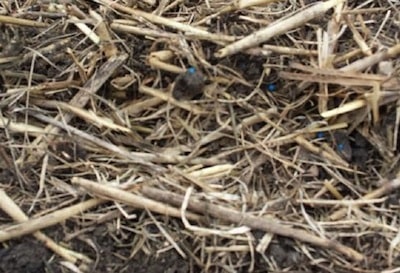
In late springs with wet conditions, broadcast seeding may be the only way to get the job done. In fact, broadcasting may actually provide better seed placement than “mudding in” seed with a drill. Broadcast seeding now could also have higher yield potential than waiting two weeks for the ground to support the drill.
The seeding rate calculator at canolacalculator.ca defaults to 60% seed survival, which is fairly typical for canola in Western Canada. If choosing the default isn’t your style, the best way to find out the typical seed mortality in your system is to start doing your own stand counts and cross-referencing that with your actual seeding rate in seeds per square …