
Did the seeding tool meet expectations this year? A moist soil bed and rain in the days after seeding can make any seeding job look passable. Problems are more obvious when the crop is under stress.
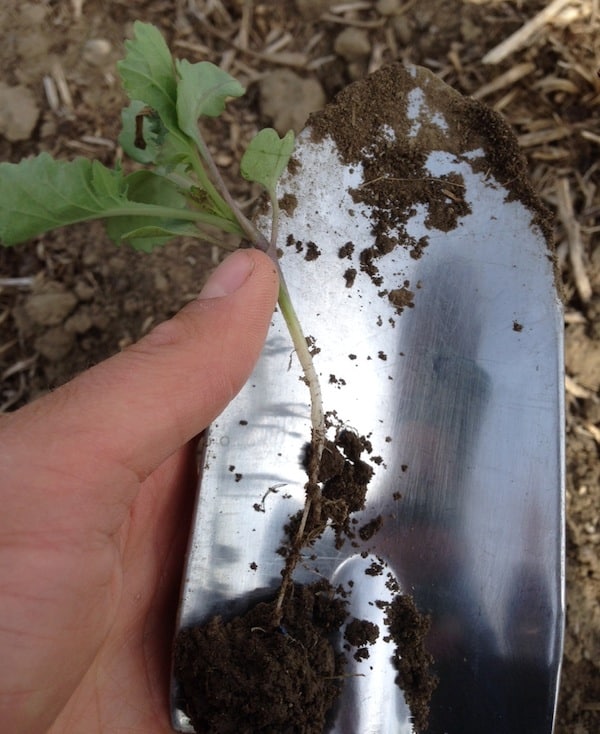
Did the seeding tool meet expectations this year? A moist soil bed and rain in the days after seeding can make any seeding job look passable. Problems are more obvious when the crop is under stress.
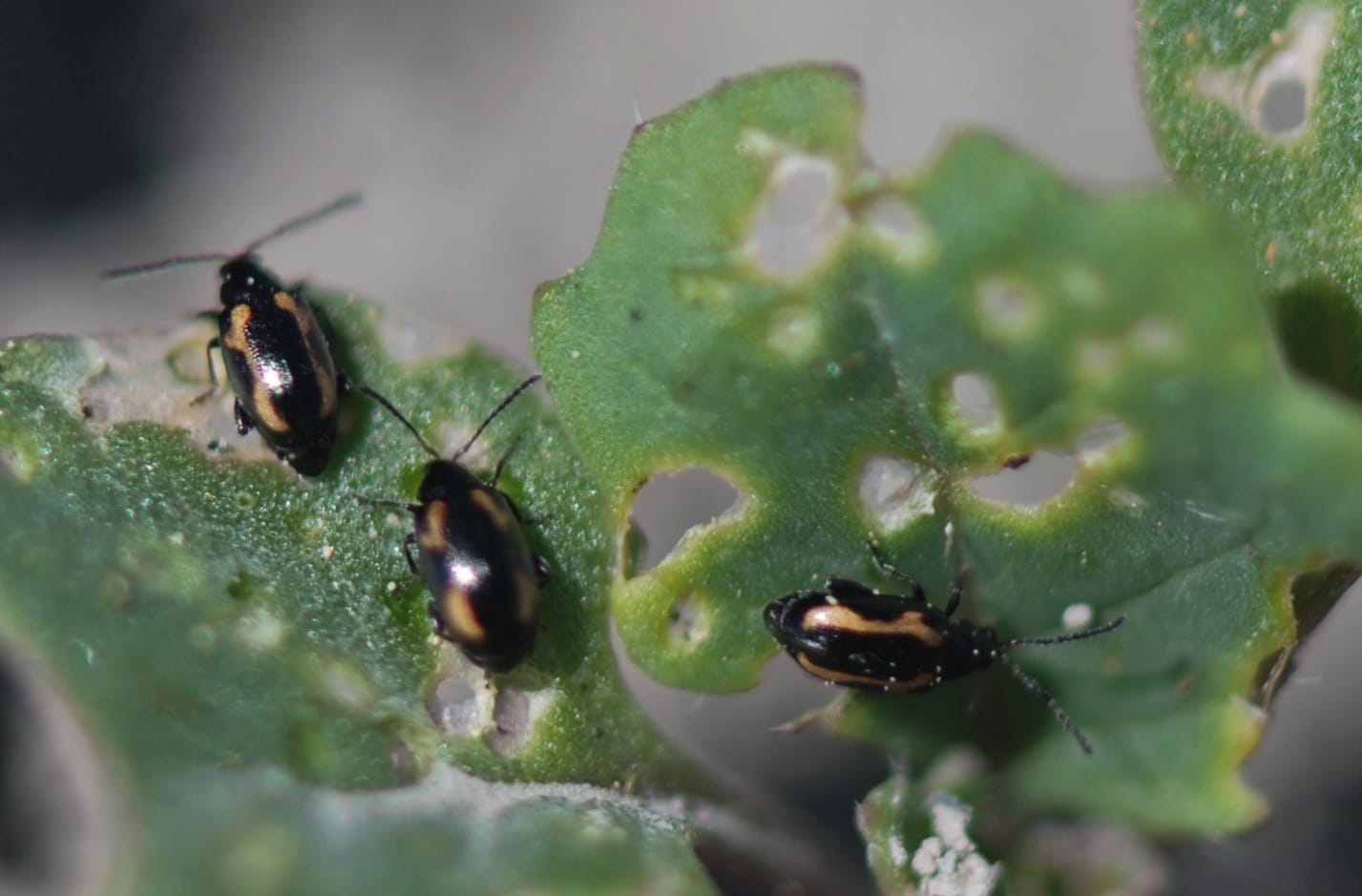
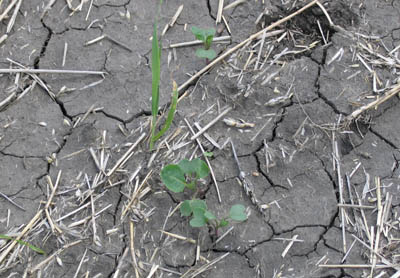
When growers have canola stands of fewer than 4 plants per square foot — due to low seeding rates, poor seed survival, insects, crusting, frost, wind, etc. — they grapple with the question whether to reseed. An established canola stand with as few as 1-2 plants per square foot generally has higher economic potential than if were to reseed that crop in June. This population is far below the minimum 4-5 per square foot required to meet yield potential, but a thin stand seeded early has greater economic potential (considering yield, quality and cost of production) than an adequate stand that doesn’t get established until mid to late June.
However, reseeding may be the better option if…
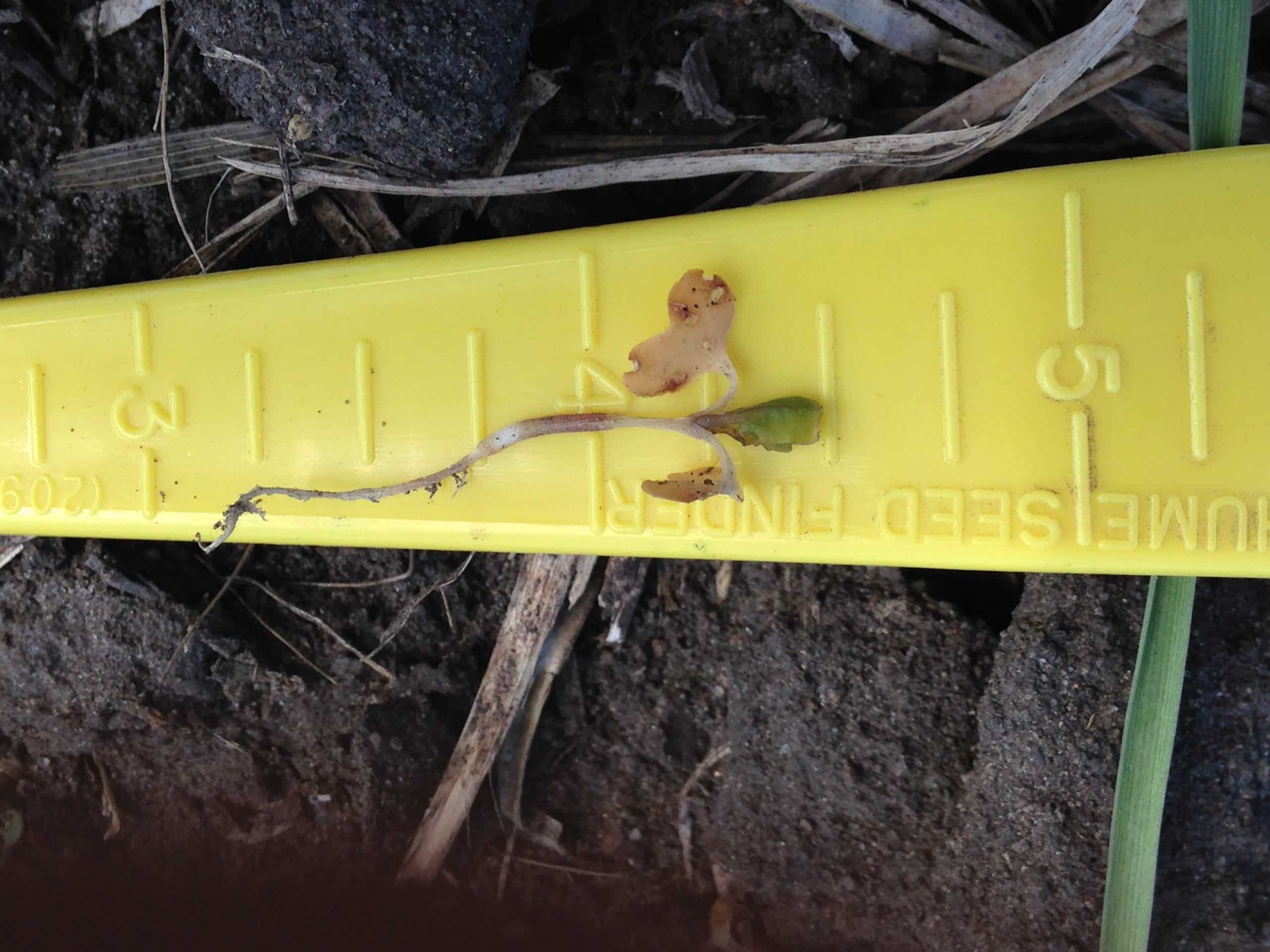
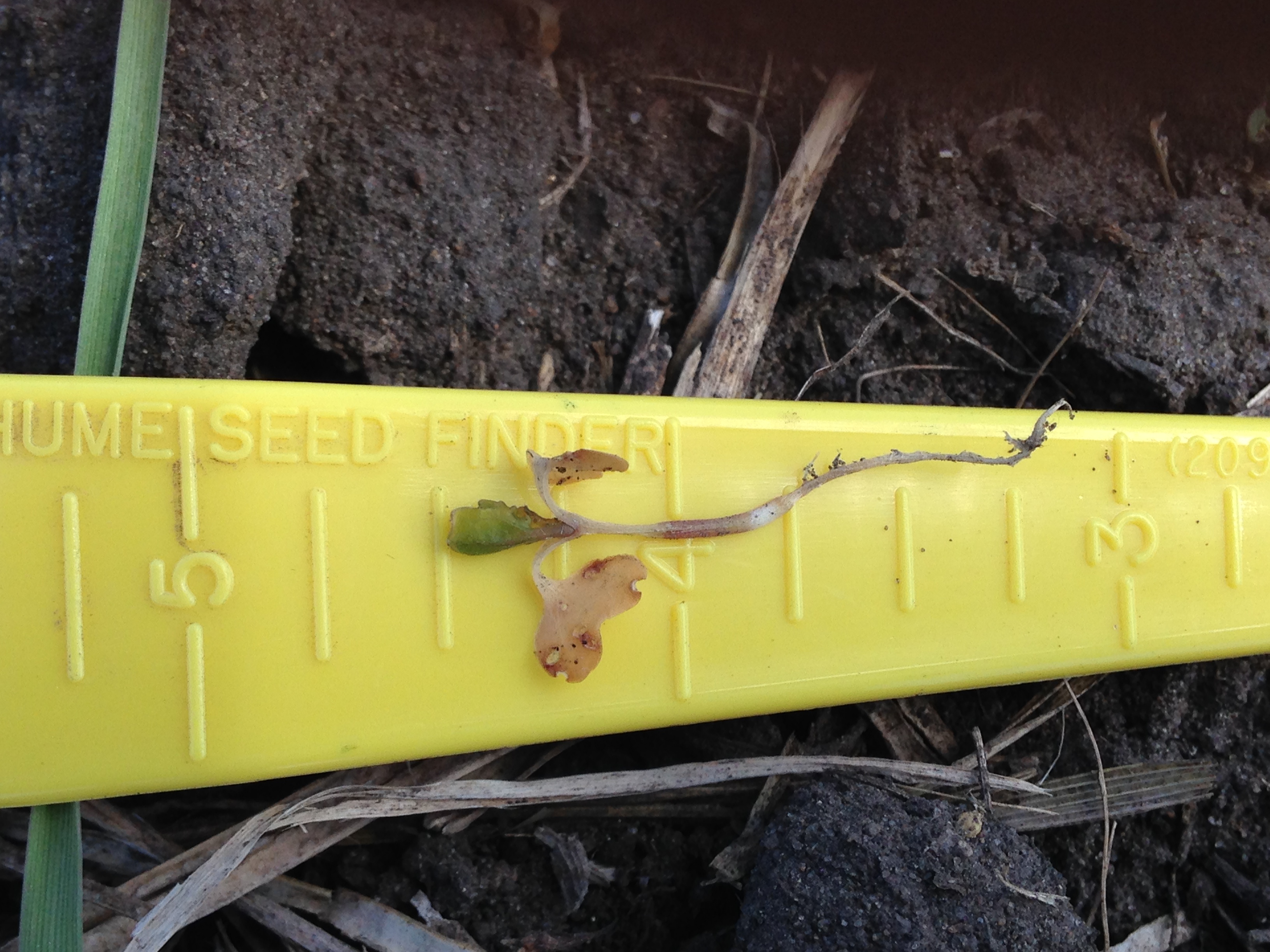
After a frost, it can take a few days to accurately determine how many plants survived, and whether the stand is still uniform. Be patient before making any decisions. Check the whole crop the day after a frost and then again 3-4 days after a frost to assess the situation.
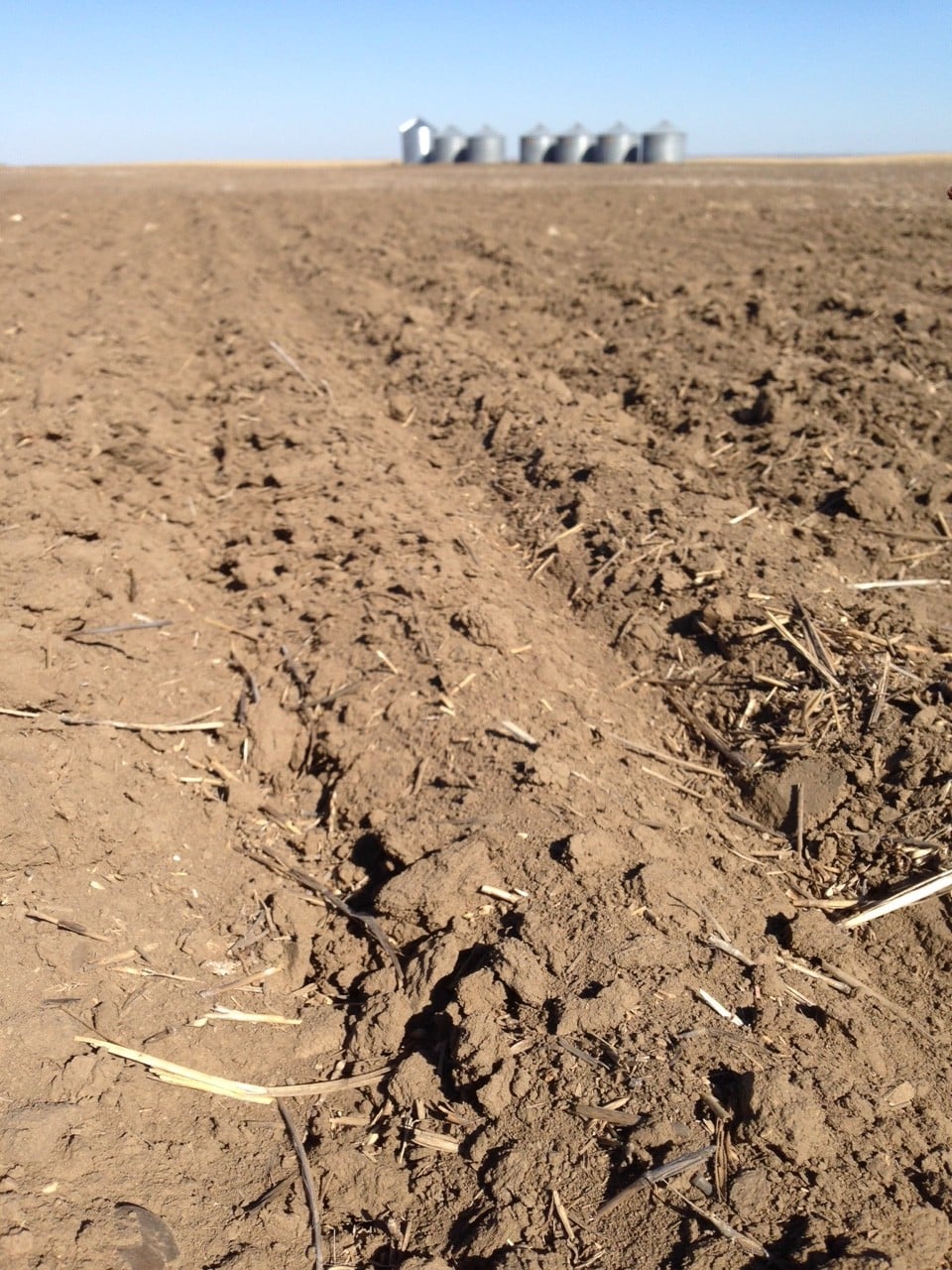

In dry soil conditions, growers may be tempted to seed deep enough to reach moisture. This is not necessary from April to mid-May, and may create more harm than good at any time. The common recommendation to seed no deeper than 1” still applies in dry conditions. Here’s why:
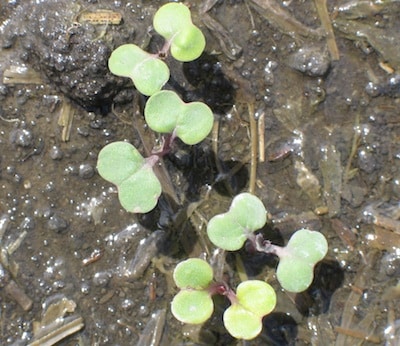

Canola is quite susceptible to water logging and shows a yield reduction after only 2-3 days in excessive moisture. Wait to see how the crop recovers before making decisions on reseeding or fertilizer top ups.
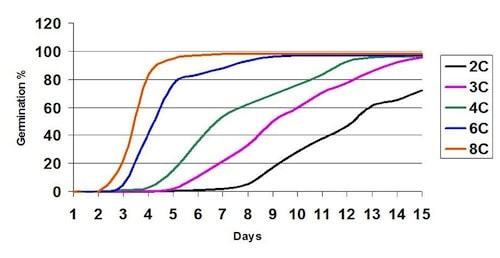
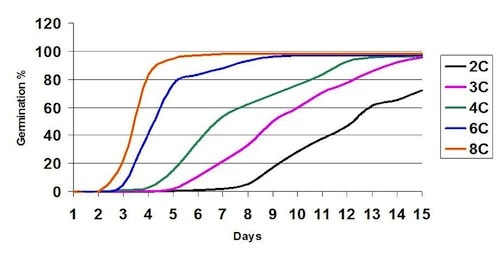
Slow canola emergence due to cool soils can increase the risks from seedling diseases and from flea beetles.
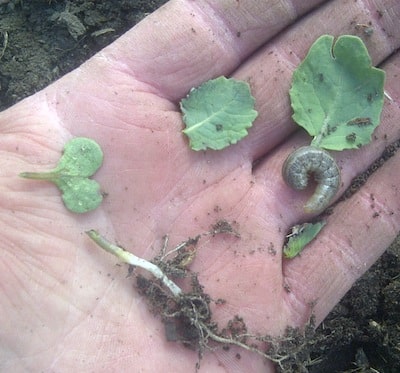
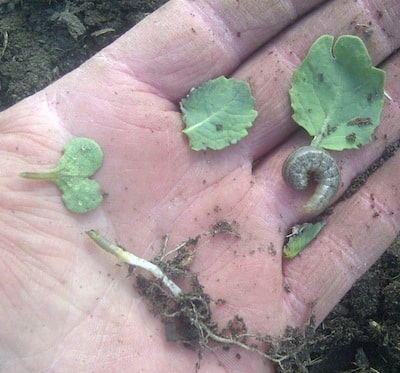
Growers will learn a lot from two field checks during the first few weeks after emergence. Scout fields 5 to 10 days after seeding when canola starts to emerge, looking for early threats. Then go back again two to three weeks after seeding to assess the stand.
In areas with dry top soil conditions, growers often wonder whether to seed deeper to chase moisture. This approach differs based on the date and typical rainfall patterns.
Achieving 7 to 10 plants per square foot can mean some high seeding rates for seed with large thousand seed weights (TSW). Therefore, going much above 6 lb./ac. is not generally recommended — regardless of TSW. The better agronomic strategy is to put effort into increasing seed survival rather than invest in a higher seeding rate.
