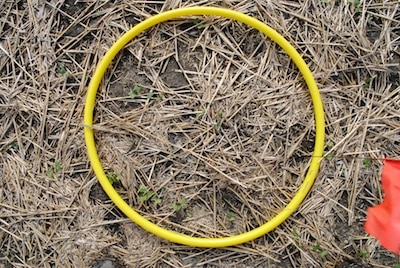
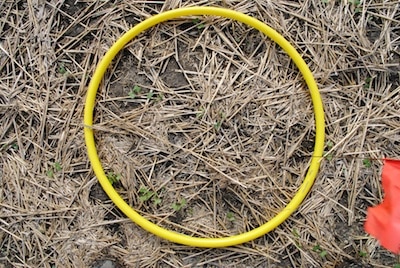
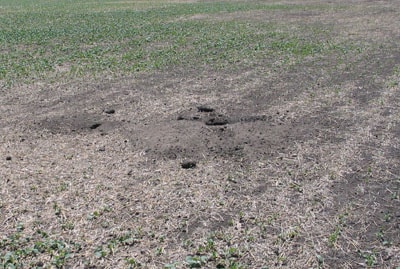
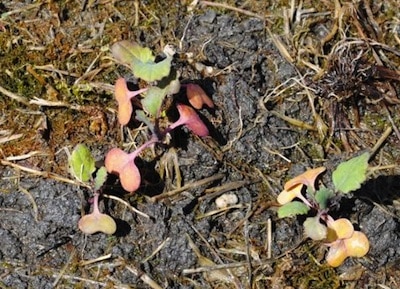
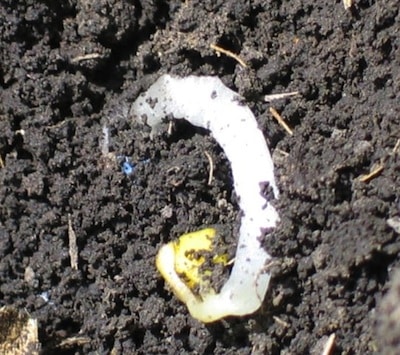
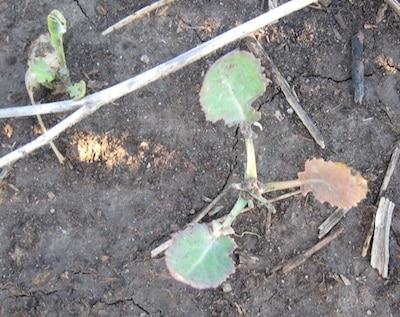
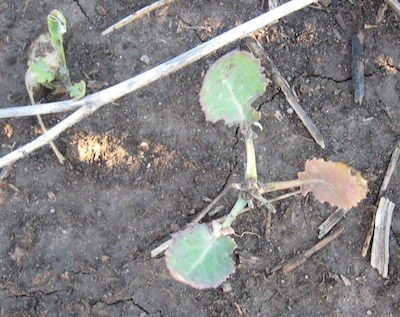
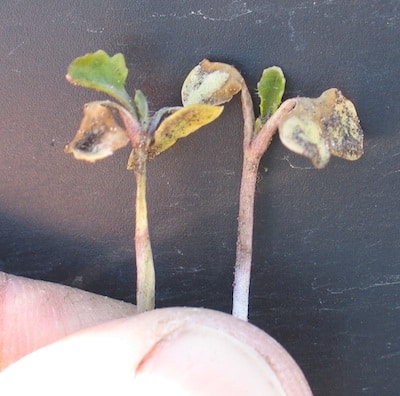
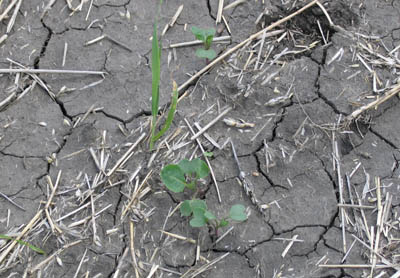
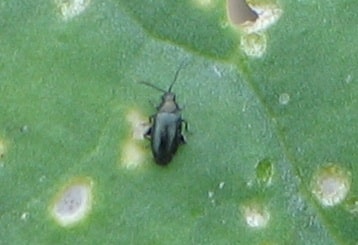
You maybe went to a field to scout for flea beetles, but take time to look around. Consider all possible causes when you notice uneven emergence, patchy growth and unthrifty plants. Get a second opinion when necessary. You need to know what caused a problem before you can take effective corrective action.
Gopher management
Gophers can eat up large areas within a canola field. Strychnine baits and, in some jurisdictions, mix-it-yourself strychnine liquid is available for gopher control. Phostoxin is also registered for gopher control, but this is a restricted use product that requires a special permit for purchase and application.
Canola in excess water. Will it survive?
Canola is quite susceptible to water logging and shows a yield reduction after only three days with wet feet. If only a small percentage of the field is lost, reseeding may not pay off — especially if that small percentage includes a bunch of pot holes all across the field. And wait to see how the crop recovers from saturated soils before investing any more in fertilizer.
Check patches in crust-prone soil
Rains can help to mellow soils that had crusted after a couple weeks of dry conditions, but the damage may have already been done. When scouting in fields with poor emergence, dig down and look for the plants — especially in fields known to be crust-prone.
Thin stands need extra protection
For canola fields at or below 4-5 plants per square foot, consider lowering the action thresholds for insect, weed and disease management all season long.
Frost: Did the crop survive?
It can take a few days after a frost before you can accurately answer that question. With a light frost of 0 C to -2 C, the risk of crop damage is minimal. With a heavy frost that kills off the cotyledons, it takes a few days before new leaves will start emerging from the growing point between the cotyledons.
The reseed question. How many plants are enough?
Research and grower experience over the years have shown that uniform stands of 1-2 plants per square foot will often outyield or match the yield of a reseeded crop with a much denser stand.
Wind blows out seeds and plants
Check the field closely. How much of the field is lost? Some seeds may still be in the soil, and for seedlings sheared off, there may be some later emerging seeds that could fill in the stand and provide reasonable yield potential. Yield may not be ideal but the potential is perhaps better than a reseeded crop.