Here is a list of labs that service canola growers in Canada. Labs are organized under the following headings: Soil nutrient analysis, Plant tissue nutrient analysis, Seed quality tests, Disease diagnostic on plant tissue, Soil analysis for clubroot, Herbicide resistant test for weeds, Herbicide carryover in soil, and Pesticide residue in plant tissue
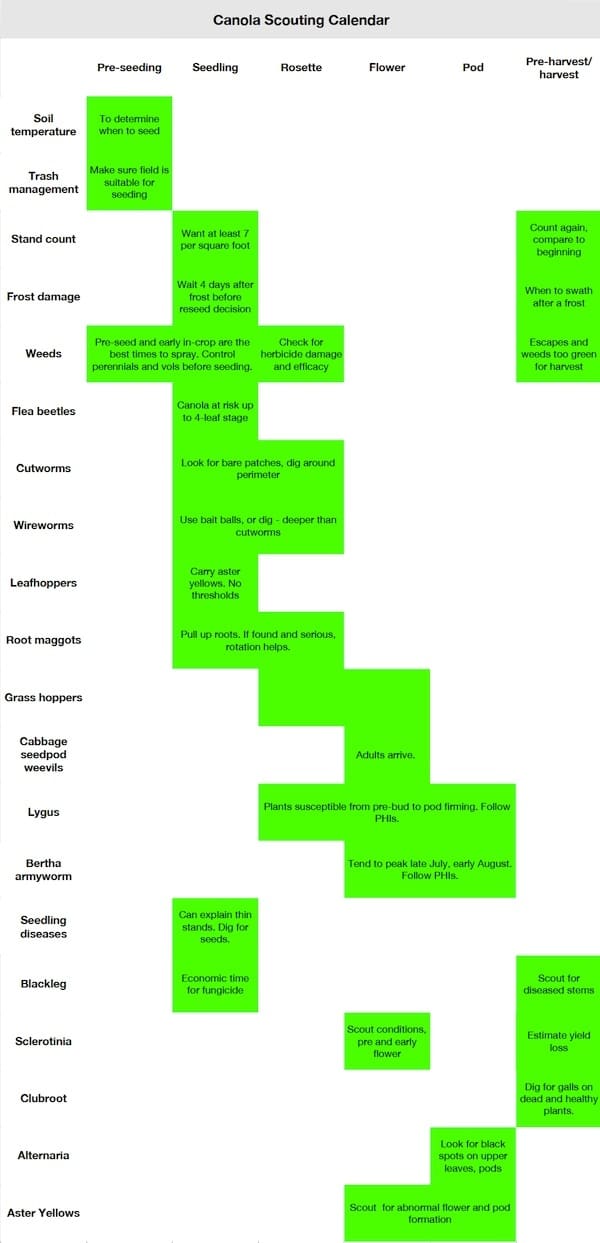
Scouting calendar
This calendar shows you the major pests and problems to look for in canola at each point in the season.

CPT: Get the most out of the data

When you look at Canola Performance Trial data, look at how a variety yields at every site, not just those closest to your farm and not just the overall average. The statistical significance of results increases with more sites analyzed, but digging deeper will show how the variety performed under different stresses, soil types and growing conditions. Read more for other tips to get the most out of the data.
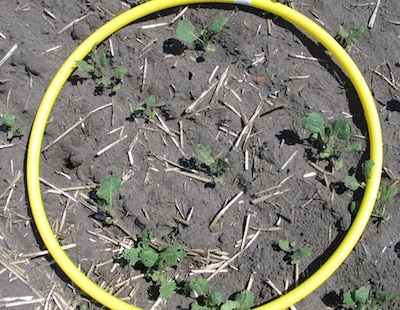
Seeding rate strategy to make the most of your genetics
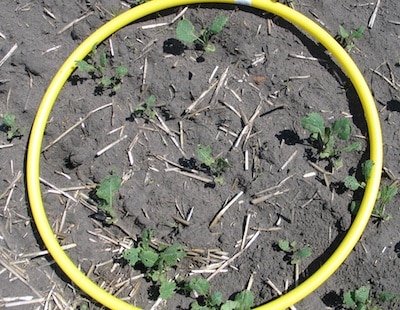
For the variety you have chosen to reach its full potential, it is important to get an adequate number of healthy plants growing. Agriculture and Agri-Food Canada surveys of canola fields in Alberta in 2010 and Saskatchewan fields in 2012 found that only about half of fields achieved an average of 5 plants or more per square foot. Canola plant stands with fewer than 5 plants per square foot will almost always have yield loss compared to the same variety at 5 or more plants per square foot.
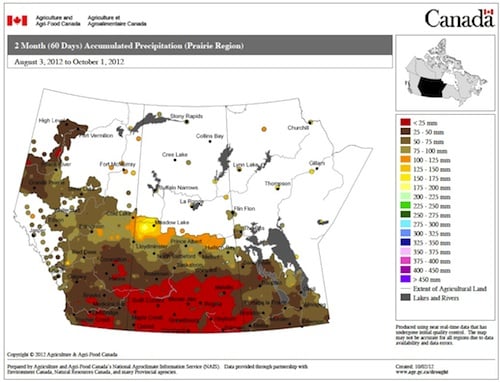
Dry soil may increase herbicide carryover

It has been a very dry two months, as the map shows. Several products with high carryover risk are broken down almost exclusively through hydrolysis — the process of water splitting the herbicide molecule in two. Hydrolytic breakdown of herbicides decreases in drought, as you can imagine, and adsorption of herbicide to soil particles is increased, both of which will increase carryover.
Tillage for weed control
Dry soils will be difficult to penetrate, and tillage will destroy standing stubble and its snow-catching capability. We can’t predict winter weather, but this extra moisture may be valuable next spring. Turning the soil can also cause a heavy flush of weeds from long buried seeds that have lost their dormancy, and burial of weed seeds and shattered canola seed will increase their longevity in the soil.
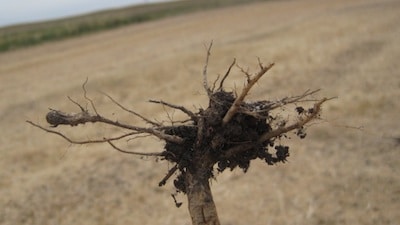
Fall field work for canola growers
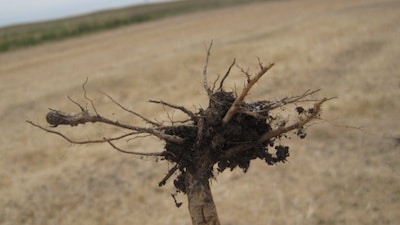
A long fall provides a few extra weeks to look back on the year that was — to reassess plant stands, fertilizer rates and disease levels. A long fall also gives growers an opportunity to control weeds and distribute residue in fields planned for canola in 2013.
Factor: Plant stand
Canola needed 10 plants per square foot to deal with everything that came along in 2012 and still come through with a decent yield. A stubble count this fall will determine how many plants made it through to harvest.
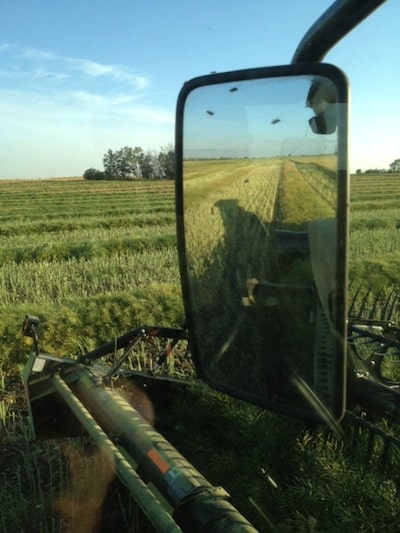
Canola yielded lower than expected. Why?

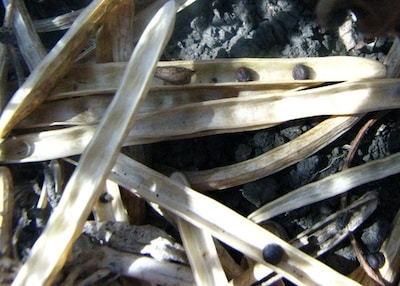
Growers and agronomists may be able to find clues to explain lower yields by looking at the plants, pods and seeds. Did the pods form? Did pods fill properly? Are seeds there but small or shriveled? Read more to see what these may mean, and what can be done to reduce these losses next year.
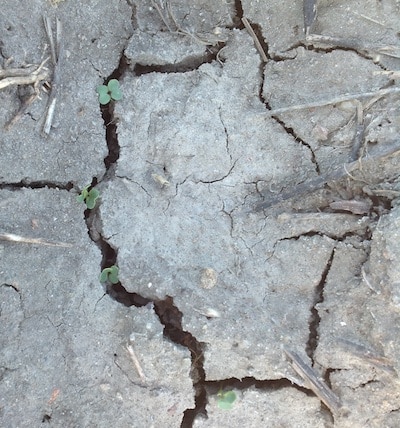
Crusting: Rain is the only practical solution
No research has been conducted to show reliable ways to break up crusting and free the crop. If a few plants have emerged, it may be best to leave them be. One to 2 plants per square foot are better than none.