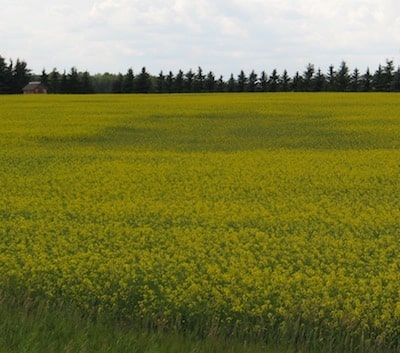
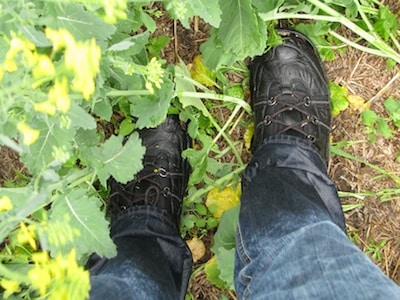
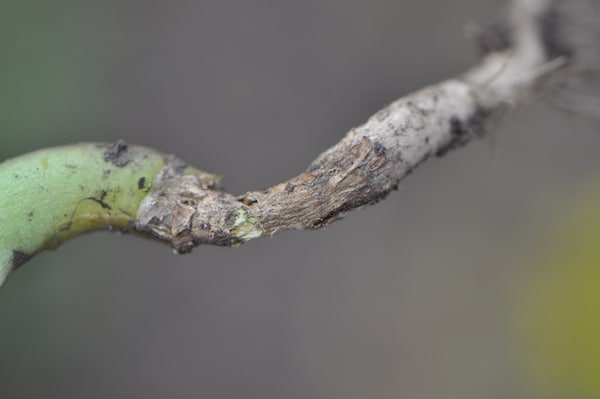
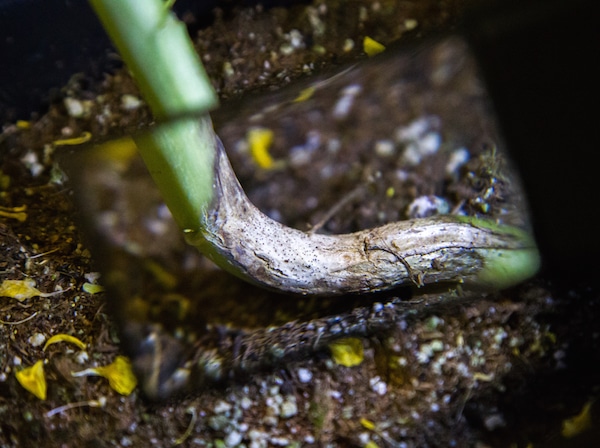
See dying patches? Could be clubroot

Check patches of prematurely ripening canola for signs up disease. Dig up roots to check for clubroot galls. Early infection at the seedling stage can result in wilting, stunting, yellowing and even death of canola plants in the late rosette to early podding stage.

Sclerotinia stem rot … hot weather, variable crops, late sprays

Hot and dry or hot and humid? Hot, dry weather should reduce the risk of heavy sclerotinia infection, even if moist weather earlier promoted a lot of apothecia emergence and spore release. Hot, humid weather that leads to morning dew and a humid canopy can promote the disease. Keep in mind that even thought the sclerotinia fungus does not like to grow over temperatures of 30°C, night temperatures are often lower and will allow for fungal growth. But also keep in mind that hot weather during flowering can increase flower and pod abortion and reduce overall yield potential. Hot, dry weather during pod fill and ripening also reduces the progression of sclerotinia within the plant.

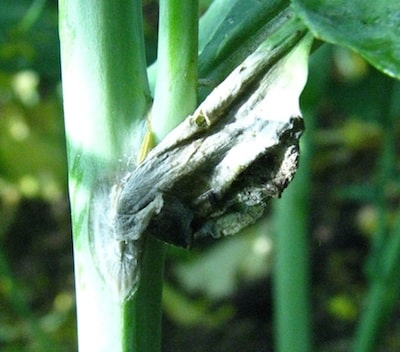
Blackleg, foot rot or cutworms?

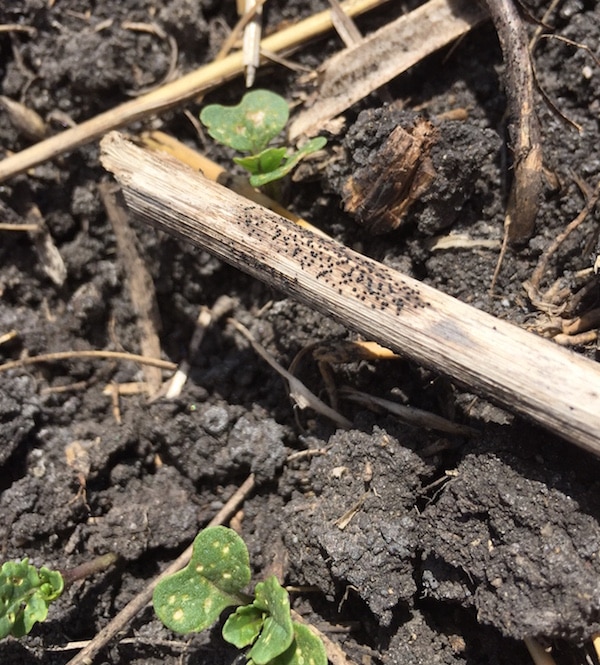
These can be hard to tell apart sometimes. Pinched or otherwise damaged-looking stems can occur with all three. The photo shows blackleg infection. Here’s how to tell them apart…

How to count 10% to 50% flower

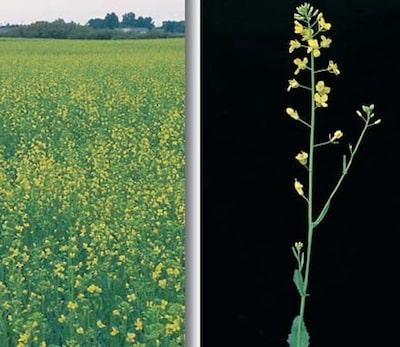
Canola at 20% flower. Source: NDSU

As a rough estimate, the 20% flower or “bloom” stage is when the main stem has around 15 “flowers”. Canola can reach 20% bloom in 4-5 days after first flower.

Sclerotinia stem rot: Risk factors and spray timing

At risk: A moist canopy and good yield potential.

Prevalence of sclerotinia stem rot has a direct correlation to above-average moisture. If a field has regular rains or high humidity or both from two weeks before flowering and through flowering, then infection will likely occur. If growers decide to spray, the window for most products is 20-50% flower. Earlier is usually better as early infection on the main stem tends to cause the most yield loss.

Blackleg: Early scouting and fungicide

For fungicide to provide an economic level of blackleg suppression, the crop has to be susceptible to the disease, blackleg incidence and severity must be high (usually due to short canola rotations) and the fungicide has to go on early – cotyledon to 4-leaf stage – before visible symptoms appear.

Muddy fields and clubroot spread

Those same moist fields that have delayed spring harvest as well as seeding in central Alberta (and some other regions) also mean more mud clinging to equipment. More mud means more clubroot spores riding along on tires and equipment frames. Though the time crunch is on, knocking off as much mud as possible will reduce clubroot spread. In these conditions, fields known to have clubroot spores should be worked last.

Clubroot: Sanitizing used equipment

Make sure soil is cleaned off any used equipment recently purchased from areas known to have clubroot. This is good biosecurity practice. Ideally, this should be done at the purchase location before bringing it home.

What’s new in blackleg management?

Using the same disease resistance genetics over and over causes a shift in pathogen population, which can then overcome the resistance in our varieties – similar to herbicide resistance in weeds. Knowing the resistance genetics used in previous years will allow growers to rotate to a different resistance gene and reduce the blackleg infection within a field. As many as 10 new blackleg resistance labels will be applied to varieties in the coming years. They will use these letters A, B, C, D, E₁, E₂, F, G, H, X to identify major resistance genes present.