
Despite some wintery weather, we can hope for (and expect) good harvest weeks to come. Don’t rush into pre-winter jobs just yet.
Despite some wintery weather, we can hope for (and expect) good harvest weeks to come. Don’t rush into pre-winter jobs just yet.


Dry conditions throughout the summer and heading into winter could have ramifications for field management decisions this fall and rotation planning for next year.
Whether taking a soil sample or applying fall fertilizer, mid September is generally considered to be too early for both.
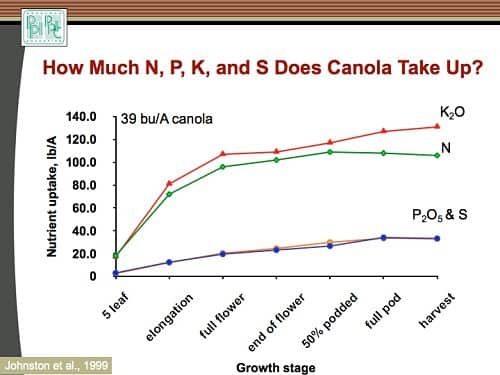
The ideal time for a sulphur top up is any time before flowering, but a top up at early flowering may pay off if plants are showing signs of sulphur deficiency. The ideal time for a nitrogen top up is before the 5-leaf stage of canola, but AAFC research out of Indian Head, Saskatchewan, shows that nitrogen top dress as late as 5-10% flower can still provide a yield benefit.
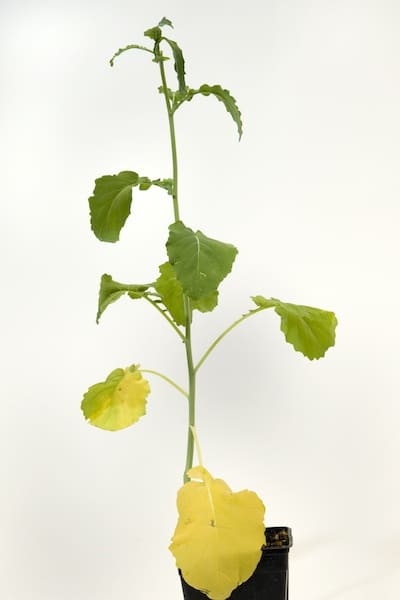
In-crop fertilizer applications can rescue a deficiency situation. But what nutrients are deficient? Look for these symptoms.
Generally, small-seeded crops such as canola are more sensitive to seed-placed fertilizer, especially nitrogen and potassium.
A quick test for the safety of seed-placed fertilizer is to turn off the fertilizer feed for about 100 feet, mark the spot, and go back and compare stand establishment in treated and untreated areas.
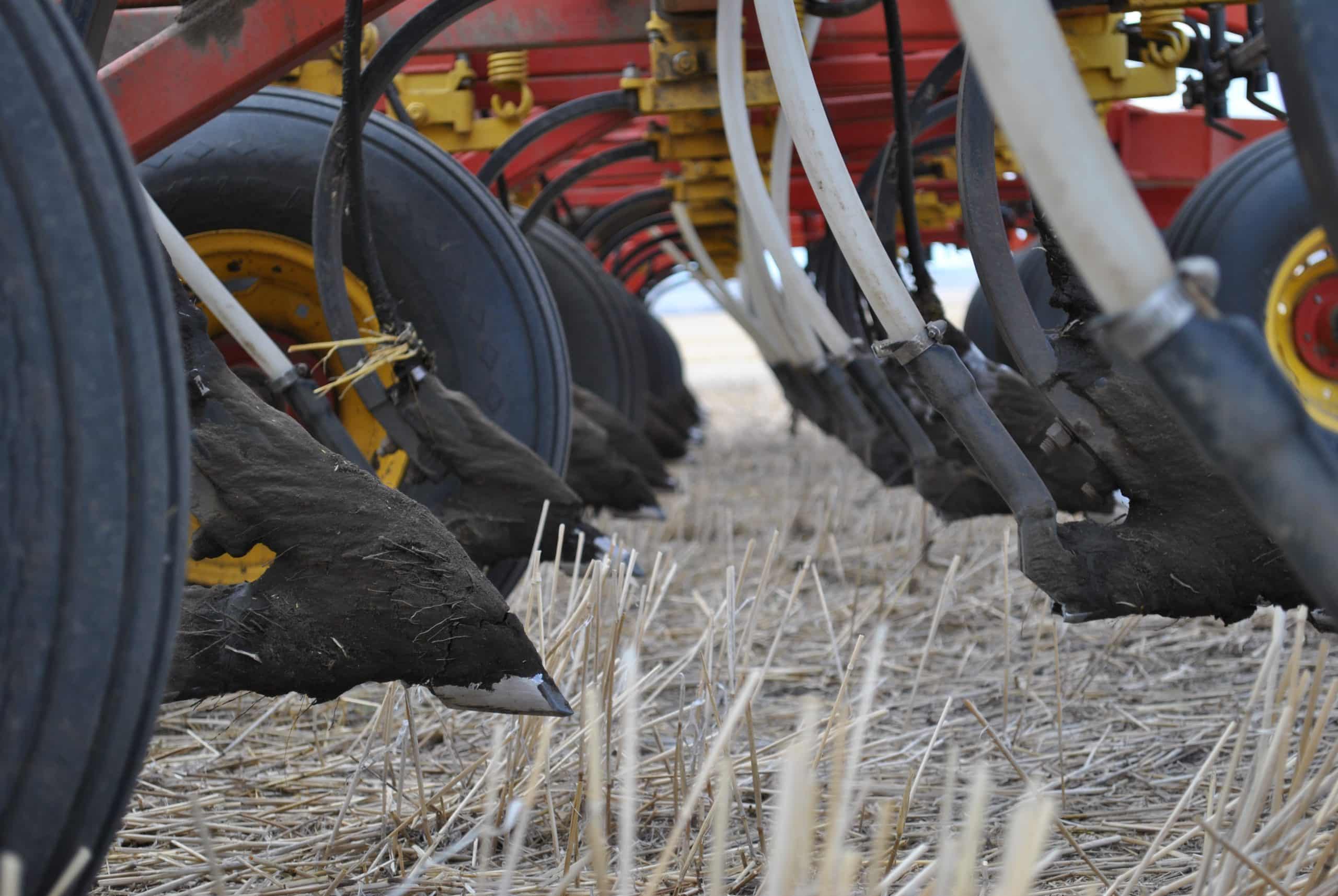

What are safe seed row fertilizer rates for phosphorus (P), sulphur (S) and nitrogen (N)? With lower seeding rates than in the past, this concern is greater than ever. Growers need to keep all seed viable to hit plant population targets. Therefore, the best practice is to put up to 20 lb./ac. of phosphate (max 40 lb./ac. of MAP) in the seed row – if P is needed – and put all other fertilizer in a band outside the seed row.
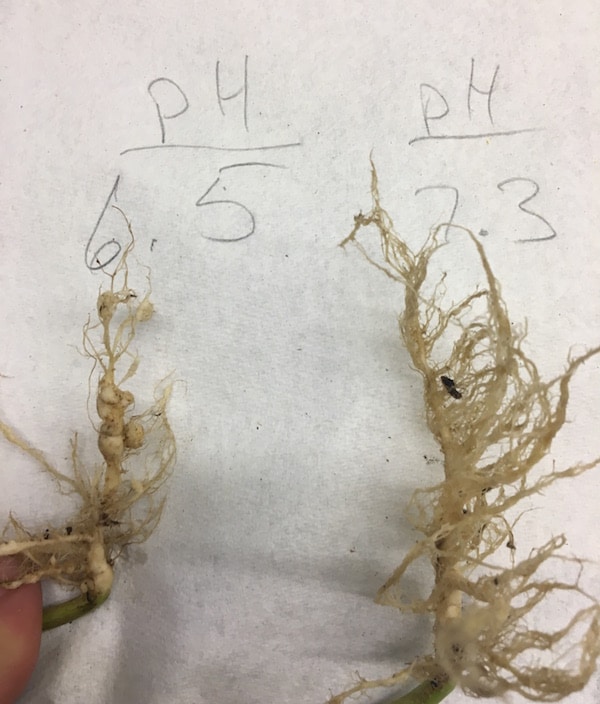

The Canola Council of Canada agronomy team held a mini canoLAB at the Alberta Canola booth during FarmTech in Edmonton last week. Three common conversation topics came up as farmers and agronomists visited the booth….
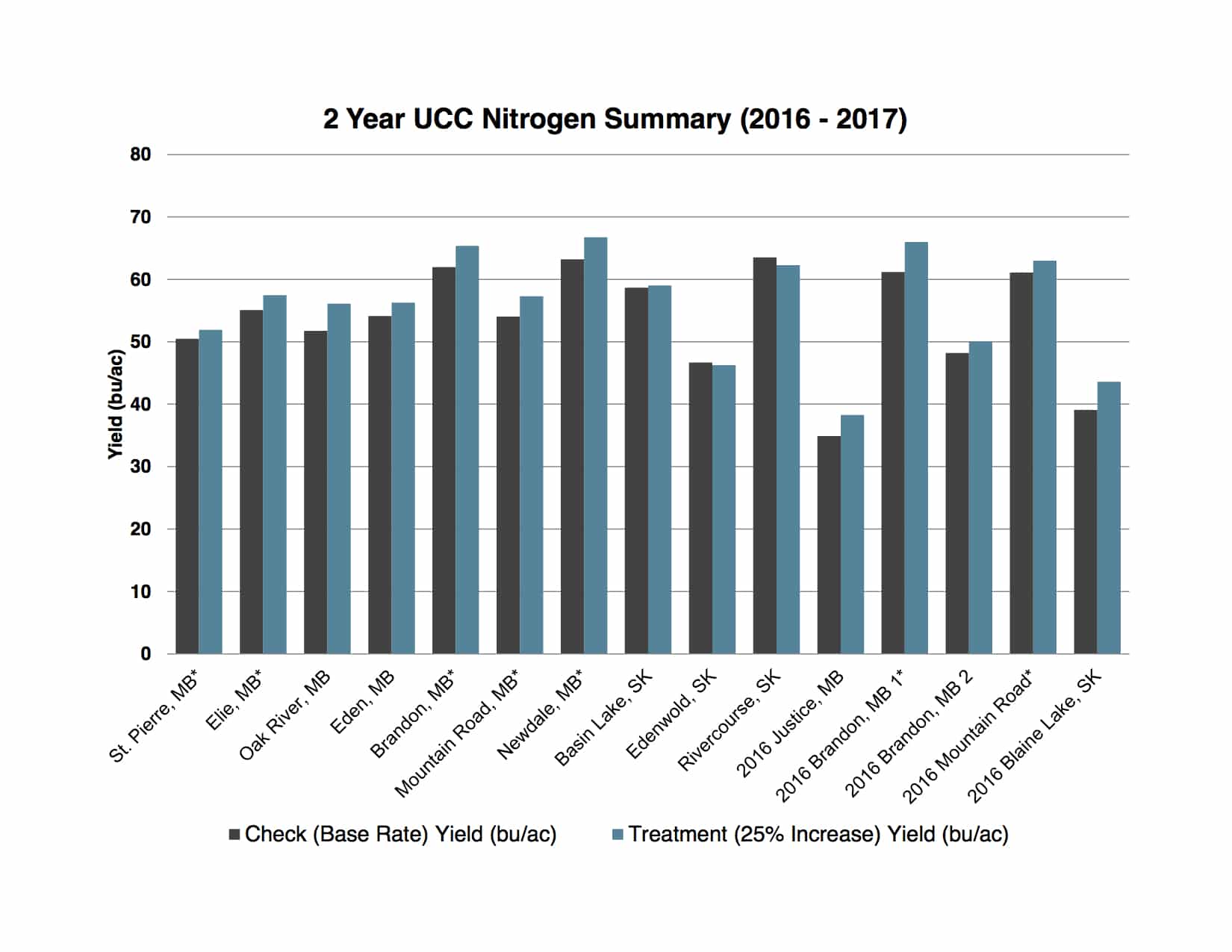

UCC field-scale trials in 2016 and 2017 compared the farmer’s base nitrogen rate with a rate 25% higher. With all site years averaged, adding extra nitrogen did provide a statistically significant yield response, but the increased nitrogen did not always provide an economic return when compared to the base rate.