Verticillium wilt committee to survey, set mgmt recommendations

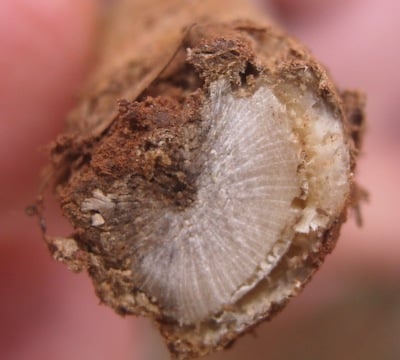
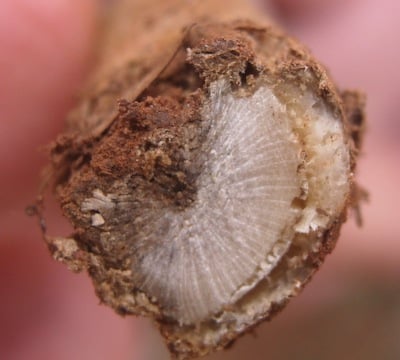
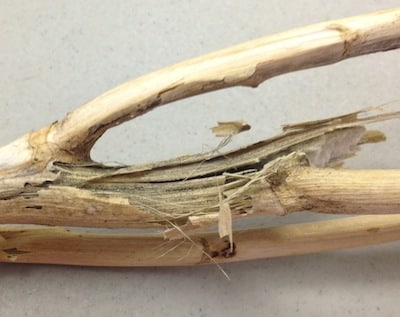
Verticillium wilt on canola. Source: MAFRD

A verticillium wilt committee, with representatives from the Canola Council of Canada, the CFIA, AAFC, provincial canola grower organizations, provincial government specialists and life-science organizations, will examine the disease risk in Western Canada and come up recommendations for management. Step one is to survey more fields this summer and autumn.
Clubroot: When genetic resistance no longer works…

…The best management option left is the four-year rotation. Discovery of different clubroot pathotypes in central Alberta will change the rotation plans for some growers. No current varieties have strong resistance to these pathotypes.

If growers have used resistant canola two or three times already on fields that were infested with clubroot, these fields are at high risk for having one or more of the different pathotypes. Any fields that have had moderate to heavy clubroot infestation are at high risk for pathogen shift to overcome resistance. Longer rotation is necessary to slow the pathogen shift that is occurring in these fields.

Top 10 agronomy topics for 2015

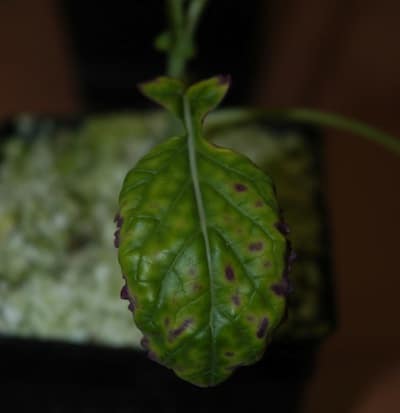
CanoLAB15 boron def

The Canola Council of Canada agronomy team came up with 12 agronomy priorities for 2015, and then ranked them. Here are the top 10, with our highest ranked topic placed first. We will cover these topics in more detail throughout 2015.

Clubroot R breakdown: Preliminary results from 2014 survey

Stephen Strelkov with the University of Alberta tested soil samples from 27 fields in Alberta that were seeded to resistant varieties in 2014 and showed more than expected levels of gall formation. Of those 27 fields, 15 have clubroot pathotypes that suggest the clubroot in those fields had overcome the resistance trait.

What is “intermediate” disease resistance?

A new canola variety was recently registered claiming an “intermediate” reaction to clubroot pathotype 5x, as well as resistance to established clubroot pathotypes 2, 3, 5, 6 and 8. Based on Western Canada Canola/Rapeseed Recommending Committee protocol for clubroot disease resistance, seed that is resistant (R) shows less than 30% infection based on a severity-by-incidence rating, and seed that is susceptible (S) will have more than 70% infection. An intermediate (I) reaction is somewhere in the middle.

A variety with intermediate reaction to 5x is not recommended on fields infected with the 5x pathotype. A minimum four-year rotation for canola is still recommended on these fields.

Verticillium wilt in Manitoba

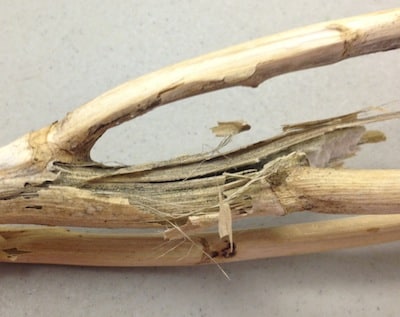
Verticillium wilt on canola. Source: MAFRD

The Canola Council of Canada is working with the Canadian Food Inspection Agency and Manitoba Agriculture Food and Rural Development (MAFRD) to understand the implications of verticillium wilt. MAFRD announced the detection of Verticillium longisporum (a species of verticillium wilt) at a single location in Manitoba in early January. (Photo source: MAFRD)

Blackleg resistance vs. clubroot resistance

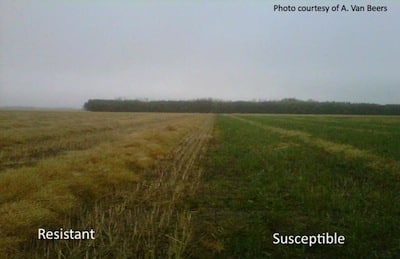
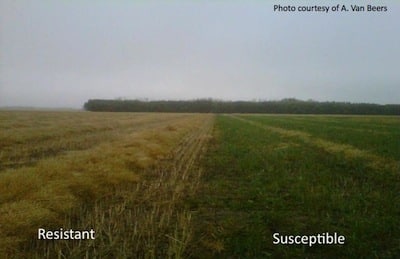
This is a clubroot infested field, with a resistant variety grown on the left and a susceptible variety grown on the right. Source: Aaron Van Beers

Growing clubroot resistant varieties in areas with low levels of inoculum or areas beside regions known to have clubroot is a good pre-emptive strategy to keep clubroot to a minimum in a particular field. The question for growers in areas with serious blackleg is whether to grow varieties with effective blackleg resistance or grow varieties with clubroot resistance. Current varieties do not always offer both. Some considerations when making the decision…

Clubroot shift and crop rotation

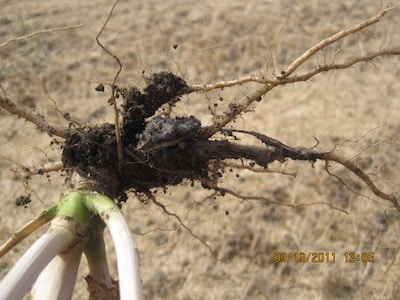
Example of clubroot galls found at harvest time.

Discovery of a different clubroot pathotype in central Alberta will change the rotation plans for some growers. No current varieties have resistance to this different pathotype, and varieties with a new effective source of resistance will not be available for at least the next year or two, or maybe longer. Longer rotation is necessary to slow the pathogen shift that is occurring in these fields.

Blackleg scouting more difficult as time passes

Pre-harvest blackleg rating small

Pre-swath or immediately post-swath are good times to check blackleg severity. Checking more than a week after swathing makes it more difficult to identify blackleg because other decomposers will start to work on the plant, often masking whatever blackleg symptoms may have been evident.

Clubroot survey underway

Alberta has started an intense survey to check fields for clubroot pathotype 5x, which is able to overcome all forms of resistance on the market today. The survey will focus on suspicious patches in fields that were grown to an R-rated canola variety. Growers and agronomist who spot suspicious patches in a resistant variety, can contact their County Ag Fieldman to be part of the survey. The point is to map the extent of this new pathotype.

Further reading:
Clubroot pathogen shift: Management