In 2013, an Alberta field was identified where a clubroot resistant variety showed a high incidence of clubroot infection. Subsequent testing by the University of Alberta indicated that all current forms of resistance were not functional on the disease in this soil. This failure of resistance or its breakdown was determined to be due the increasing shift to a previously unidentified pathotype called 5x. Current clubroot resistance is still functional to the predominant pathotype 3 and the less dominant pathotypes 6, 5 and 8. But this 5x is able to overcome all forms of resistance on the market today.
Jobs to do while waiting for harvest weather
Disease assessment.
Seed colour change assessment.
Count plants.
Prep the combine.
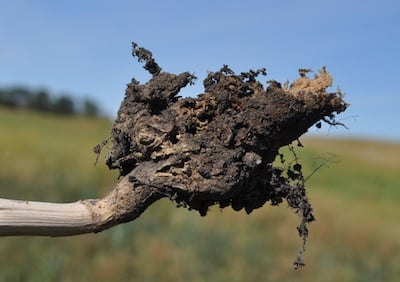
Soil sampling for clubroot
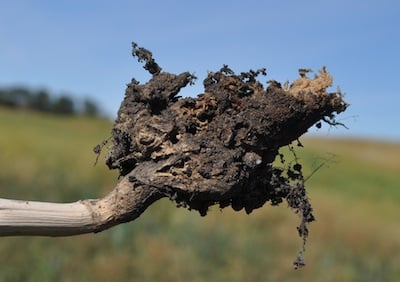
Various labs will test soil for clubroot. Those collecting soil samples are advised to park on the road when possible so the vehicle does not pick up infested soil. Follow sanitation procedures if visiting more than one field. This includes using disposal boot covers for each field and cleaning and disinfecting footwear and tools that come in contact with the soil. MAFRD provides these soil sampling procedures…
Disease scouting: Video aides
Clubroot, blackleg and sclerotinia stem rot are found in many canola fields at this stage of the season. Taking time now to determine what diseases are present and at what levels can help with variety decisions and crop rotation planning for next year. Here are a few videos with helpful tips….
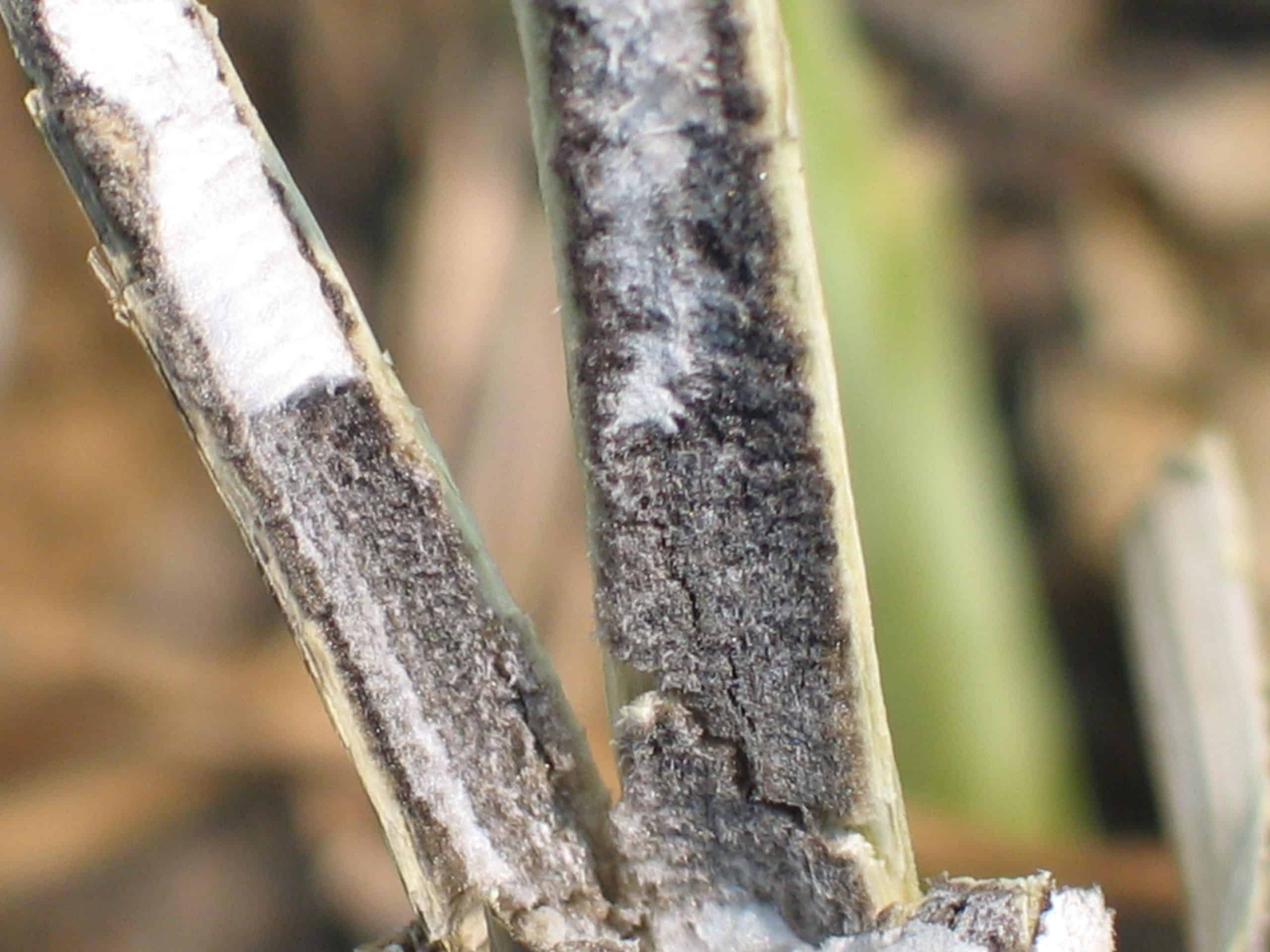
Disease scouting: killing two tasks with one look

While you are out there checking to see if your crop is ready to cut/harvest is a perfect time to also check for disease! Likewise, the representative sampling technique used to accurately determine the stage of the crop is also ideal for disease scouting of your field. Pulling out a few plants and checking for the big three diseases, as well as any other issues, will save you an extra trip to the field. Early disease detection could save you thousands of dollars down the line!
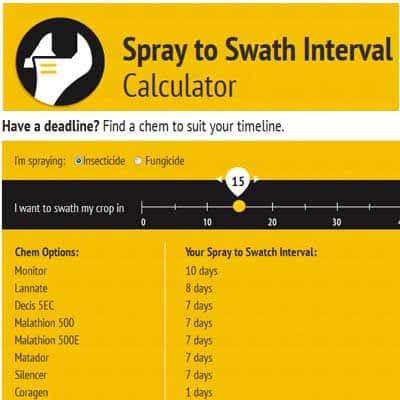
PHI reminder

Many canola fields are within 5 to 10 days of swathing, which limits the choices for insecticides based on pre-harvest intervals. Here are the pre-harvest intervals for insecticides registered for insect control in canola. Try the interactive PHI tool at www.spraytoswath.ca.
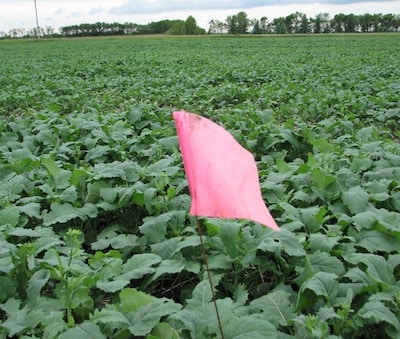
Take check strips to yield
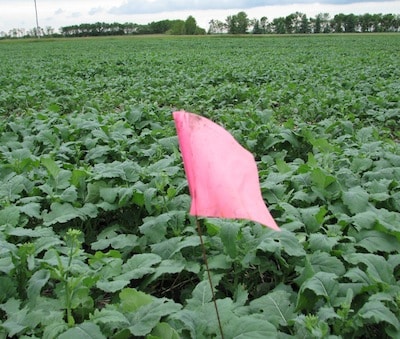
A check strip is a good way to assess if a new product or technique works and, if it does work, whether it provides a return on investment. Effective analysis requires taking these strips to yield and comparing them.
Clubroot in North Dakota
A severe case of clubroot has been found in a canola field in North Dakota, near the Manitoba border. This suggests the disease has been in the area longer than expected. It also confirms expectations that environmental conditions in Manitoba are suitable for clubroot. Close scouting is advised for growers in Manitoba and Eastern Saskatchewan, especially canola fields close to the North Dakota border.
New CCC video: Blackleg Disease and Resistance Management
A vivid new video from the Canola Council of Canada zooms in on blackleg, showing how the canola disease infects a plant, how it spreads throughout a field, and what growers can do to protect blackleg resistance traits. The video, called “Blackleg Disease and Resistance Management,” is posted at www.youtube.com/canolacouncil.
Leave required time between spraying and cutting
Pre-harvest interval (PHI) refers to the amount of time that must lapse (in days) after a pesticide application before the crop is cut. Cutting refers to swathing or straight combining. Each crop protection product has its own PHI, and the PHI for a specific product often vary by crop.