Canola Watch teams up with Real Agriculture to offer podcasts recorded live at canolaPALOOZA 2019 at Lacombe, Alberta. In this podcast, the first of five in the series, hosts Jay Whetter and Shaun Haney interview Luis Del Rio with North Dakota State University and Kelly Turkington with Agriculture and Agri-Food Canada to talk about sclerotinia stem rot risk factors and management.
Canola Watch quiz (survey actually) – Sclerotinia assessment
Predicting sclerotinia stem rot severity is difficult. This quiz is a review of management decisions for 2018, including a specific look at DNA petal tests. Please take a minute to do this quick survey.
The disease triangle: Moisture means sclerotinia
The three points of the disease triangle are host, pathogen and environment. When it comes to sclerotinia stem rot in canola in Western Canada, the disease triangle hinges on one component: Environment.
Sclerotinia stem rot timeline for infection
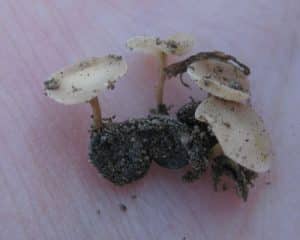
The sclerotinia stem rot infection cycle begins when sclerotia in the soil (left from the last time an infected crop was produced on that field) take up enough moisture to germinate and form little mushrooms known as apothecia. Spores are then released into the air from the mushrooms. Under ideal warm and moist conditions, it takes about two to three weeks for sclerotia to germinate and release spores.
Sclerotinia stem rot: Late and second sprays
If conditions are dry at early flower and then it rains at 40% to 50% flower, spraying at the end of the window may be effective – as long as there was enough moisture before flowering to get apothecia germinating. In this situation, later sprays could be especially effective if moisture also promoted a longer flowering window due to later compensatory growth. With lower seeding rates resulting in more branching, canola fields can be at 50% flower for a week or more.
Sclerotinia: Positive petal test may not mean "spray"
Small amounts of spores can lead to yield-robbing levels of sclerotinia in continued moist conditions. A petal test to confirm the presence of sclerotinia DNA on petals could be used to provide an indication of pathogen pressure at the time of petal collection.
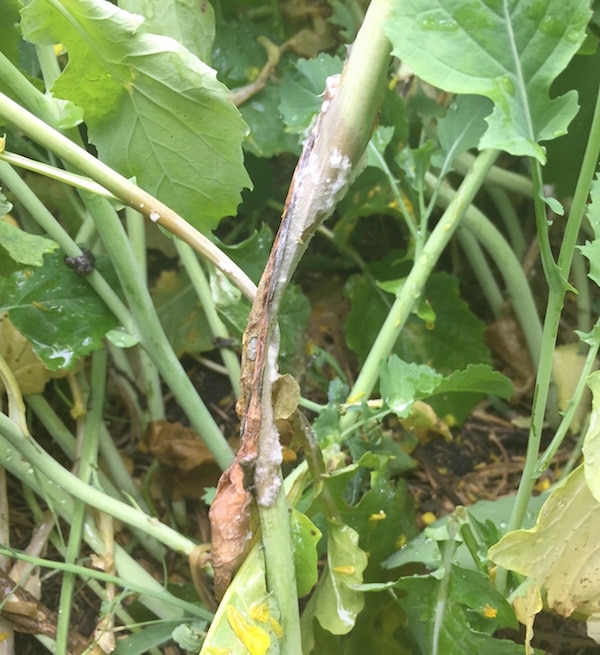
The sclerotinia spray decision: Moisture scenarios
The decision to spray or not spray fungicide to limit sclerotinia stem rot is rarely easy. Consider the following three scenarios as you assess the risk situation this year.
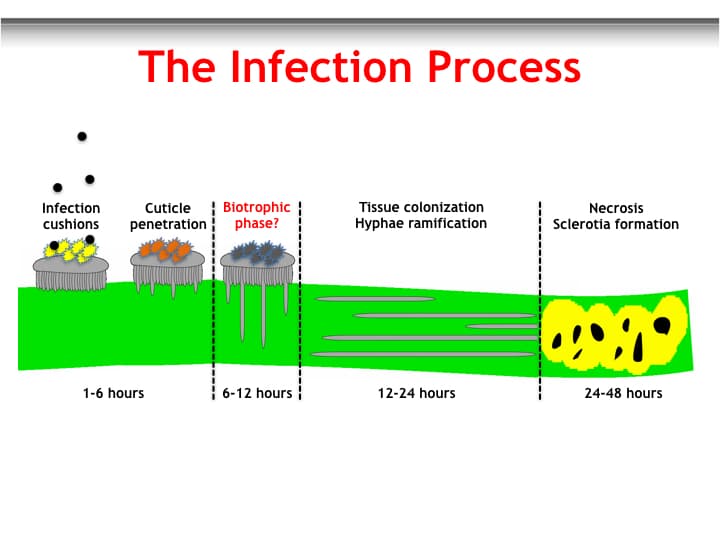
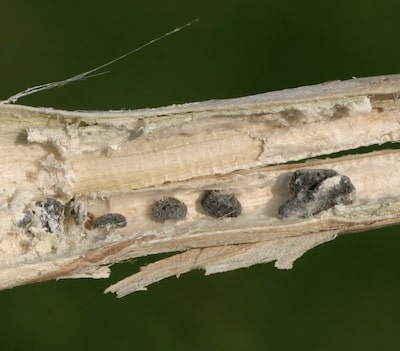
Sclerotinia stem rot timeline for infection

The timeline from when sclerotia in the soil first take on moisture, to apothecia germination, spore release, petal infestation, petal drop and finally canola plant infection takes up to three weeks. This graphic shows the final 24 hours as the fungus on decaying petals enters the plant and creates a lesion.
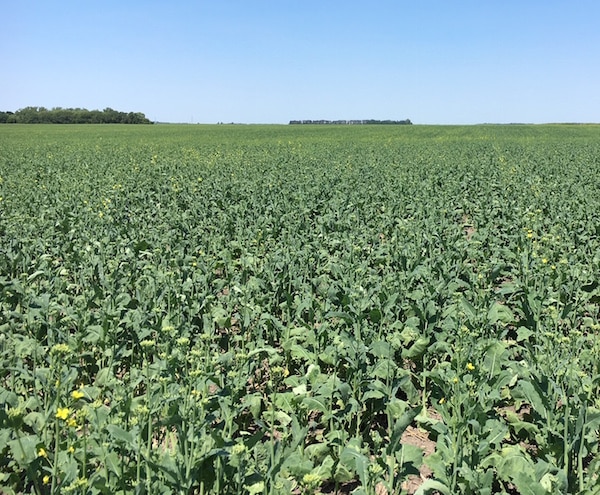
Sclerotinia risk assessment: Fungicide planning

As earliest canola crops start to flower, the annual sclerotinia stem rot management conversations begin. This article describes factors that increase risk and reduce risk.
Quick comparison: Blackleg, clubroot, sclerotinia stem rot
Use this quick-reference table to compare key distinguishing features, mechanisms for spread, and management options for blackleg, clubroot and sclerotinia stem rot.