Seed first or spray weeds?

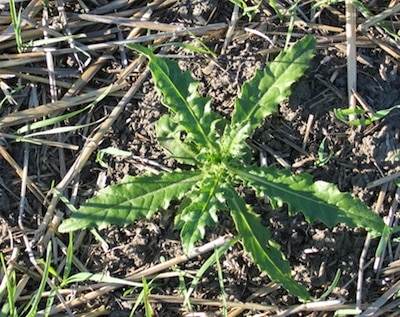
Canada thistle

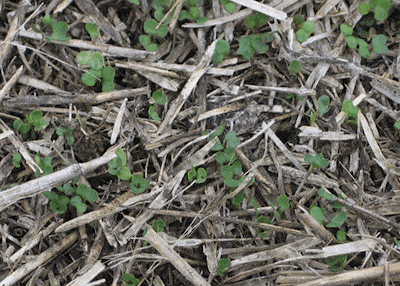
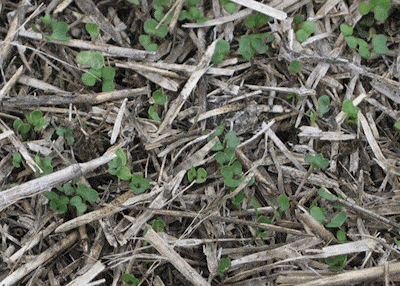
Early weed control is an important step in profitable canola production. Research on preseed weed control showed that early seeding was less important to yield than early weed control.

Pre-seed weed control will manage weeds that emerge ahead of seeding, reducing crop competition for light, moisture and nutrients.

Top 10 details to record at seeding time

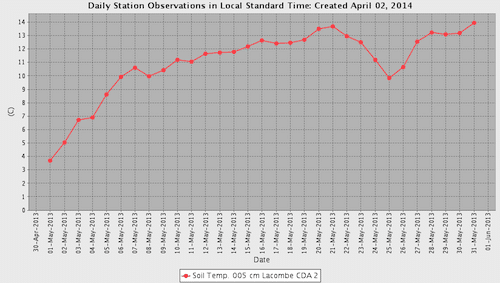
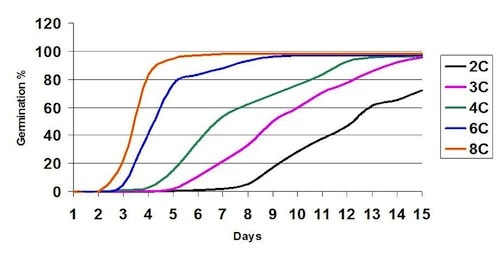
Seeding into warmer soils speeds up emergence and makes it more uniform. However, the yield benefits of seeding early May versus late May (most years) are too important to ignore..

1. Date. Record the date and also the time of day that each crop was seeded. Comparing seeding dates, and cross referencing that with soil temperature and moisture conditions, can help determine future decisions with regard to ideal time of seeding and management steps that could be taken to reduce risks for early seeding. Time of day could be useful when comparing fields seeded the same day.

2. Soil temperature and moisture in the seedbed. Measure the soil temperature in the seed zone. Also note the 7- to 10-day temperature forecast and update your records with actual temperatures through that period. Soil temperatures in the days after seeding have a significant influence on the days to emergence and the uniformity of emergence. (See the graph above that shows emergence rate as it relates to soil temperature.) Recording soil temperature can help when sleuthing potential emergence issues, and can be a useful reference if emergence is very strong. Also note seedbed soil moisture — dry, moist or wet — on seeding day.

Snap seed decisions

Canola performance trials screenshot

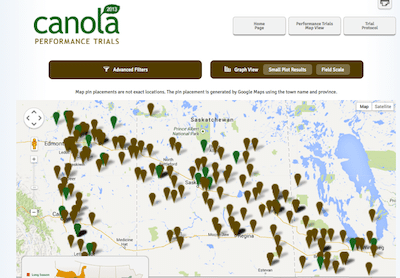
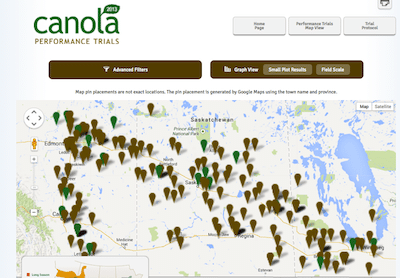
Need to make a last minute seed decision? Visit www.canolaperformancetrials.ca for canola variety comparisons for 2013 as well as 2012 and 2011. The online tool has data on yield, days to maturity, lodging and height for small plot and field scale sites across the Prairies. Use the various filters to refine a search by location, herbicide tolerance system, year and season zone.

Click here for the 2013 results booklet.

52 by 25: Tools for increasing yields

One goal in the Canola Council’s new strategic plan is to reach an average yield of 52 bu./ac. by 2025. This, along with acres holding at around 2012 levels, will achieve the production target of 26 million tonnes — which is the forecast market for Canadian canola by 2025.

Here are five keys to achieving the yield target…

Crop rotation: Canola's fit with other crops

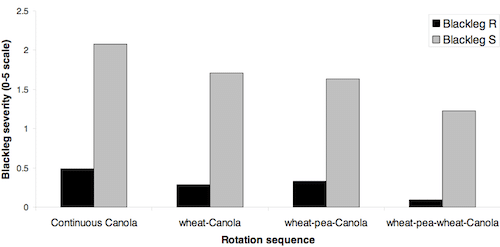
The black bars represent a blackleg resistance hybrid. The grey bars are results for blackleg-susceptible Westar grown on the same plots.

Rotation between canola crops has known benefits for management of blackleg, clubroot and root maggot and an overall improvement in canola yield. A one-year break between canola crops provides a clear yield advantage over back to back canola, according to crop insurance data. A two-year break improves on blackleg management when compared to a one-year break. (The graph above is from a Randy Kutcher AAFC study featured here.) A longer break is also better for clubroot, however rotation alone is not a practical way to manage clubroot once it has arrived on a farm. Crop rotation as well as using a clubroot resistant variety, limiting soil movement and controlling clubroot-host weeds are all required.

Seed decisions: How to identify good data

CPT 2013 booklet cover

Meaningful seed comparisons usually have the following features:

1. It comes from at least 15-20 sites, ideally from more than one year.
2. Statistical analysis is performed on the data to test its reliability. This analysis will also identify real statistically-supported differences between treatments or varieties.
3. Trials should follow a protocol applied across all sites. Without a protocol, differences might be due to factors other than those tested.
4. Trials are run by a third party (an independent source). Ideally, results should be published in a peer-reviewed journal.

The Canola Council of Canada’s Canola Performance Trials were established to provide variety data based on these principles. The tool at www.canolaperformancetrials.ca has small and large plot data from across the Prairies, and for years 2011, 2012 and 2013.
Buy enough seed to meet population targets

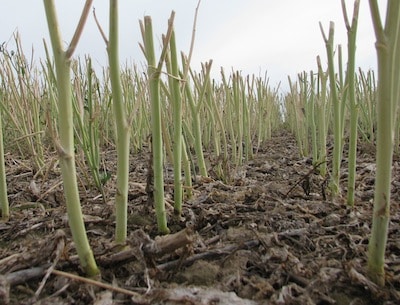
Canola stems

The ideal canola stand will have 7-10 plants per square foot. Canola needs a minimum of 4-5 plants per square foot, on average, to reach its yield potential. A few extra plants improves the chance of hitting yield targets, and allows for some plant loss to insects and disease. Canola with plant populations below 4-5 per square foot can still yield fairly well under good growing conditions and with good pest management, but it will not likely reach its yield potential.

The seeding tool used to put in the crop does not change this fact.

Count stems after harvest

Canola stems

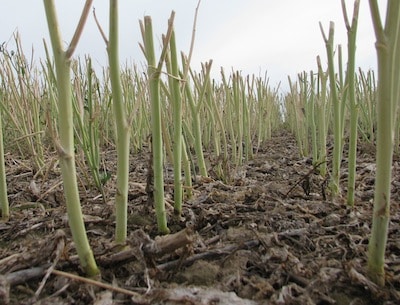
The ideal plant stand is 7 to 14 plants per square foot, and any canola crop with fewer than 5 plants per square foot is not reaching its yield potential. A fall count of stems provides an end-of-season assessment of this year’s stand.